
Last updated September 20, 2026
Level 1 sweep and inspection to the NFPA 211 annual standard - flue, crown, cap, and flashing checked and photographed
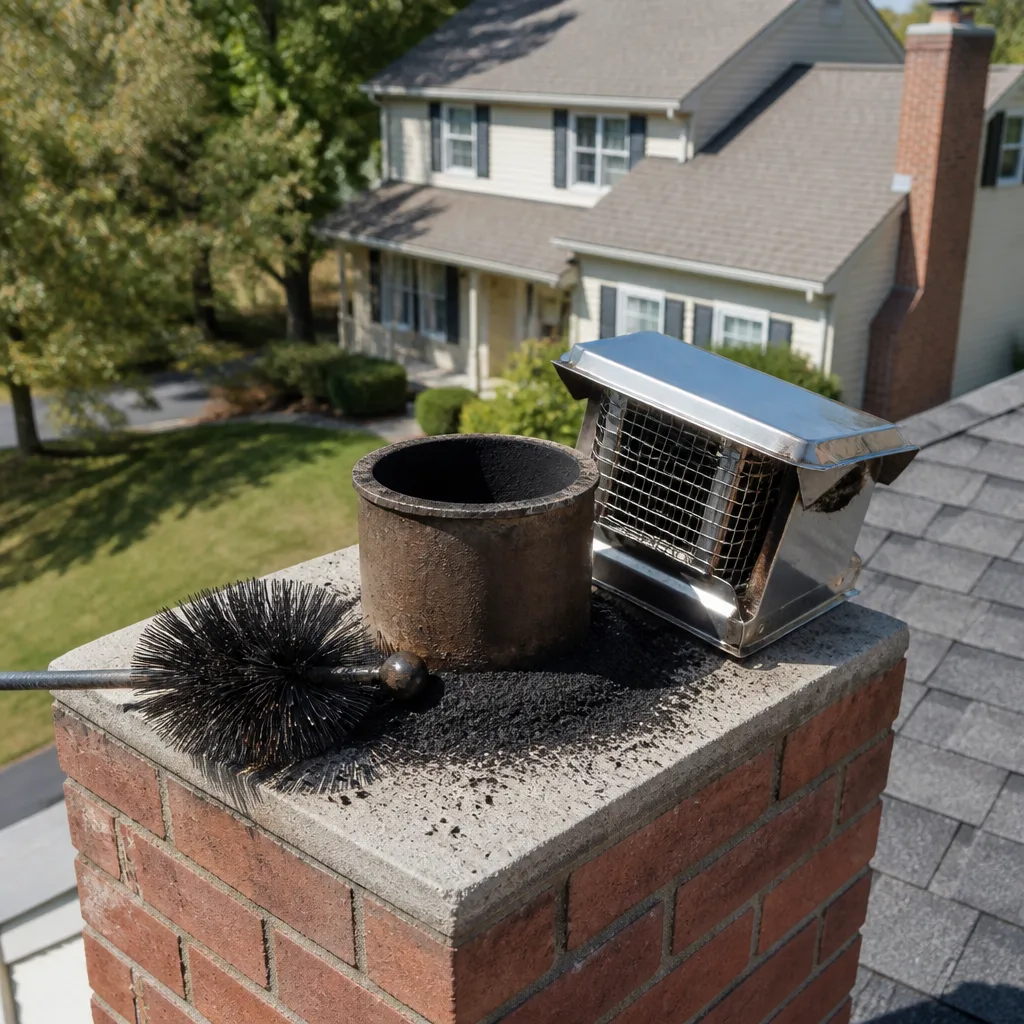
Chimney sweep logs do not sweep chimneys. They loosen some creosote - which then falls where a brush and vacuum still have to collect it.
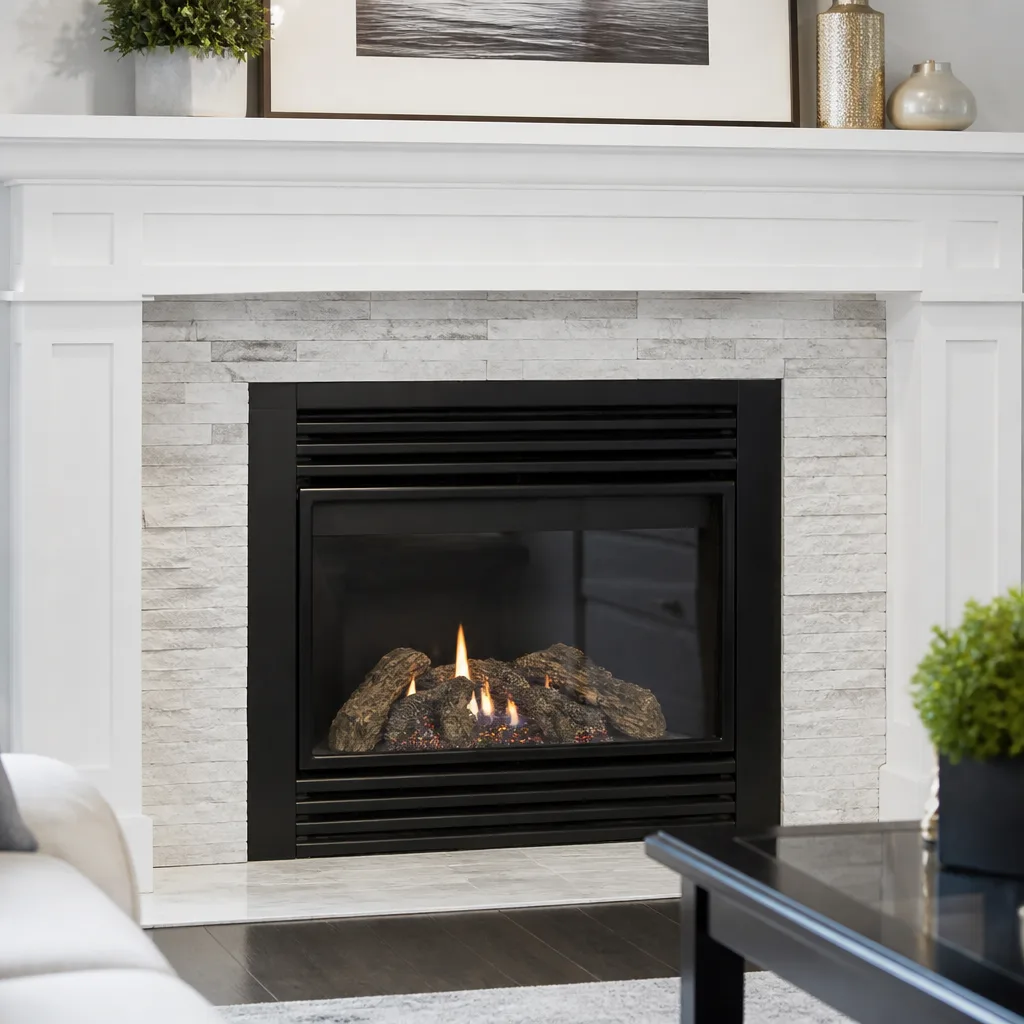
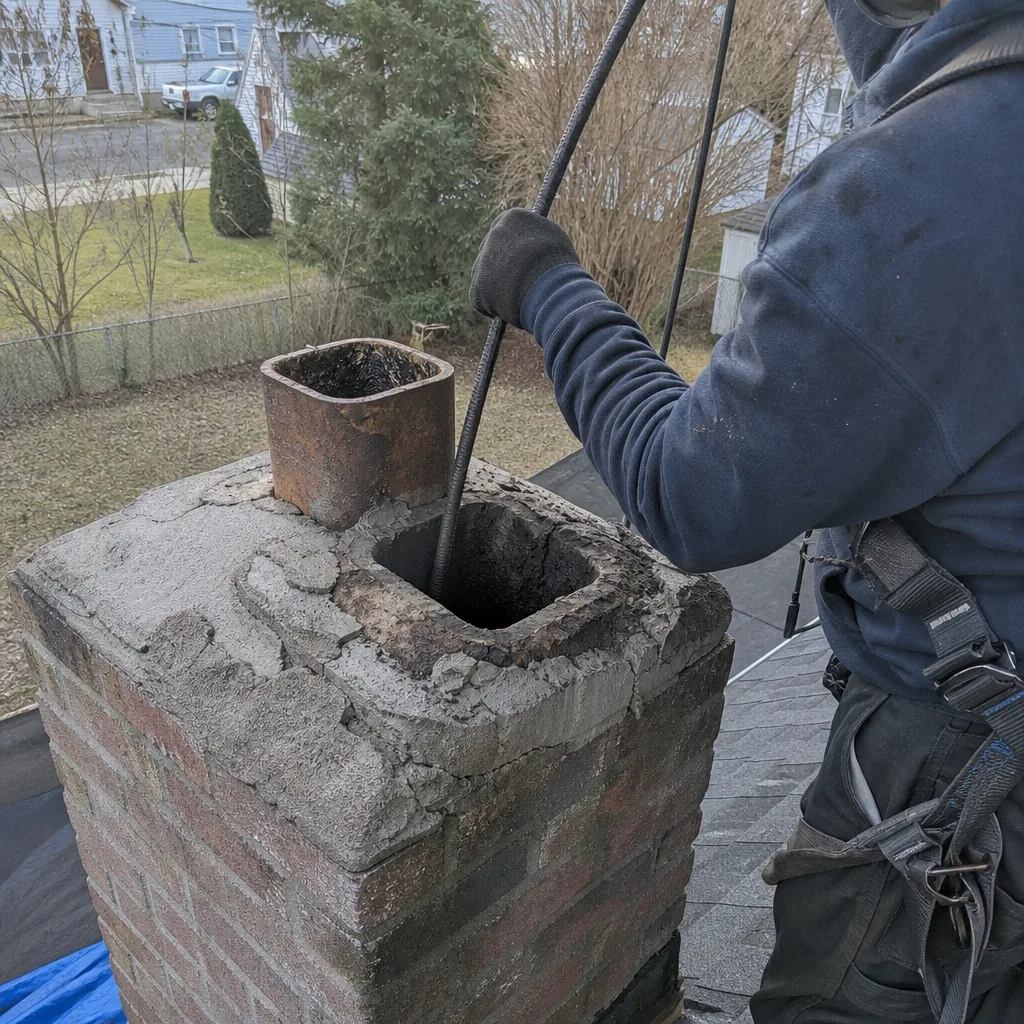 Before
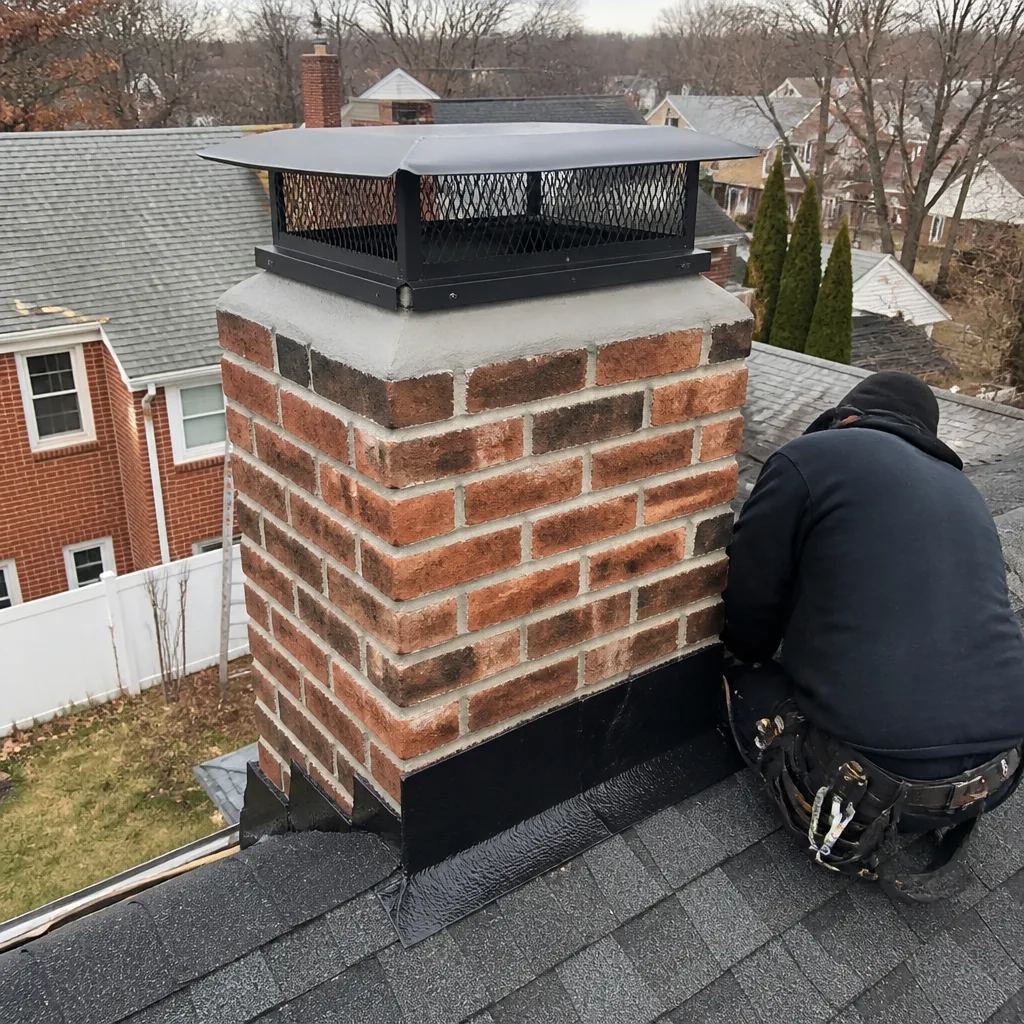 After
After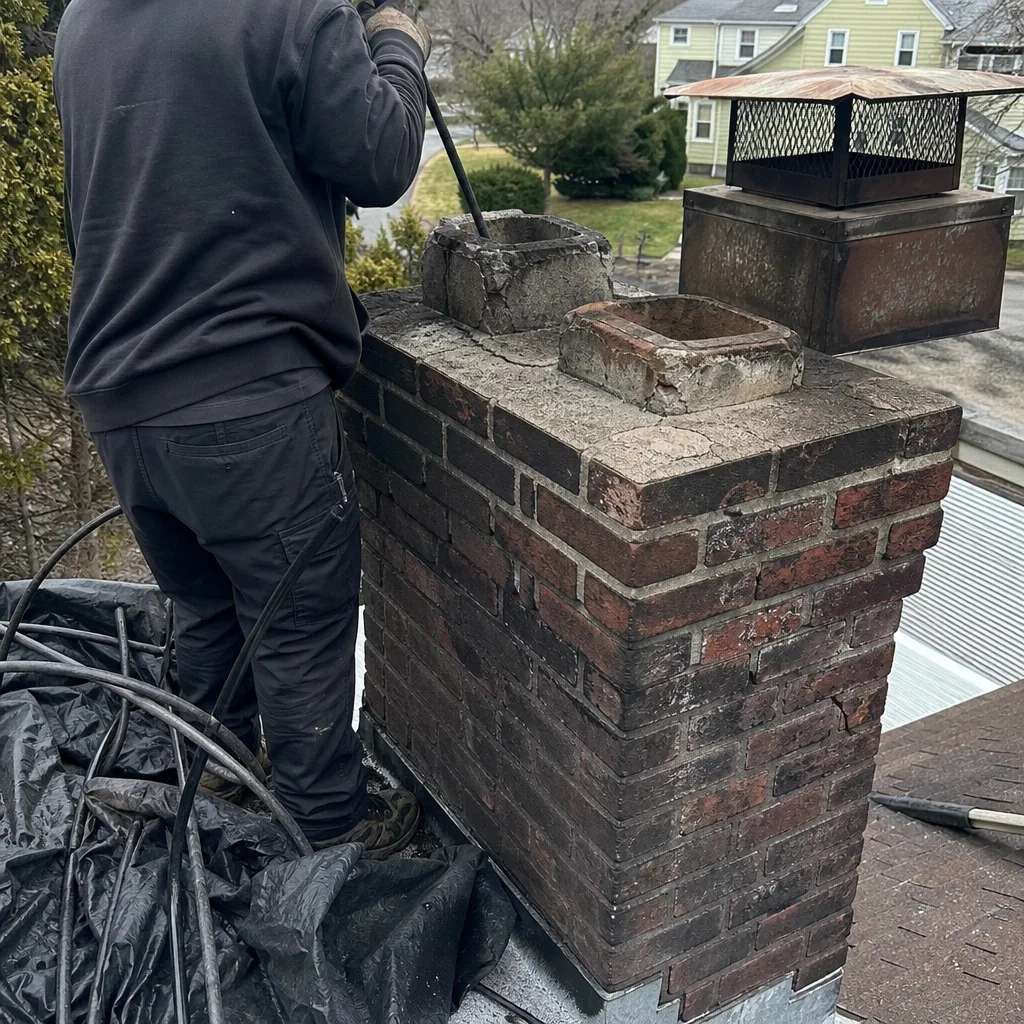 Before
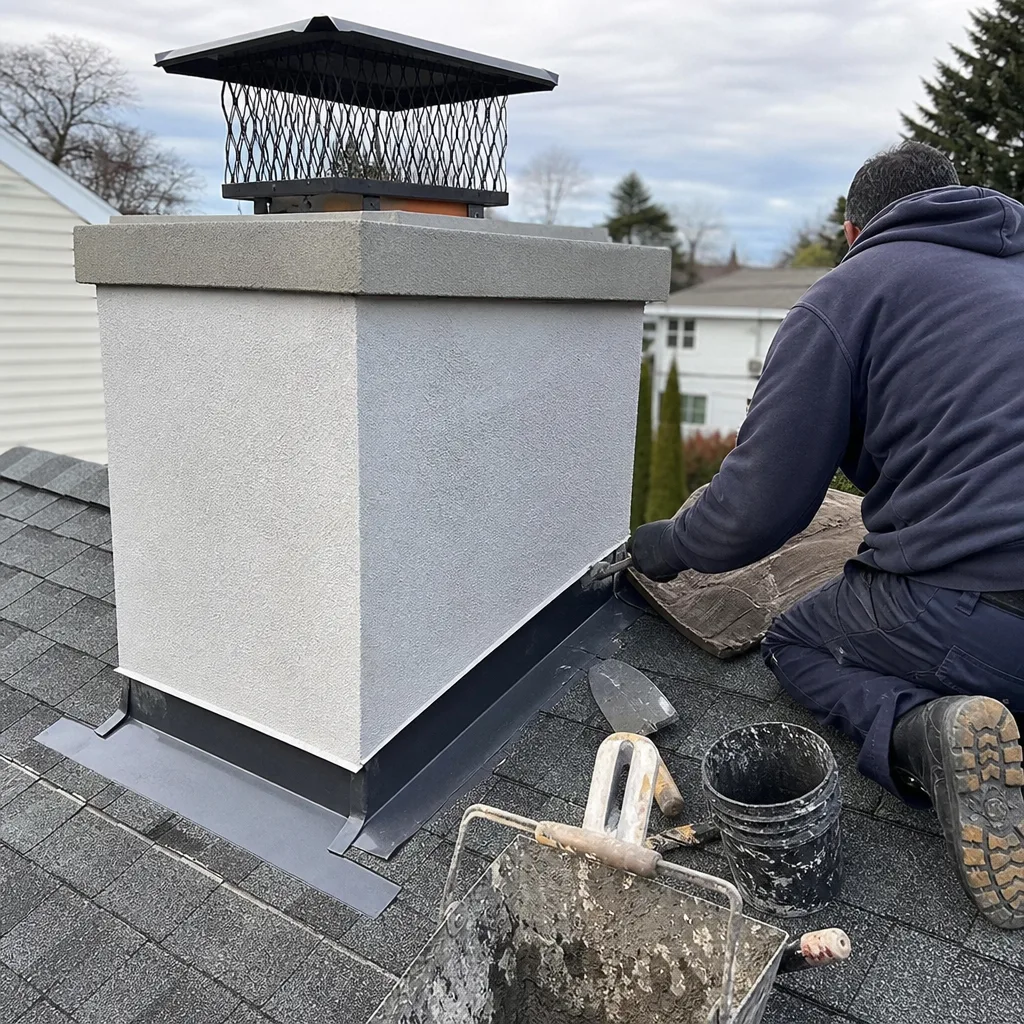 After
After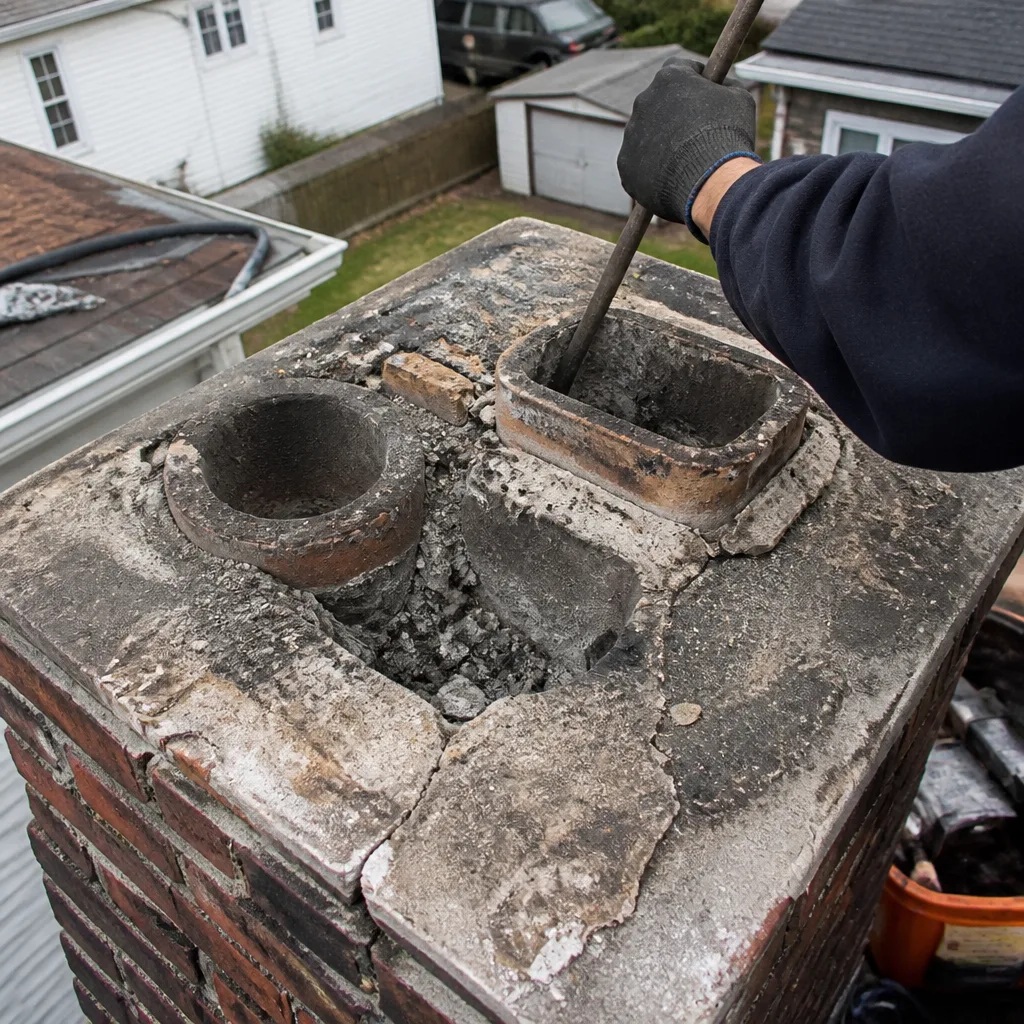 Before
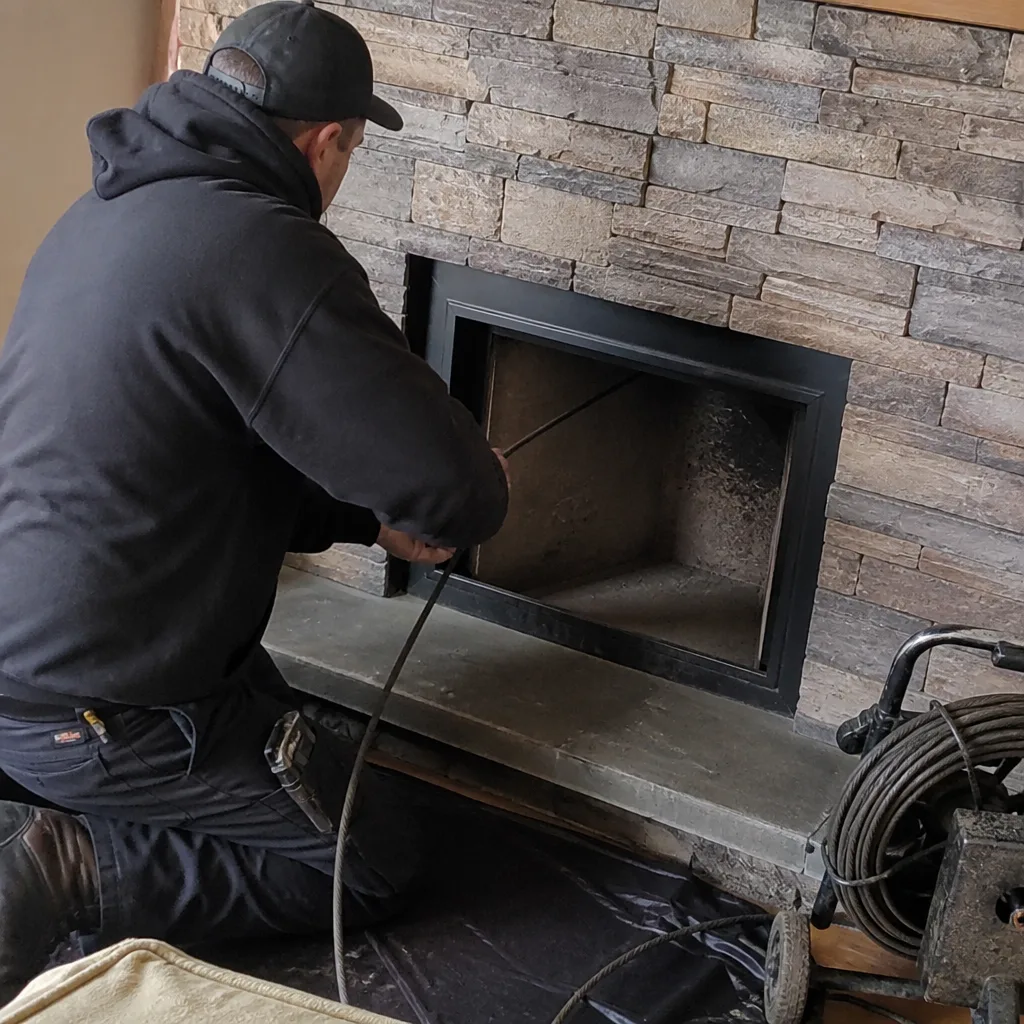 After
AfterThe Complete Guide to Chimney Cleaning in Newark
The NFPA estimates that 27% of home heating fires involve chimneys with documented creosote buildup, yet the cleaning most Newark homeowners pay for is a brush pass with no way to verify what was actually removed. This guide exists because “chimney cleaning” is not one service with one price. It is a decision tree: what you need depends on your flue diameter, your liner material, the last time the chimney saw a camera, and what Newark’s housing stock has been doing to your masonry for the past 70 to 140 years. We will walk you through what a cleaning should include, what it should cost in Newark, what a proper inspection legally requires, and how to read the report you get when the job is done, with more guides & resources linked throughout.
Quick Answer
Chimney cleaning in Newark typically runs $189 to $389 for a standard sweep, depending on flue diameter, liner type, creosote class, and whether the chimney is accessible from the roof or requires staging. The cleaning should always include a camera-scan inspection because a brush pass alone cannot confirm what was removed, and in Newark’s older masonry chimneys, what the brush cannot reach is usually the part that matters. For help choosing who performs this work, see our DIY vs Professional Chimney Cleaning: The Newark Homeowner’s Decision Guide.
Table of Contents
- What Chimney Cleaning Actually Involves
- How Much Chimney Cleaning Costs in Newark
- Level 1, Level 2, Level 3: Which Inspection You Actually Need
- What a Camera Scan Shows That a Flashlight Misses
- How Often Should You Clean Your Chimney in Newark?
- Why Newark’s Housing Stock Changes the Cleaning Equation
- How to Read a Written Sweep Report
- Common Mistakes to Avoid
- When to Call a Professional
- Frequently Asked Questions
- The Bottom Line
BeforeAfterWhat Chimney Cleaning Actually Involves
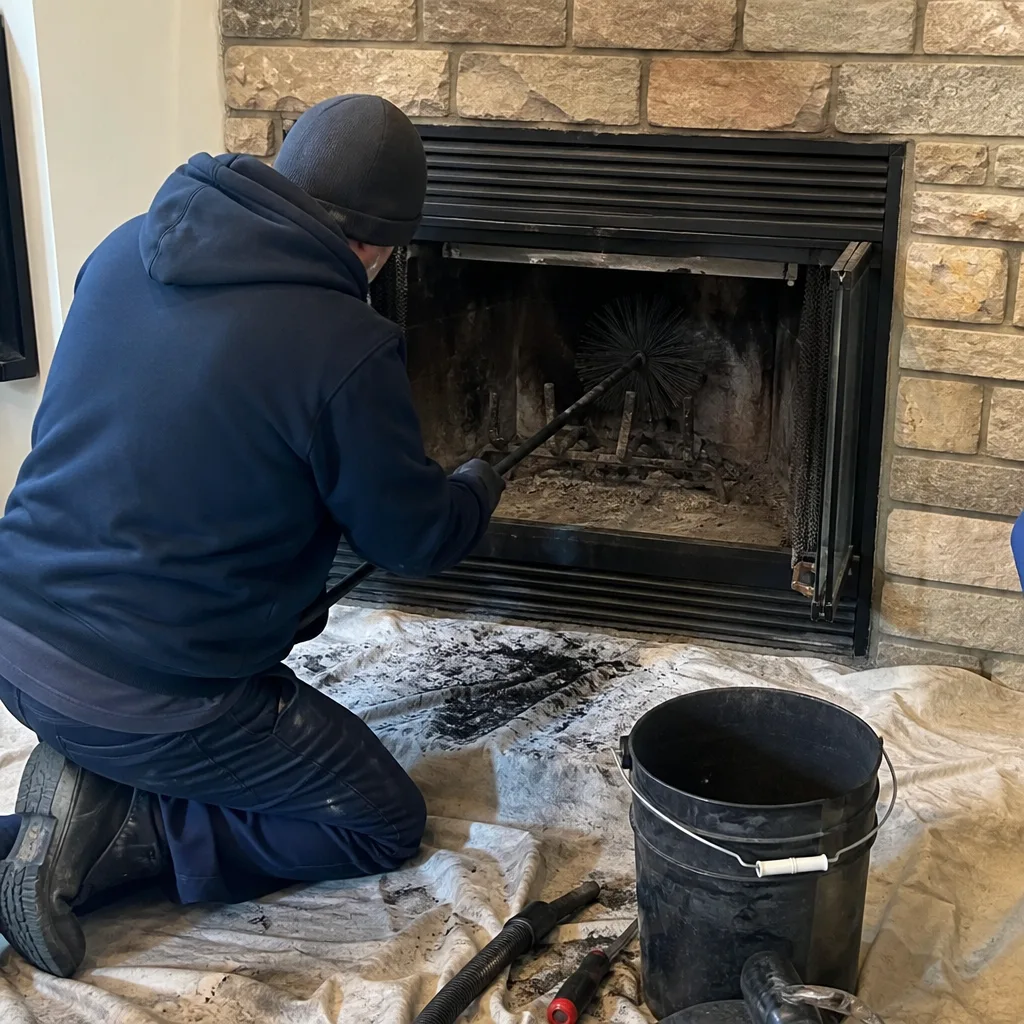
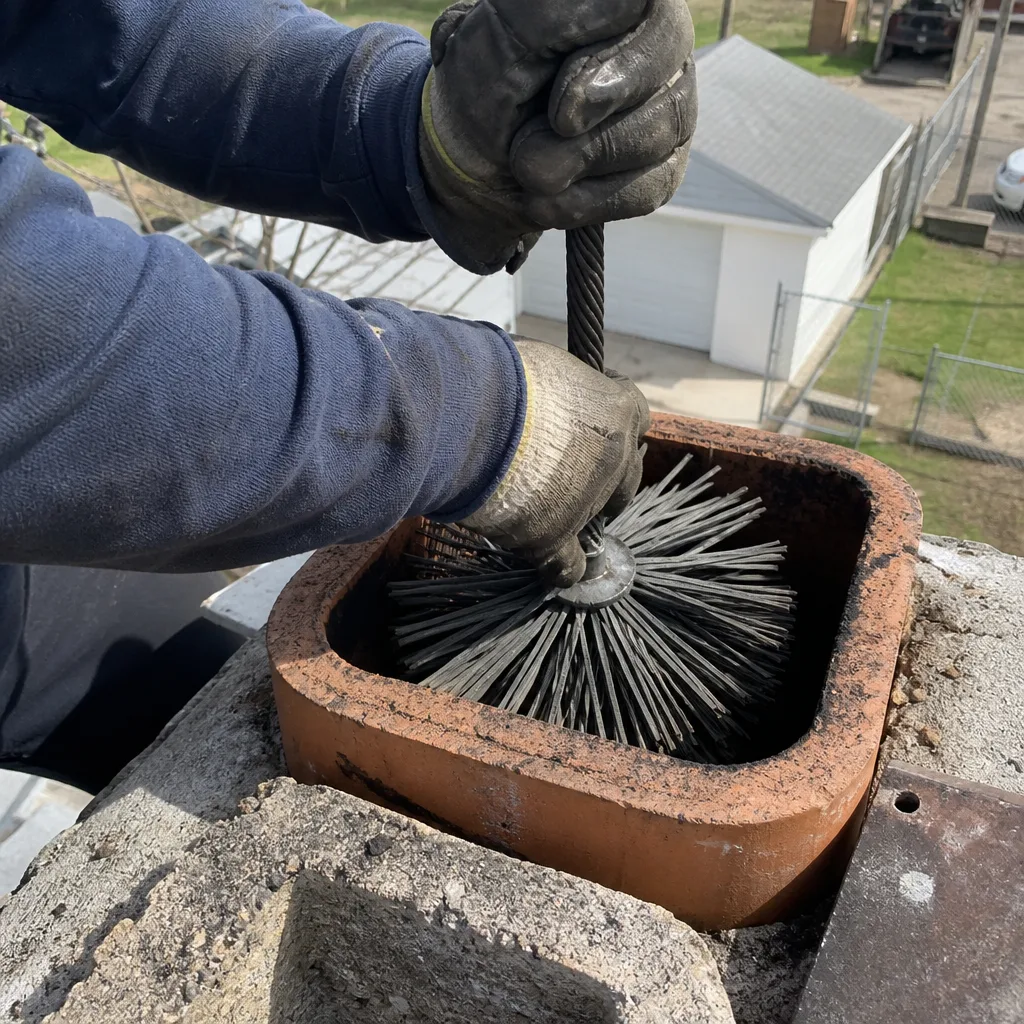
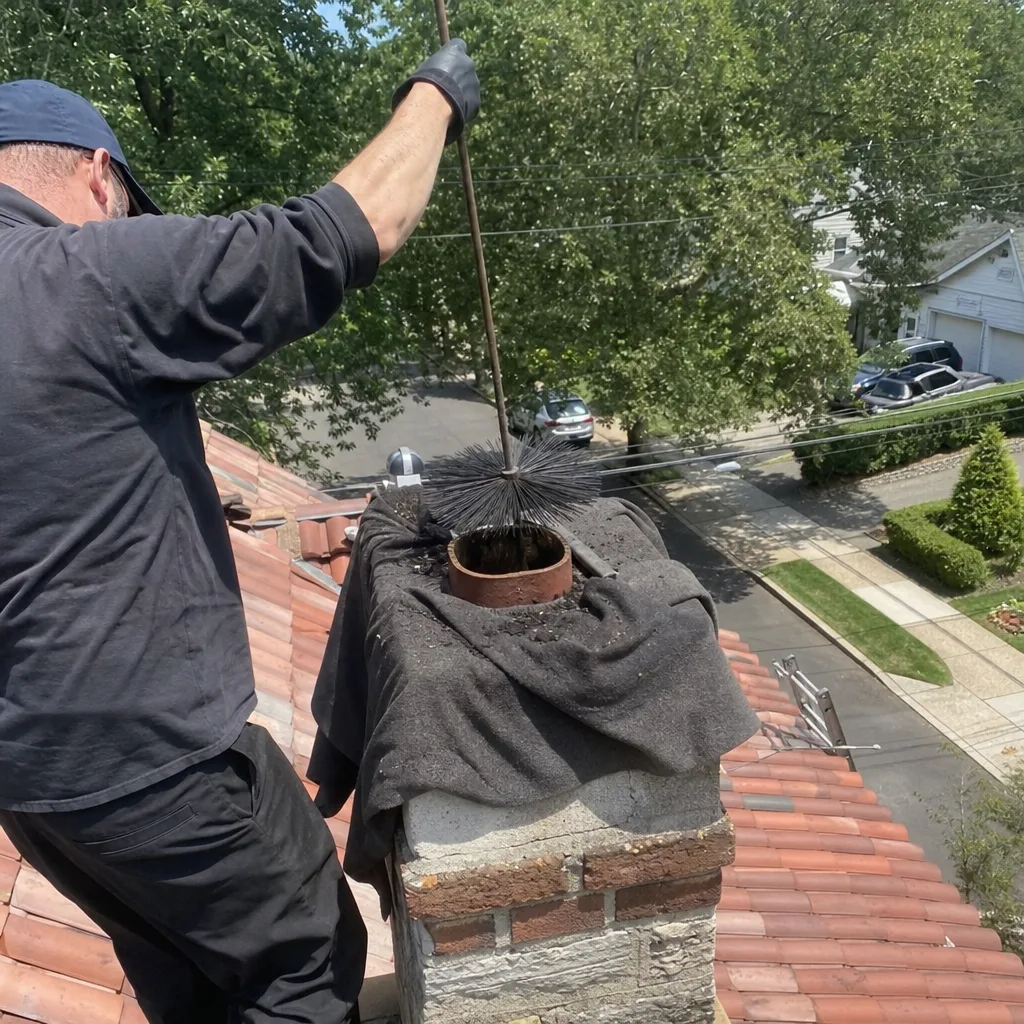
A proper chimney cleaning is a mechanical process, not a cosmetic one. The technician removes creosote, soot, and debris from the flue interior using brushes sized to the flue’s diameter, typically run from the roof down or from the firebox up with a rotary system. But the cleaning is only half the job. NFPA 211, the standard that governs chimney and venting systems, treats sweeping and inspection as inseparable. You cannot claim a chimney is clean if no one has looked at it with anything better than a flashlight. Every cleaning we perform at Level Two Chimney Newark includes a camera-scan inspection as standard, because the brush tells you what came out. The camera tells you what is still in there.
Here is what a complete cleaning visit should always include:
- Flue brushing with a brush sized to the flue diameter, not a one-size-fits-most wire brush dragged through.
- Creosote classification. Creosote is graded Class I (dusty soot), Class II (flaky, crunchy tar), or Class III (glazed, hardened, dripping tar). Class III cannot be brushed out effectively and usually requires chemical treatment or removal.
- Smoke chamber brushing. The smoke chamber is the angled transition zone above the firebox. It collects creosote at higher rates than the flue itself and is skipped by quick sweep jobs.
- Smoke shelf cleaning. The smoke shelf sits directly behind the damper. Debris collects here and blocks proper draft.
- Firebox cleaning and inspection. The firebox floor and walls show cracks, spalling brick, and refractory damage.
- Camera scan of the flue interior from top to bottom. This is the only reliable way to see liner cracks, offset joints, missing mortar, and hidden creosote pockets.
- Written report with photos, findings, and a written price for any recommended work before anything else is scheduled.
If any step on that list is missing, you did not get a chimney cleaning. You got a partial service with a full-service price tag.
How Much Chimney Cleaning Costs in Newark
In Newark and the surrounding Essex County market, a standard chimney sweep runs between $189 and $389. The spread exists because legitimate variables change the labor, not because some companies are discounting and others are gouging. Here is the line-item reality.
| Service Component | Typical Newark Range |
|---|---|
| Standard sweep, wood-burning fireplace, single flue | $189 - $289 |
| Sweep with camera-scan inspection (Level 2 equivalent) | $289 - $389 |
| Oil flue or gas flue sweep | $175 - $275 |
| Heavy creosote removal (Class III glaze) | $350 - $650, chemical treatment included |
| Chimney cap replacement | $225 - $475 installed |
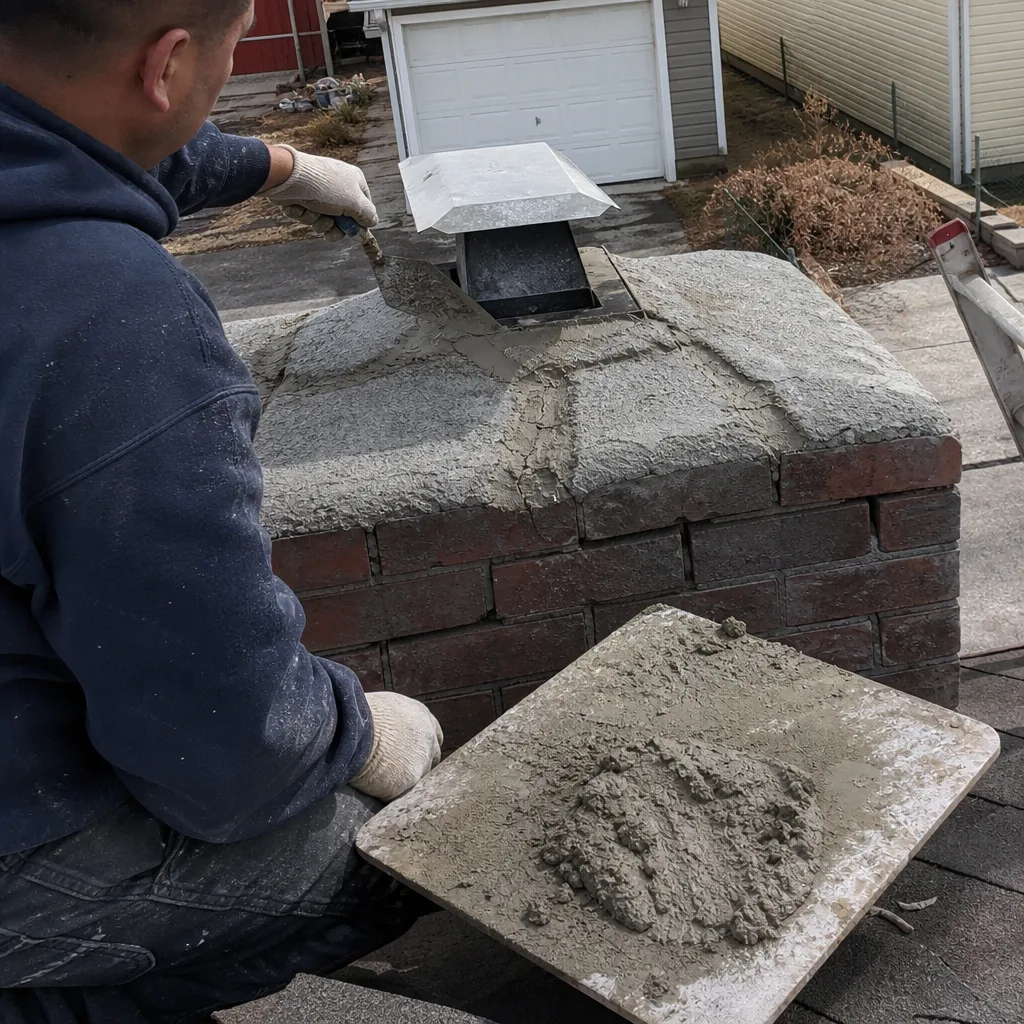
| Chimney crown repair | $300 - $900 depending on size and condition |
| Full stainless steel liner installation | $2,800 - $6,500 |
Those numbers come from what we quote in Newark every week. What they do not include: the “$59 whole house special” advertised on social media, which is a sales lead dressed up as a sweep, followed by a technician finding $4,000 of “necessary” work. We will say this plainly: if a chimney company will not put the price in writing before the tech steps inside your home, the price is not real. Clause 1 of the Haven Standard, which Level Two Chimney Newark has operated under since 2009, requires a written price and written scope before any work begins. Not after. Before. The reason is simple. You cannot evaluate a price you have not been given. Call (862) 245-4309 for a written estimate. It costs nothing and it is delivered in writing.
Level 1, Level 2, Level 3: Which Inspection You Actually Need
NFPA 211 defines three inspection levels, and the distinctions are not suggestions. They are legal triggers. Knowing which one applies to your situation in Newark will save you from paying for an inspection you do not need, and more importantly, from skipping one that your insurance company expects.
- Level 1 inspection. This is the inspection performed during a routine cleaning when nothing has changed. The technician checks the readily accessible portions of the chimney, the flue, the cap, the damper, and the visible masonry. No special tools. No camera required. This is appropriate when you use the same appliance, burn the same fuel, and have had no incidents or changes in the past year.
- Level 2 inspection. This is required by NFPA 211 in four specific events: (1) when you buy or sell the home, (2) when the chimney has been damaged by storm, earthquake, or fire, (3) when you change the appliance or fuel type (for example, converting from oil to gas), or (4) before relining or major repair. A Level 2 includes everything in a Level 1 plus access to the attic, crawlspace, and roof, and crucially, a camera scan of the flue interior. In Newark, home sales virtually always require a Level 2 inspection.
- Level 3 inspection. This is triggered when a Level 1 or Level 2 reveals a potential hazard that requires access behind walls or removal of structural components to fully evaluate. A Level 3 is rare and typically involves opening concealed areas to examine the chimney structure. It is the last resort, not the upsell.
One practical warning about Newark specifically: the city’s housing stock skews older, and oil-to-gas conversions are extremely common in the Ironbound, Forest Hill, Weequahic, and Vailsburg neighborhoods. When an oil furnace flue is repurposed for a gas appliance, the old oil residue profile remains inside the flue. That residue interacts differently with gas exhaust, and a Level 2 inspection is the only way to document what is actually lining the flue before the conversion is signed off. If your Newark home changed heating systems, you do not need a cleaning. You need a camera-scan inspection with a written report.
What a Camera Scan Shows That a Flashlight Misses
A flashlight pointed up a flue shows about three feet of visible darkness. A camera scan shows every inch of the flue wall, every joint, every offset, every crack, and every pocket of creosote that the brush did not reach. Here is what the camera finds in Newark chimneys on a regular basis, and what each finding means.
- Liner cracks. Terracotta liner tiles crack from heat stress, moisture, and age. A cracked liner allows heat and gases to reach combustible framing. In a pre-1950 Newark home with an original terracotta liner, this is not a hypothetical. It is a near certainty we see weekly. A cracked liner means the chimney is not safe to burn until it is relined with stainless steel.
- Offset joints. Flues rarely run perfectly straight. Offset joints are the angled sections where the flue changes direction, and they are the number one place creosote accumulates. The brush often rides over the inside curve and leaves a pocket behind. The camera finds it. The flashlight never does.
- Third-degree creosote pockets. Class III creosote is glazed tar. It is shiny, thick, and extremely flammable. It forms when burning conditions are cool and restricted. A brush will strip some of it, but the hardened glaze often remains. The only correct removal method is a chemical treatment paired with rotary agitation. The camera shows how much remains after the first pass.
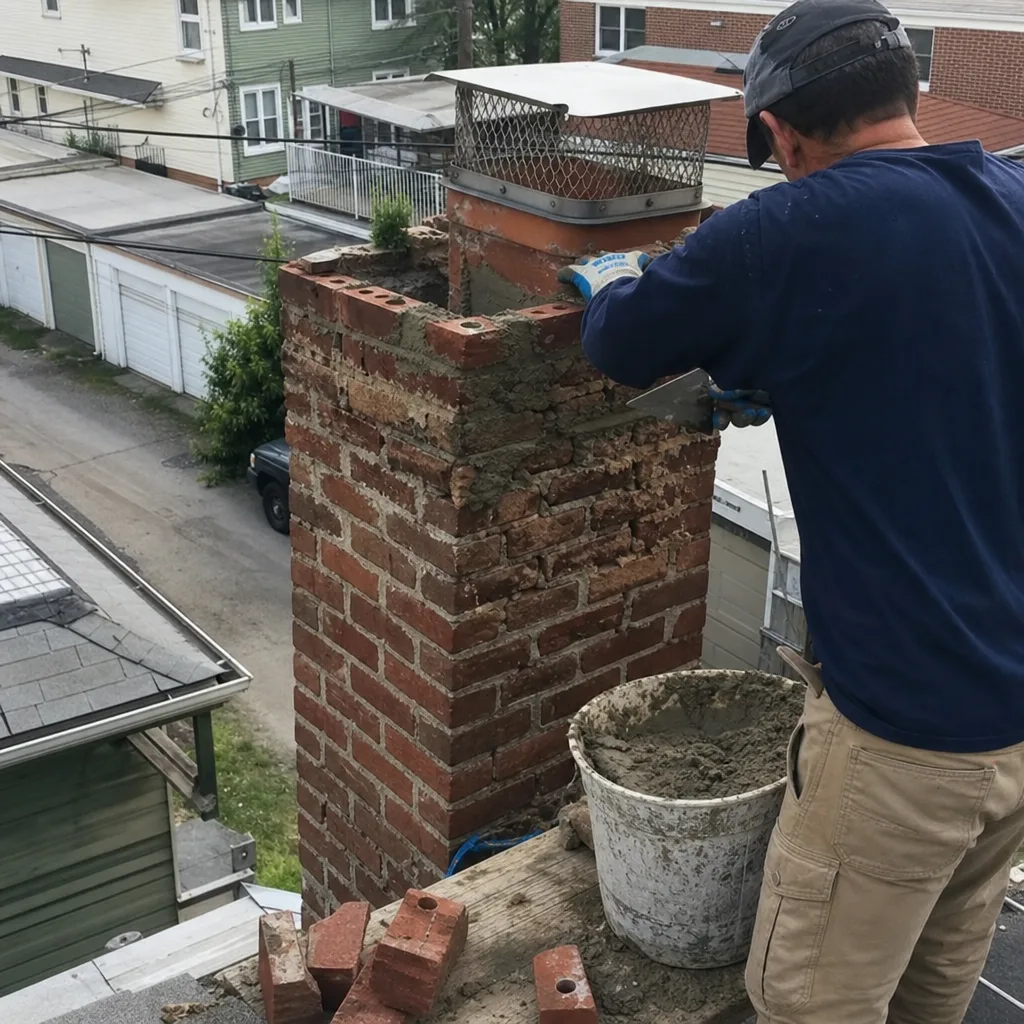
- Spalling brick and missing mortar joints. Spalling is when brick faces flake off from trapped moisture. The camera sees sections where mortar joints have disappeared entirely, which compromises the flue’s structural integrity. A flashlight from the roof or the firebox simply cannot reach these sections.
- Nests, carcasses, and debris. Newark has a healthy squirrel, raccoon, and bird population, and an uncapped chimney in Forest Hill or the North Ward is an open invitation. Critters build nests inside flues, and those nests are dry, flammable, and directly in the path of exhaust.
We made camera-scan documentation the default on every job in 2009, years before regulators or insurers required it. That practice became Clause 4 of the Haven Standard: a documented photo record on every visit. The record belongs to you. You keep it. The next chimney company that comes out can see exactly what was found, exactly what was done, and exactly what was left behind. That is the point of evidence-based service. The chimney cleaning and sweep service in Newark we provide does not happen without this step, and we would not trust a company that skipped it.
How Often Should You Clean Your Chimney in Newark?
The NFPA says to have your chimney inspected at least once a year and cleaned as needed. That “as needed” is where most Newark homeowners stop reading, so let us make it concrete. Here is the actual decision rule we use.
- Wood-burning fireplace, used regularly during the heating season: sweep every 25 to 40 fires, which for most Newark households means once per year before the first fall fire.
- Wood-burning fireplace, occasional use (fires on holidays, weekends): sweep every 18 to 24 months, but inspect annually because even light use produces creosote.
- Gas fireplace or gas logs, vented: inspect annually; sweep on a 2 to 3 year schedule because gas systems produce acidic residue that damages terracotta liners even though no creosote forms.
- Oil furnace flue (pre-2015 Newark homes): sweep annually. Oil produces a sooty, sulfur-rich residue that is corrosive and blocks draft faster than wood creosote.
- Unused chimney: inspect annually. Unused does not mean safe. Rain, freeze-thaw cycles, wildlife, and masonry decay continue whether or not the chimney is being used.
Newark’s climate makes the annual inspection non-negotiable. We get freeze-thaw cycles all winter. Water enters masonry through a cracked crown or an uncapped flue, freezes, and expands. That is how a hairline crack becomes a structural spall in one season. If you live in Newark and skip two years, you are not skipping a cleaning. You are accumulating damage that will cost ten times the price of a sweep to repair. The Level Two Chimney Newark home page explains what a documented annual record looks like across multiple years.
Why Newark’s Housing Stock Changes the Cleaning Equation
Newark is not a suburb of new construction. The majority of the city’s housing predates 1950. The oldest homes in the Ironbound, Lower Roseville, and parts of Forest Hill were built in the 1880s and 1890s with brick, lime mortar, and terracotta flue liners. Those materials behave completely differently from the stainless steel liner in a 2018 townhouse in Harrison or Kearny, and the difference drives everything about how a chimney should be cleaned and inspected.
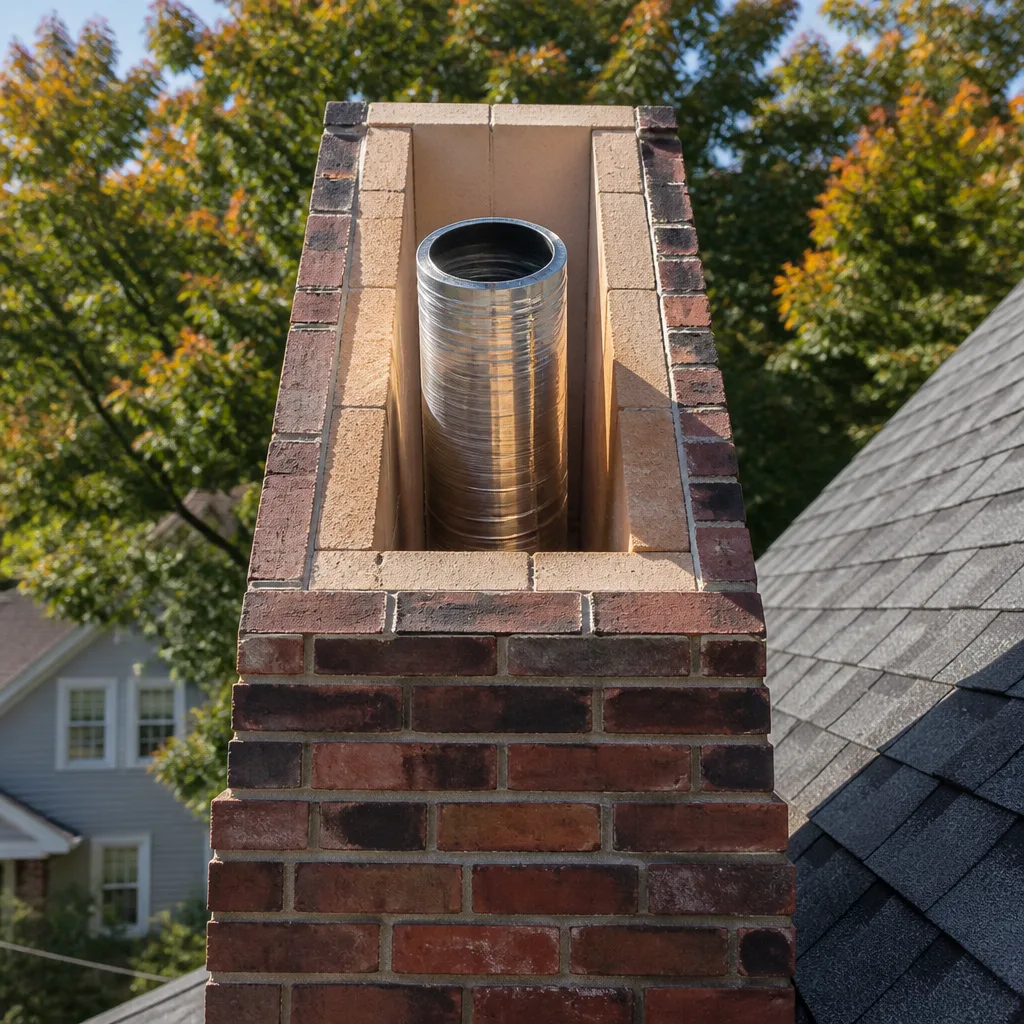
Here is the practical version. A terracotta liner in a pre-1950 Newark chimney has been absorbing heat and moisture for 70 to 140 years. The tiles crack. The mortar between them erodes. The flue widens slightly from erosion, which changes draft dynamics and increases creosote accumulation. When you clean a newer stainless steel liner, the brush glides through a smooth, circular, continuous pipe and removes nearly everything. When you clean an older terracotta liner, the brush skips over joints, catches on offsets, and leaves pockets behind. Which means the camera-scan inspection matters more in Newark than it does in a newer suburb, because the cleaning itself accomplishes less.
The other Newark-specific variable: oil-to-gas conversions. Thousands of Newark heating systems converted from oil to gas between 1995 and 2015, especially in multi-family conversions in the Central Ward and South Ward. When an oil furnace flue is repurposed for gas, the old oil residue remains. Oil produces a dense, sulfur-heavy soot that adheres to terracotta. Gas burns cleaner but hotter, which bakes the old oil residue into a hard, glassy coating inside the flue. A standard brush pass will not remove it. Chemical treatment will not always remove it. In many cases, the only valid solution is lining the flue, and the only way to know before you agree to a liner is a camera scan. Materials sourced from DuraFlex are what we use for Newark relining jobs, but the material choice matters less than the evidence that the liner is needed. The camera provides that evidence.
If your Newark home was built before 1950 and you have never had a camera scan, schedule one. We are not saying your chimney is dangerous. We are saying no one has ever verified that it is not. Those are different statements, and only one of them is true after the camera comes up.
How to Read a Written Sweep Report
A written sweep report is the document that separates a real chimney company from a guy with a brush and a truck. You should receive one after every cleaning, and you should be able to understand every line item without a translator. Here is what a proper report from a Newark chimney company includes, and what each line actually tells you.
- Flue diameter and length. If the report does not state the flue diameter, the company did not measure it. If they did not measure it, the brush may have been the wrong size, and the cleaning may have been partial.
- Liner material and condition. Terracotta, stainless steel, cast-in-place, or unlined. Condition should be stated in plain terms: “intact,” “cracked at the third joint,” “spalling,” “gaps at offset.” If the word “condition” does not appear with a specific finding, ask for a refund.
- Creosote class. Class I, II, or III, with a one-sentence explanation of what that means for your next fire.
- Debris removed. A note on what came out: soot, Class II creosote, a bird nest, a squirrel carcass, roofing debris. You want specificity because it confirms the sweep actually happened.
- Camera scan findings. What the camera saw, in writing, with reference photos attached. “Flue appears clean” is not a finding. “No cracks visible in the lower 20 feet; offset at 12 feet shows minor creosote pocket, brushed and re-scanned, clear” is a finding.
- Recommended work, if any, with a written price. This is Clause 1 of the Haven Standard in practice. Any recommended work must come with a price in writing at the time of recommendation. Not “we’ll email you something.” Written, now, with a scope of what is included.
- Photo record. Clause 4 of the Haven Standard requires a documented photo record on every job. You leave the appointment with photos of what was found, what was removed, and what remains. If a Newark company does not give you photos, they have not met the “camera-scan” standard.
Keep every report. They accumulate into a maintenance history that matters when you sell the home, when you file an insurance claim, and when you stand in front of the fireplace ten years from now trying to remember whether the liner was cracked. A chimney report is not a receipt. It is a record. Treat it that way.
Common Mistakes to Avoid
- Hiring on price alone. The “$59 sweep” in Newark is a sales funnel. The technician spends twenty minutes brushing, then produces a pressured quote for thousands of dollars of repairs you cannot verify. The cleaning is a loss leader. The upsell is the business model. Get a written price for the cleaning and the inspection before anyone arrives.
- Accepting a cleaning without a camera scan. Without a camera, the company cannot verify what was removed or confirm the liner is intact. You are paying for peace of mind that no one earned.
- Skipping the smoke chamber. Many quick sweeps brush the flue and call it done while the smoke chamber and smoke shelf, where creosote accumulates fastest, go untouched. Ask specifically: “Does your price include the smoke chamber?”
- Ignoring the oil-to-gas conversion issue. If your Newark home converted from oil to gas and the flue was never inspected with a camera, the old oil residue may be baking into glaze. A standard sweep will not address it.
- Waiting until you see smoke backing up. Smoke is the last symptom, not the first. By the time you see it in the living room, the flue is already blocked or the draft has already failed. The annual inspection exists to catch the problem before the fire does.
- Not reading the report. A written report with findings, photos, and prices is the only evidence you have that work was done correctly. If the company will not put it in writing, walk away.
- Assuming “newer home, no problem.” Even a 2015 townhouse with a stainless steel liner needs annual inspection. Stainless liners corrode. Caps blow off. Wildlife moves in. Newer is not immunity.
When to Call a Professional
Call a chimney professional if you see smoke backing into the room, notice a strong creosote smell when the fireplace is not in use, see black tar dripping into the firebox, hear animals in the flue, or spot cracked or missing bricks on the exterior chimney. Call after any storm that dented the cap or shifted masonry. Call before you buy a home, before you sell a home, and before you convert a heating system. And call if you simply cannot remember the last time anyone looked inside the flue with a camera. Level Two Chimney Newark offers free estimates in Newark, guided by Corrine Halstead and the Haven Standard since 2009. Call (862) 245-4309 for a written price before any work begins.
Frequently Asked Questions
A standard chimney sweep in Newark runs $189 to $289, and a sweep with a camera-scan inspection runs $289 to $389. Heavy creosote removal, relining, and masonry repair are priced separately. Call (862) 245-4309 for a written, itemized estimate before booking.
You cannot know the answer to that question without a camera scan. If a company recommends a liner but cannot show you camera footage of the existing liner’s cracks, gaps, or deterioration, get a second opinion. Level Two Chimney Newark offers a free second opinion on any written estimate. Bring us the competitor’s written quote, and we will put our findings in writing with photos.
For a wood-burning fireplace used regularly in Newark, clean it once per year or every 25 to 40 fires. For an oil flue, clean it annually. For a gas flue, sweep every 2 to 3 years but inspect annually. Unused chimneys still need annual inspection because water and wildlife damage continue regardless of use. See our Seasonal Chimney Cleaning Care for Newark: Year-Round Homeowner’s Guide for a full maintenance calendar.
Creosote accumulates, the flue narrows, draft weakens, and the risk of a chimney fire rises. In a Newark home with an older terracotta liner, skipping years of cleaning also allows existing liner cracks to worsen undetected, which can put heat and gases in contact with combustible framing. The cleaning is the cheap insurance policy against a much more expensive repair.
A Level 1 inspection is a visual check of accessible parts and is appropriate for routine annual maintenance where nothing has changed. A Level 2 inspection adds a camera scan of the flue interior and attics, crawlspaces, and roof access, and is required when you buy or sell a home, change appliances, or experience storm damage. In Newark, home sales trigger a Level 2 inspection nearly every time.
Yes. Gas fireplaces and gas logs produce acidic residue that corrodes terracotta liners and weakens masonry over time. A gas chimney should be inspected annually and swept every 2 to 3 years, even though no visible soot or creosote forms. Newark’s older housing stock makes this especially relevant because terracotta is more vulnerable to acidic attack than stainless steel.
The Bottom Line
Chimney cleaning in Newark is priced between $189 and $389 for a legitimate sweep with a camera-scan inspection, and the variables that change that number are flue diameter, liner material, creosote class, and what the camera finds. Newark’s older masonry chimneys require more careful cleaning and more rigorous inspection than newer stainless steel systems, and the oil-to-gas conversions common across the city create residue profiles that routine brushing will not resolve. The answer to every question in this guide is the same: get it in writing, with photos, from a company that will show you the evidence. Chimney repair in Newark, fireplace services in Newark, and chimney cleaning and sweep in Newark are all documented services under the Haven Standard. Call (862) 245-4309 for a free written estimate. The camera will show you what you need to know.
Written by Corrine Halstead, Owner at Level Two Chimney Newark, serving Newark since 2009.