
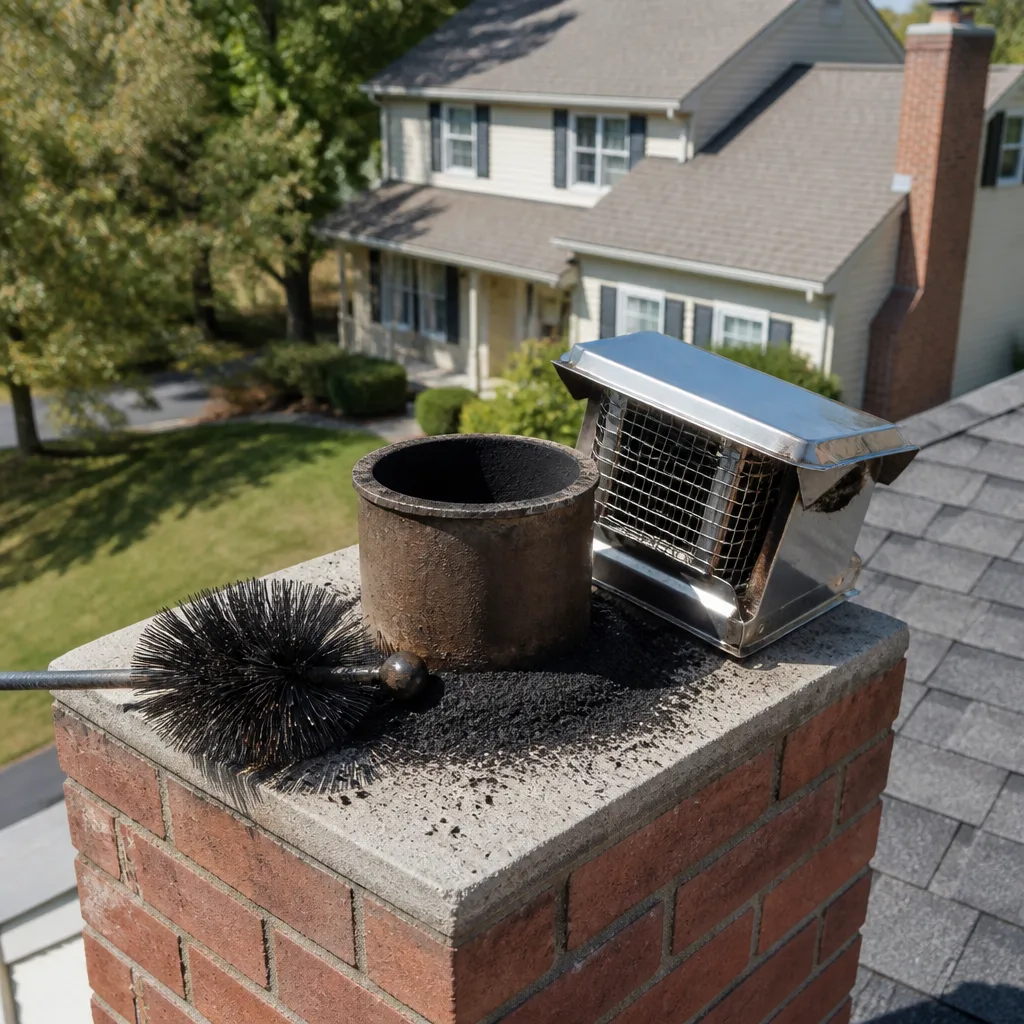
Level 1 sweep and inspection to the NFPA 211 annual standard - flue, crown, cap, and flashing checked and photographed
Chimney sweep logs do not sweep chimneys. They loosen some creosote - which then falls where a brush and vacuum still have to collect it.
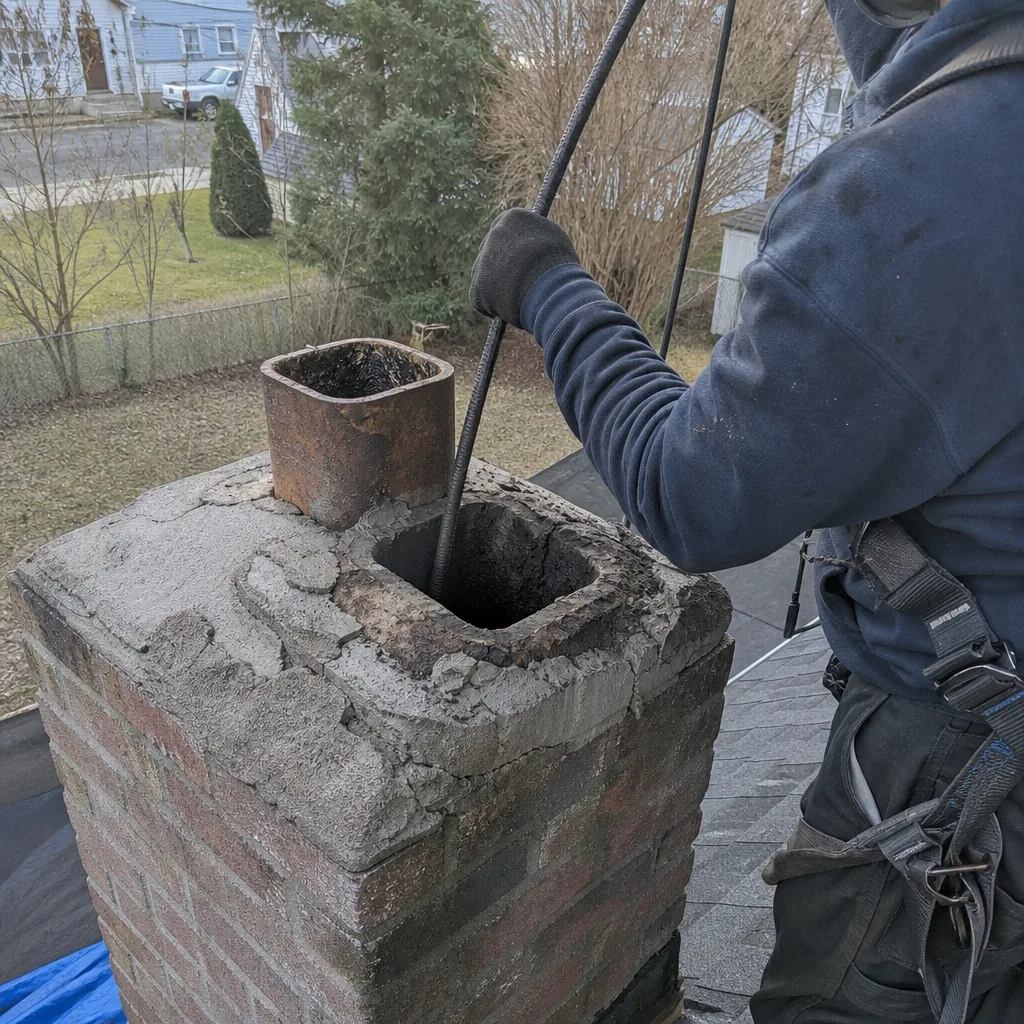 Before
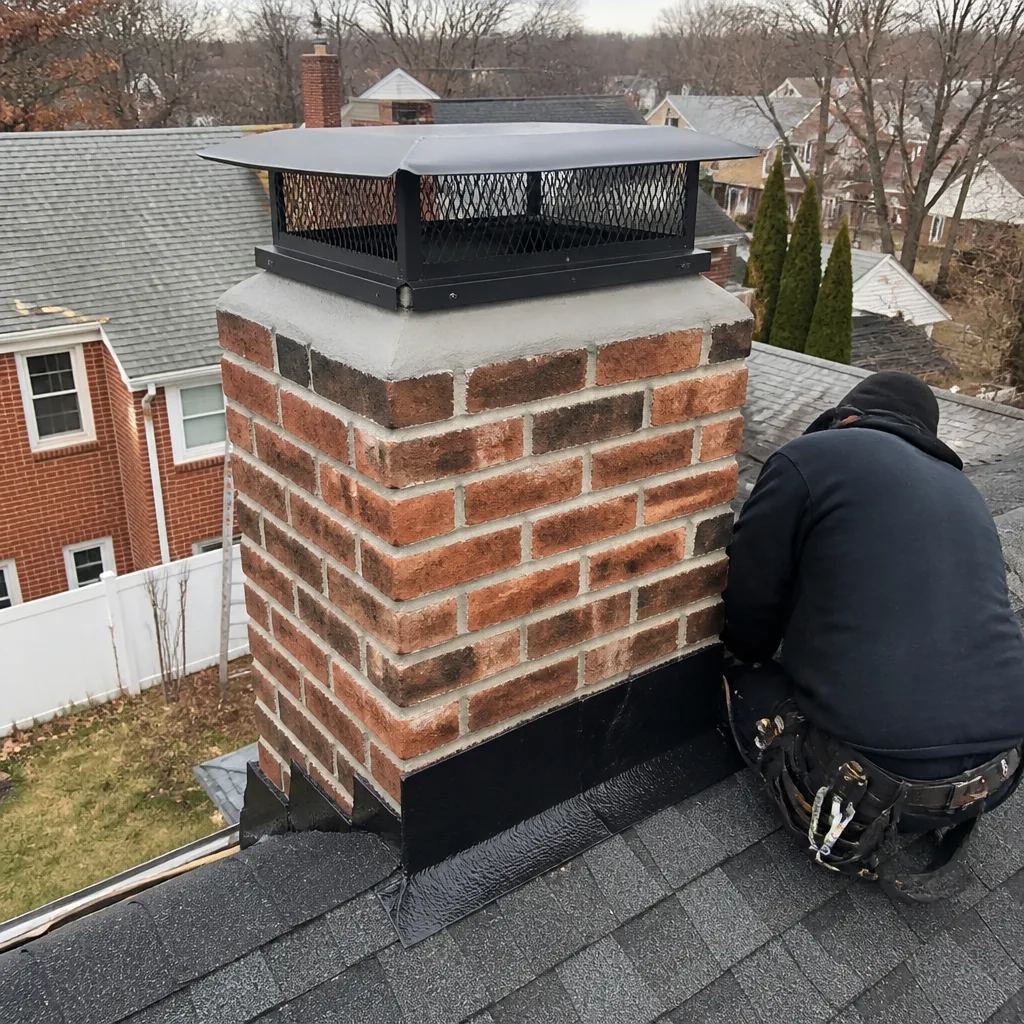 After
After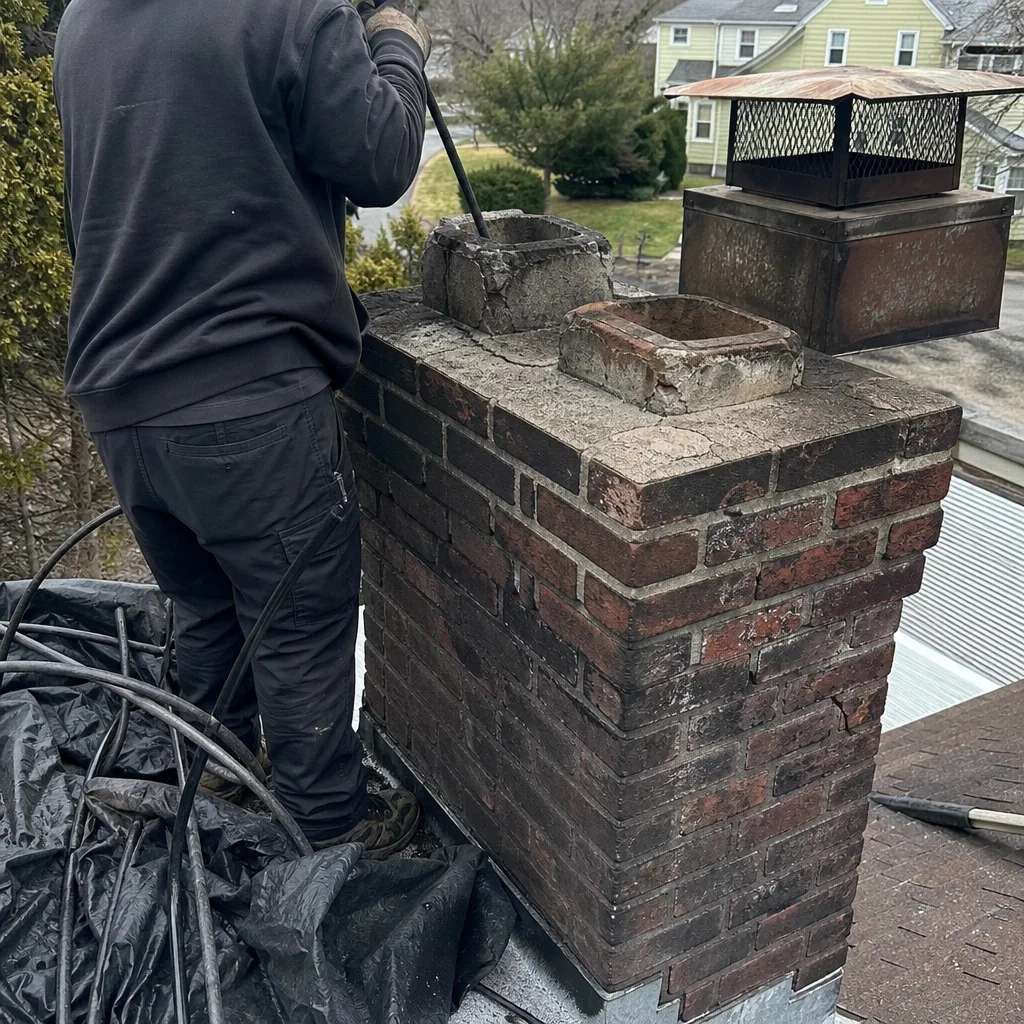 Before
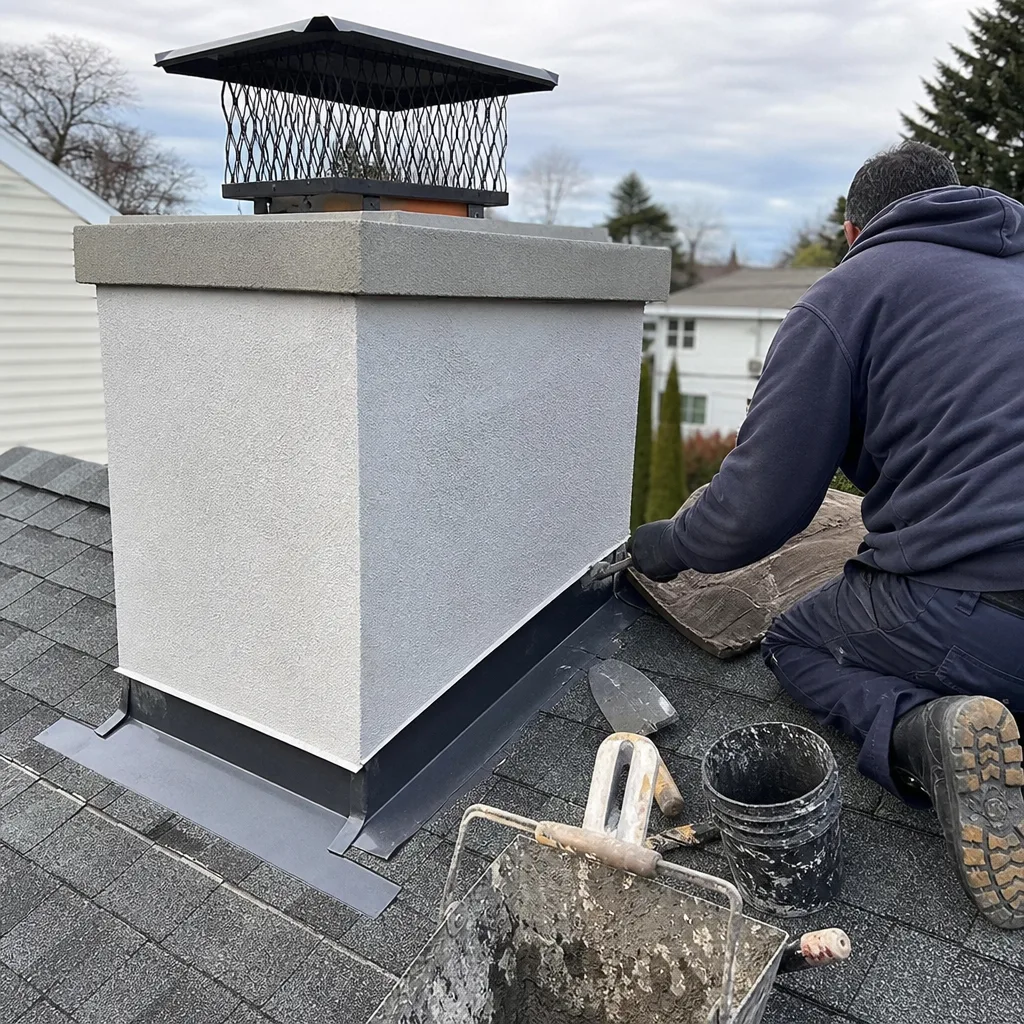 After
After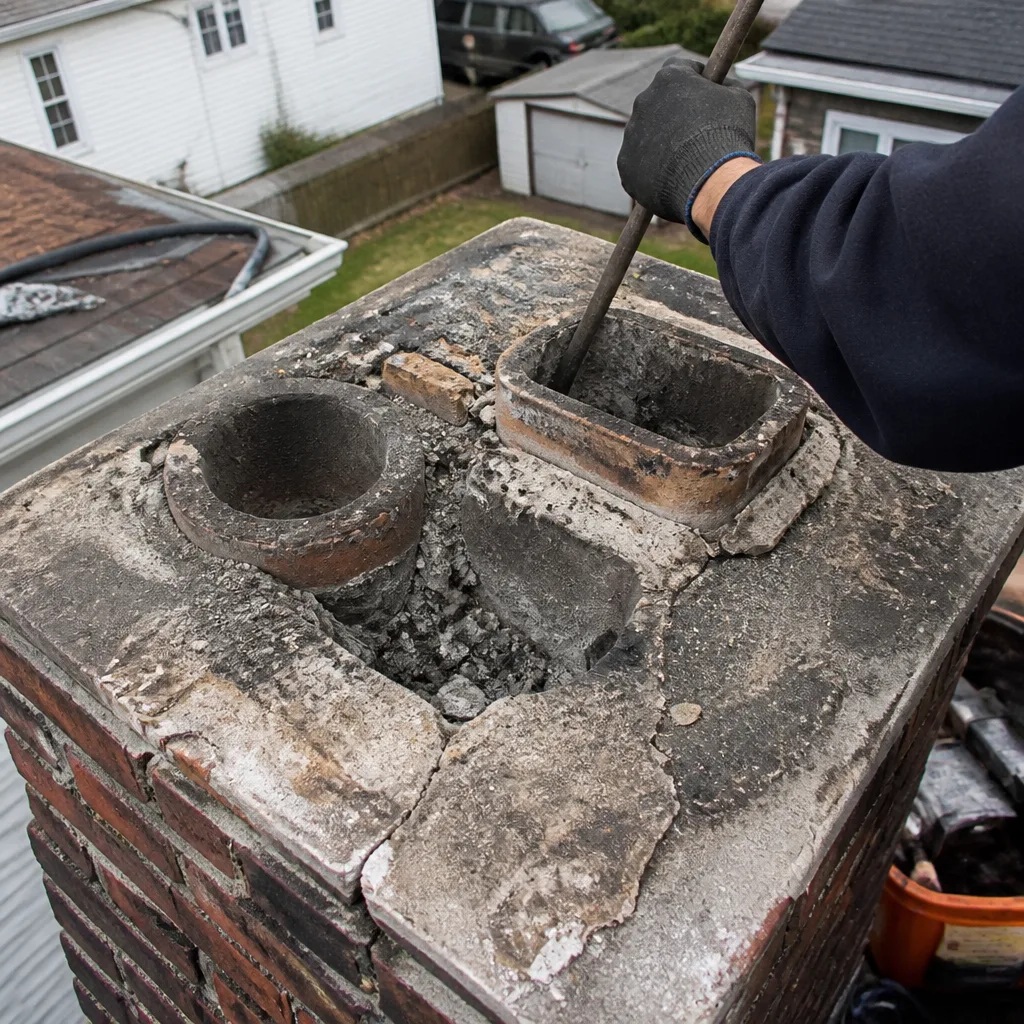 Before
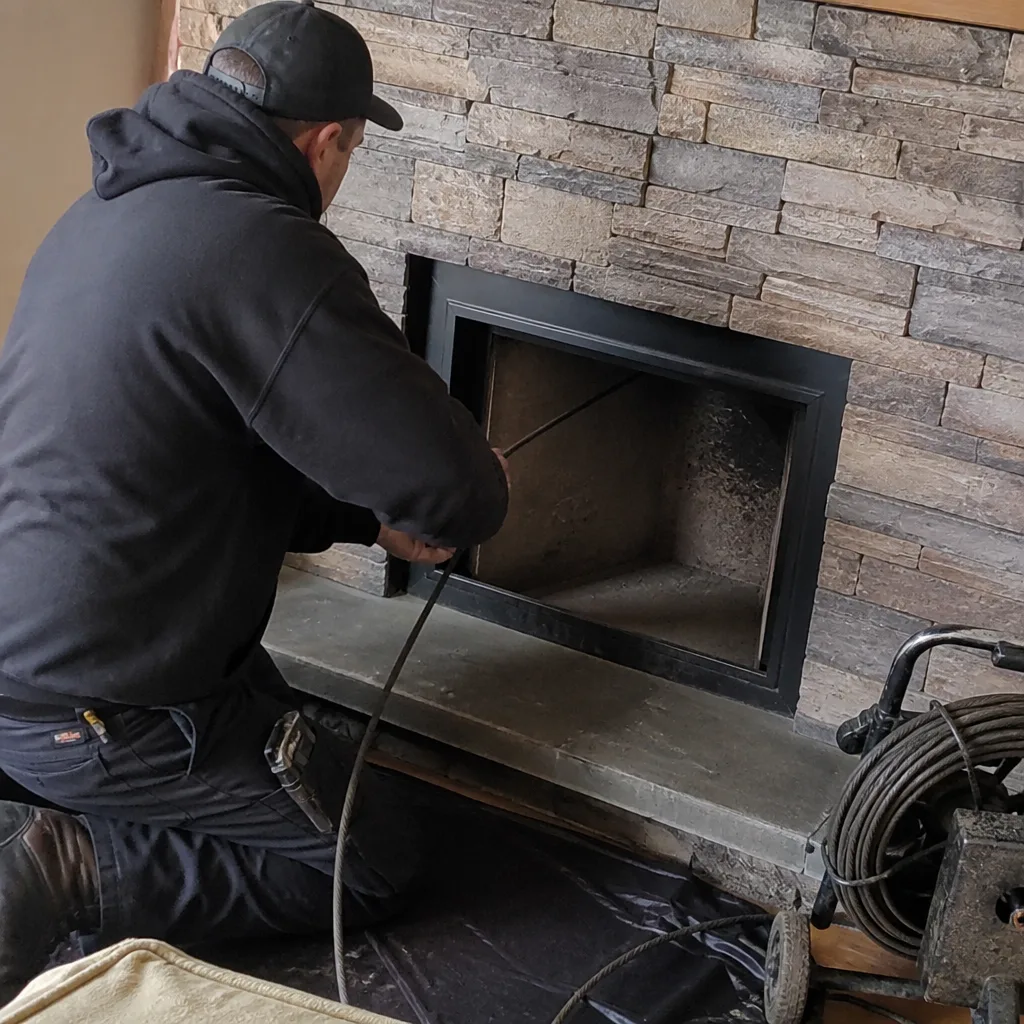 After
AfterMortar Repointing in Newark, NJ
Mortar repointing in Newark typically costs between $400 and $1,800 depending on how many linear feet of joint need to be cut out and filled, and the height and accessibility of the chimney. Most jobs on the single-family homes and rowhouses we see throughout Newark’s North Ward, Ironbound, and Forest Hill neighborhoods finish in a single day. If you’re seeing crumbling or missing mortar between chimney bricks, don’t wait – water gets into those gaps and the repair cost grows fast once freeze-thaw cycles start doing serious structural work.
Repointing (also called tuckpointing in some regions) is the process of removing deteriorated mortar from the joints between masonry units and packing in fresh mortar matched to the original mix. It’s one of the most cost-effective repairs we do as part of Chimney Repair in Newark – far less expensive than replacing spalled brick or rebuilding a crumbling crown. Corrine Halstead leads our Newark crews, and every repointing estimate comes in writing with a fixed scope before anyone picks up a cold chisel. That’s not a sales pitch; it’s how every job at Level Two Chimney Co. has worked since 2009.
Questions before you book? Call us at (862) 245-4309 – a live person picks up 24 hours a day, seven days a week, no voicemail.
When You Need Mortar Repointing
Mortar has a shorter service life than the brick it bonds. A chimney built in the 1940s or 1950s – common in Newark’s Vailsburg and Clinton Hill neighborhoods – may have original mortar that’s simply reached the end of its life. Here’s what to look for:
- Mortar is recessed more than a quarter-inch behind the brick face. When you can drag a key along the joint and feel it catch or crumble, the joint has worn past the point where surface sealing will help. The mortar needs to come out and be replaced.
- You can see daylight through joints, or chunks of mortar on the roof deck. Debris on the roof below the chimney is usually mortar that froze, cracked, and fell – Newark’s freeze-thaw cycle between November and March accelerates this faster than in warmer climates.
- Water stains on interior walls or ceiling near the fireplace. Once mortar joints open, rain tracks straight down the masonry and into the house. In Newark, annual precipitation averages around 47 inches, and a gap as narrow as a credit card is enough to let significant moisture in over a season.
- White staining (efflorescence) on the chimney exterior. Efflorescence is mineral salt deposited when water moves through masonry and evaporates on the surface. It’s a sign water is already traveling through the joint system – repointing stops the source.
- Brick faces starting to flake or pit (spalling). Spalling bricks usually follow failing mortar. Once water saturates the masonry and freezes, it expands and pushes the brick face off. Catching the mortar joints early keeps the bricks themselves intact and keeps your repair cost from doubling.
- A home inspection or Level 2 camera scan flagging joint deterioration. If a report calls out “open mortar joints” or “deteriorated pointing,” that language translates directly to: repoint now or plan for a structural repair later.
Our Mortar Repointing Process
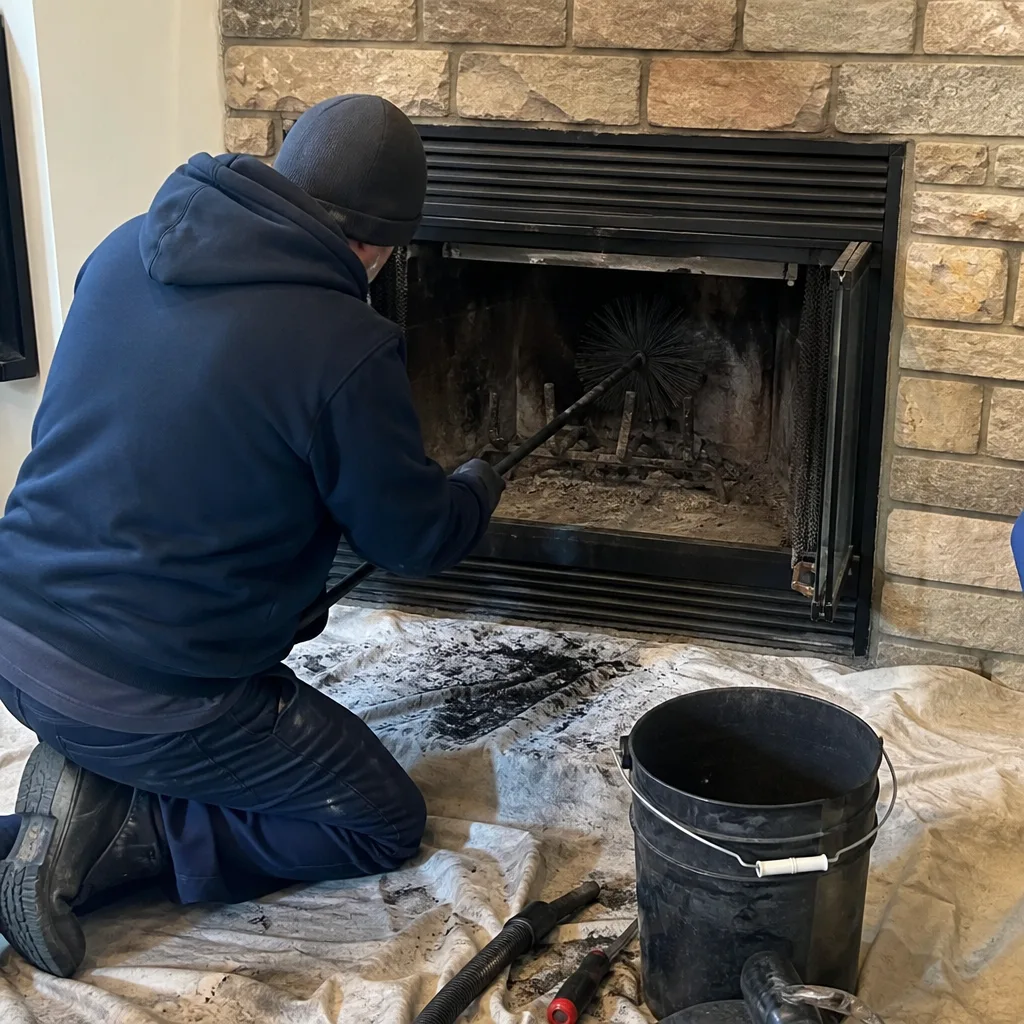
We use the same documented process on every job. Before a tool touches the chimney, you have a written price and written scope in hand. After the last joint is finished and tooled, you get a photo record. That sequence doesn’t change.
- NFPA 211 Level 2 inspection and joint assessment. We run a camera scan of the flue and do a close visual inspection of every exposed joint on the chimney exterior. We note joint depth, mortar type (hard Portland vs. softer lime-based), brick condition, and crown and cap integrity. This step produces the written scope – specific linear footage, specific areas, specific materials. You see exactly what you’re paying for before we start.
- Written price and scope delivered before work begins. Consistent with Haven Standard Clause 1, the price is fixed in writing. If we open a joint and find something unexpected – say, a structural crack behind the mortar face – we stop, document it with photos, and present a revised scope before continuing. No surprises on the invoice.
- Cutting out deteriorated mortar. We use angle grinders with masonry blades and hand chisels to remove mortar to a minimum depth of three-quarters of an inch, typically closer to an inch on older Newark chimneys where the original mix has gone soft all the way through. Depth matters: a shallow skim coat bonds poorly and fails in two to three seasons. This step is loud and dusty – we protect the surrounding roof surface and clean up before we leave.
- Mortar mix selection and batching. Matching the mortar to the existing masonry is critical. Hard Portland cement applied to a soft historic brick causes the brick face to spall because the mortar won’t flex with the masonry. For pre-1940s brick common in Newark’s older stock, we typically use a Type N or Type O mix. For newer construction, Type S is standard. We source materials through our supply network, which keeps cost predictable and lets us batch consistently across the job.
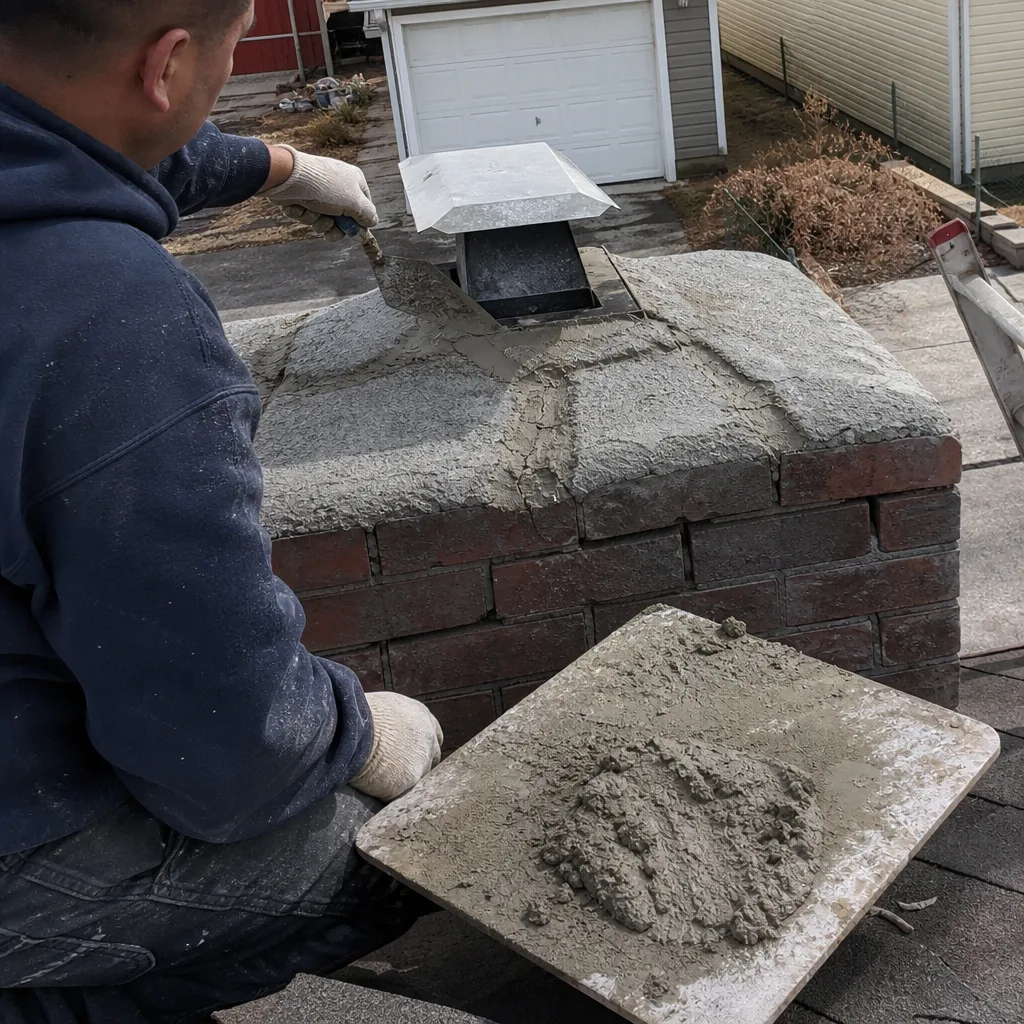
- Packing and tooling joints. Fresh mortar is packed in layers if the joint is deep, then finished flush and tooled to match the original profile – typically a concave or weathered joint on Newark rowhouses. Tooling compresses the surface, sheds water, and improves bond strength. We work in sections and keep the new mortar damp-cured if conditions are dry, since mortar cured too fast loses strength.
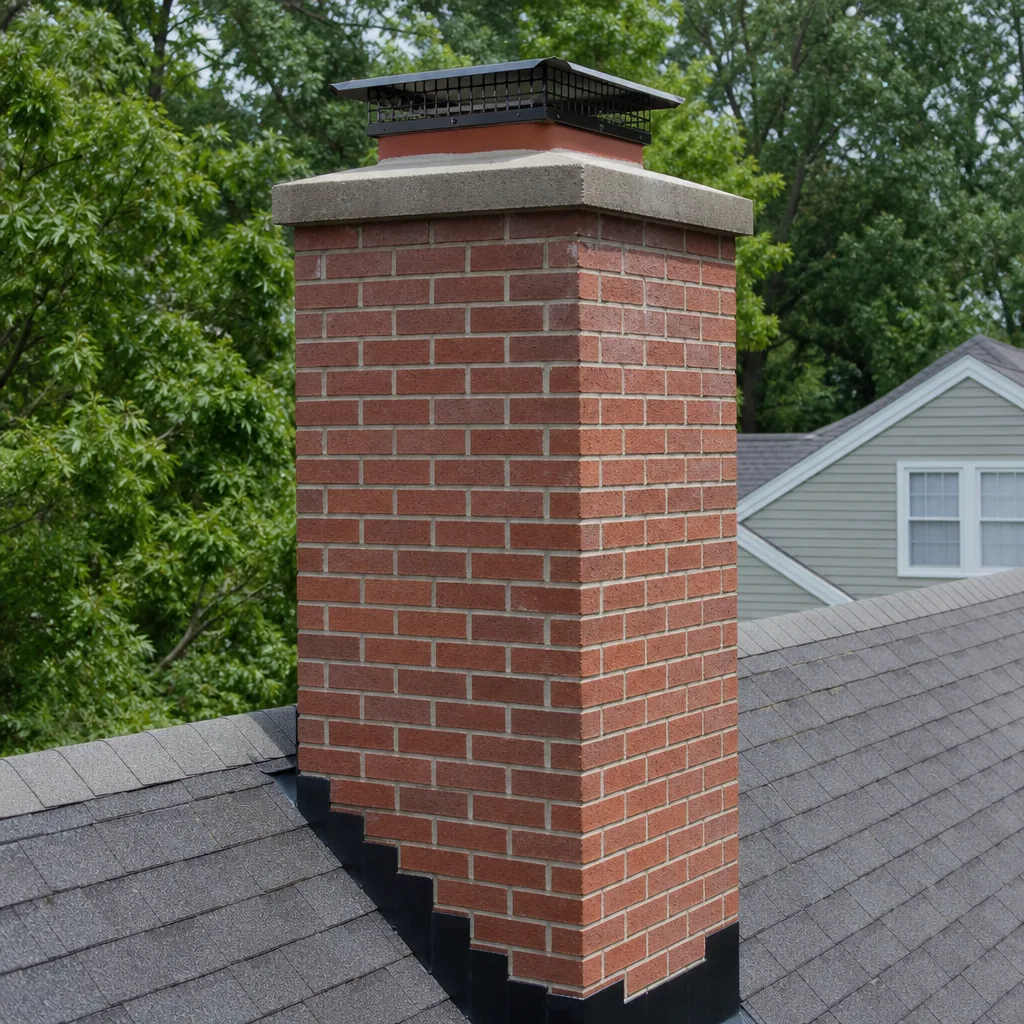
- Photo documentation and job record. When the work is complete, we photograph every repaired section and deliver a documented record under Haven Standard Clause 4. That record goes to you and stays in our file – useful when you sell the home or file an insurance claim, and it’s the same practice we’ve run on every job since 2009. Corrine Halstead signs off on the completed job record before it’s sent to you.
BeforeAfterMortar Repointing Pricing in Newark
Mortar repointing in Newark runs $400 to $1,800 for most residential chimneys. Here’s how that range breaks down:
| Scope | Typical Cost Range |
|---|---|
| Minor repointing – one or two sides, good access, single-story or low two-story | $400 – $650 |
| Moderate repointing – three or four sides, 20-40 linear feet of joint, typical Newark rowhouse | $650 – $1,100 |
| Extensive repointing – full chimney, height above 20 feet, scaffold or extended ladder setup required | $1,100 – $1,800 |
| Repointing combined with crown repair or cap replacement | $1,200 – $2,400 |
What moves the price:
- Height and access. A chimney on a three-story home in Forest Hill costs more to reach safely than one on a Cape Cod in Weequahic. Scaffold setup adds time and material cost.
- Extent of deterioration. If mortar joints are open deep enough that water has reached the brick interior, we may find bricks that need replacing before repointing can proceed.
- Mortar type matching. Historic lime-based mortars take more time to batch correctly. Getting the mix wrong creates a new problem, so we don’t cut corners here.
- Combined repairs. If the crown is also cracked or the cap is missing, doing both at one visit costs less overall than two separate mobilizations.
The estimate is free, it’s written, and it’s fixed before anyone starts. If you have a written quote from another contractor, bring it to us – we offer a free second opinion on any written estimate, and we’ll tell you plainly whether the scope and price make sense.
Call (862) 245-4309 to schedule your free estimate.
Why Newark Chimneys Need Repointing More Often Than You’d Expect
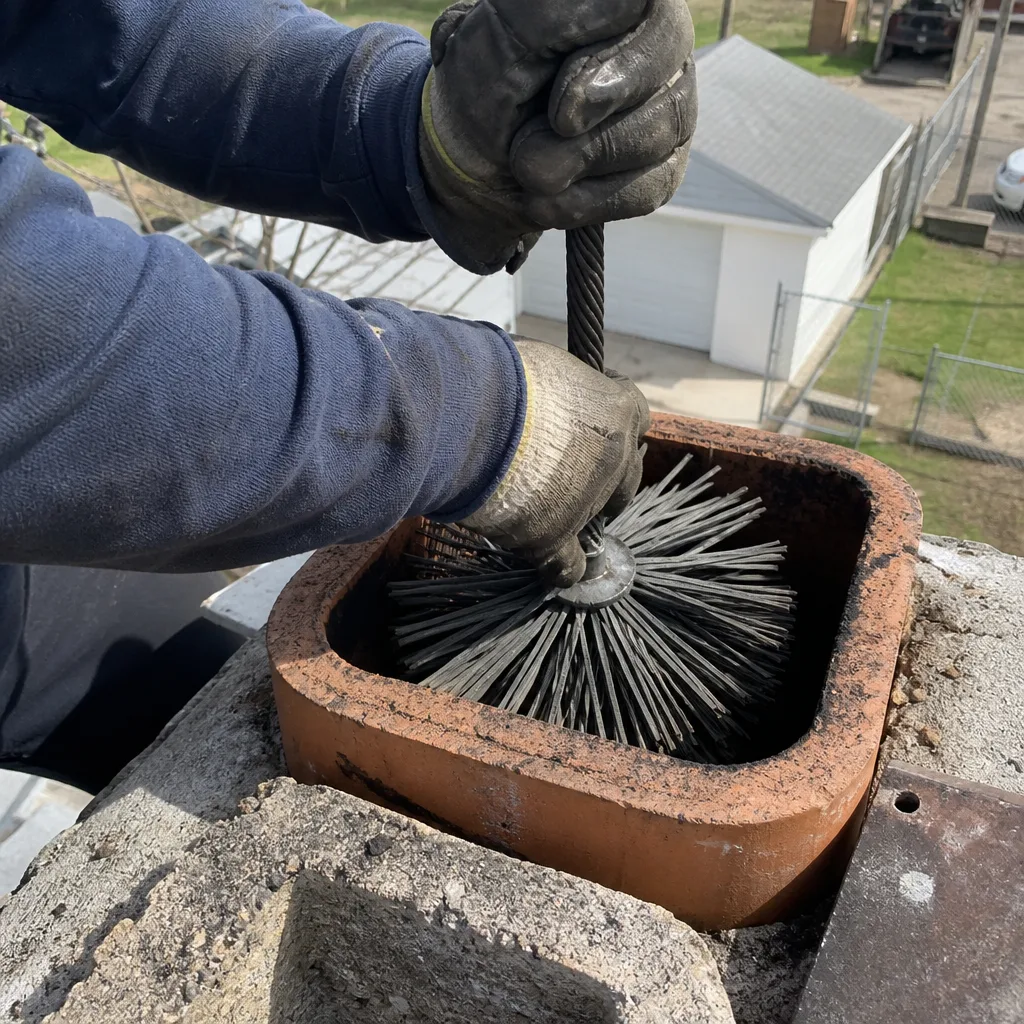
Newark’s climate is harder on mortar than most homeowners realize. The city averages around 25 freeze-thaw cycles per year between November and March – each one expands water that has settled into micro-cracks, widens the opening slightly, and leaves the joint a little more vulnerable to the next cycle. Over ten or fifteen years on a chimney that last saw a tuckpointing crew in the 1990s, that adds up.
The housing stock compounds the issue. Many of Newark’s masonry chimneys in the Ironbound, North Ward, and Clinton Hill neighborhoods were built before 1960 using softer lime-based mortars designed to flex with the masonry. When a previous contractor replaced that mortar with hard Portland cement – a common shortcut that was standard practice through the 1980s and into the 1990s – they created a joint harder than the brick itself. The brick spalls before the mortar does, and by the time a homeowner notices the brick faces flaking, the structural damage is already underway. We’ve seen this pattern on dozens of Newark chimneys, particularly on the double-wythe brick stacks common to the three-family homes along the city’s residential corridors.
The lesson: mortar type selection matters as much as the labor. A $600 repointing job with the wrong mix becomes a $2,000 brick replacement in eight years.
What You Walk Away With
After every mortar repointing job at Level Two Chimney Co. in Newark, you receive:
- A written scope and written price delivered before work began (Haven Standard Clause 1)
- A documented photo record of every repaired section, showing before and after conditions (Haven Standard Clause 4)
- A written warranty on materials and workmanship, backed by the 365-Day Done Right Promise – if it’s not right, we make it right
- Camera inspection footage from the NFPA 211 Level 2 scan conducted at the start of the visit, so you have a baseline record of your flue liner condition
That documentation is yours to keep. It’s useful for disclosure when you sell, for insurance claims if water damage has already occurred, and as a baseline when you schedule the next inspection.
FAQs – Mortar Repointing
How much does mortar repointing cost in Newark, NJ?
Mortar repointing in Newark typically costs between $400 and $1,800 for a residential chimney, depending on the number of sides that need work, the height of the chimney, and whether any bricks need replacing before the joints can be filled. A modest job on a single-story or low two-story home runs $400 to $650; a full repoint on a taller chimney or one with extensive joint deterioration is more likely to land in the $1,100 to $1,800 range. Call (862) 245-4309 for a free written estimate – we give you a fixed price before anyone starts work.
Is repointing the same as tuckpointing?
Repointing and tuckpointing describe the same basic repair in most contexts: removing deteriorated mortar from masonry joints and replacing it with fresh mortar. In traditional historic masonry, “tuckpointing” referred to a specific decorative technique using two colors of mortar to create the appearance of fine joints. In everyday use – and in how most Newark contractors use the term – the two words are interchangeable. What matters more than the label is the depth of the cut and the mortar mix used; both determine whether the repair lasts ten years or twenty.
How long does a repointing job last?
Properly done repointing on a Newark chimney should last 20 to 30 years with no maintenance beyond keeping the cap in good condition and the crown sealed. The main factors that shorten that lifespan are: using mortar that’s harder than the brick, insufficient joint depth at the time of repair, and leaving a cracked crown untreated so water continues to saturate the masonry from the top. We address crown condition as part of every inspection before repointing begins, so we’re not fixing one problem while a second one undoes the work.
Can you repoint a chimney in winter in Newark?
Mortar repointing should not be done when temperatures are at or below 40 degrees Fahrenheit – fresh mortar needs time to cure before it freezes, and if it freezes during cure, it loses bond strength and the repair fails early. In Newark, that means the safe window for exterior repointing is roughly April through October, with some flexibility in mild stretches of November and March. If your chimney needs repointing and winter has already started, the right move is to get a written scope and price now, schedule the work for spring, and keep water out of the open joints in the meantime with a temporary application of a breathable masonry sealant. We’ll tell you honestly what we can and can’t do safely given the date you’re calling.
Key Takeaways
- Mortar repointing in Newark costs $400 to $1,800 for most residential chimneys – price depends on scope, height, and mortar type.
- Open mortar joints let water in; freeze-thaw cycles do the structural damage. Newark averages roughly 25 freeze-thaw cycles per year.
- Matching mortar hardness to the existing brick matters – wrong mix, and the brick spalls before the mortar does.
- Every job includes a written price before work starts, a documented photo record when it’s done, and the 365-Day Done Right Promise.
- Repointing is part of a broader Chimney Repair in Newark scope – crown, cap, and liner condition all affect how long the repointing holds.
- Free second opinion on any written estimate – bring us the competitor’s quote.
Schedule Your Free Mortar Repointing Estimate in Newark
If you’re seeing crumbling joints, white staining on the brick, or water showing up inside near the fireplace, the right next step is a written assessment – not a guess. We’ll run a camera scan, document what we find, give you a fixed price, and tell you plainly what needs to happen and in what order. No pressure, no vague estimates, no invoice surprises.
Call (862) 245-4309 now. A live person answers around the clock. We serve Newark and the surrounding area, and we can typically schedule an inspection within a few days. Corrine Halstead and the Level Two Chimney Co. team are ready to give you a documented picture of exactly where your chimney stands – and exactly what it will cost to fix it.
Written by Corrine Halstead, Owner at Level Two Chimney Newark, serving Newark.