
Last updated September 20, 2026
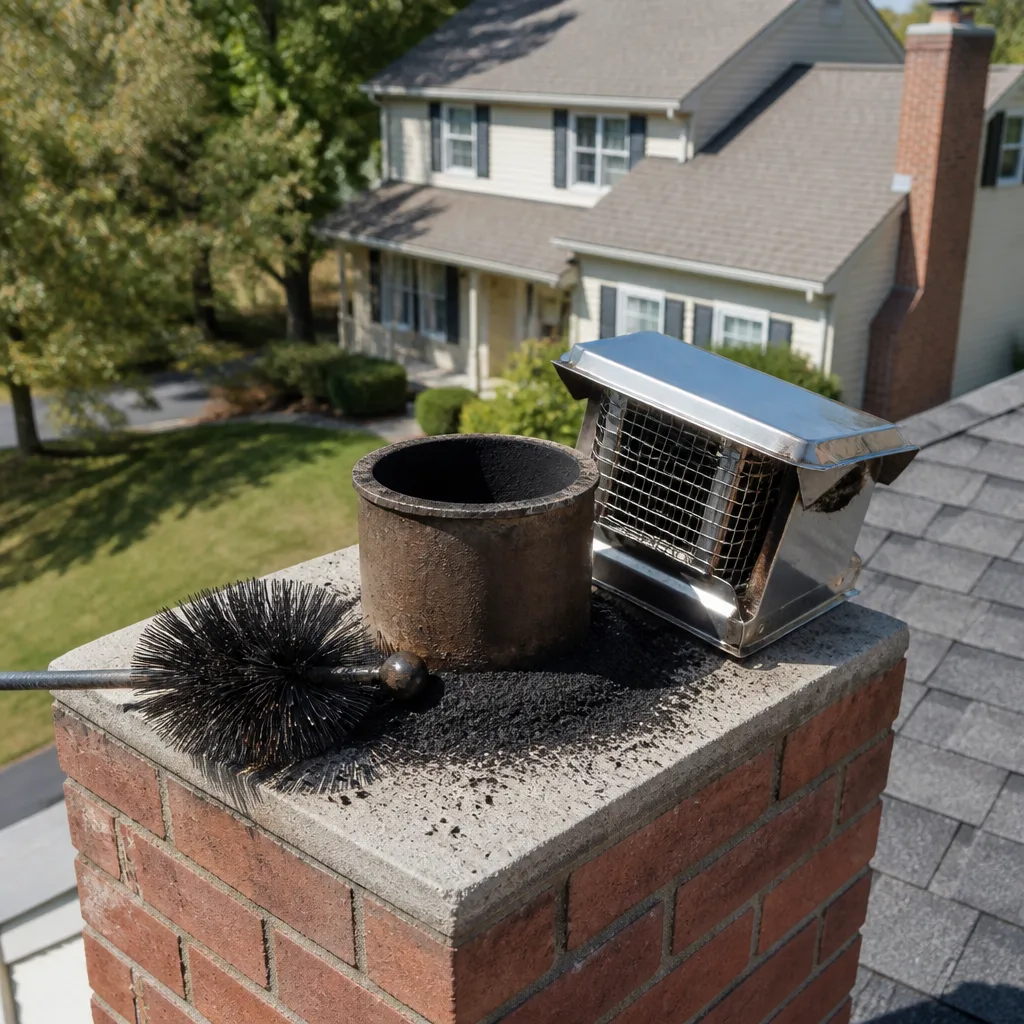
Level 1 sweep and inspection to the NFPA 211 annual standard - flue, crown, cap, and flashing checked and photographed
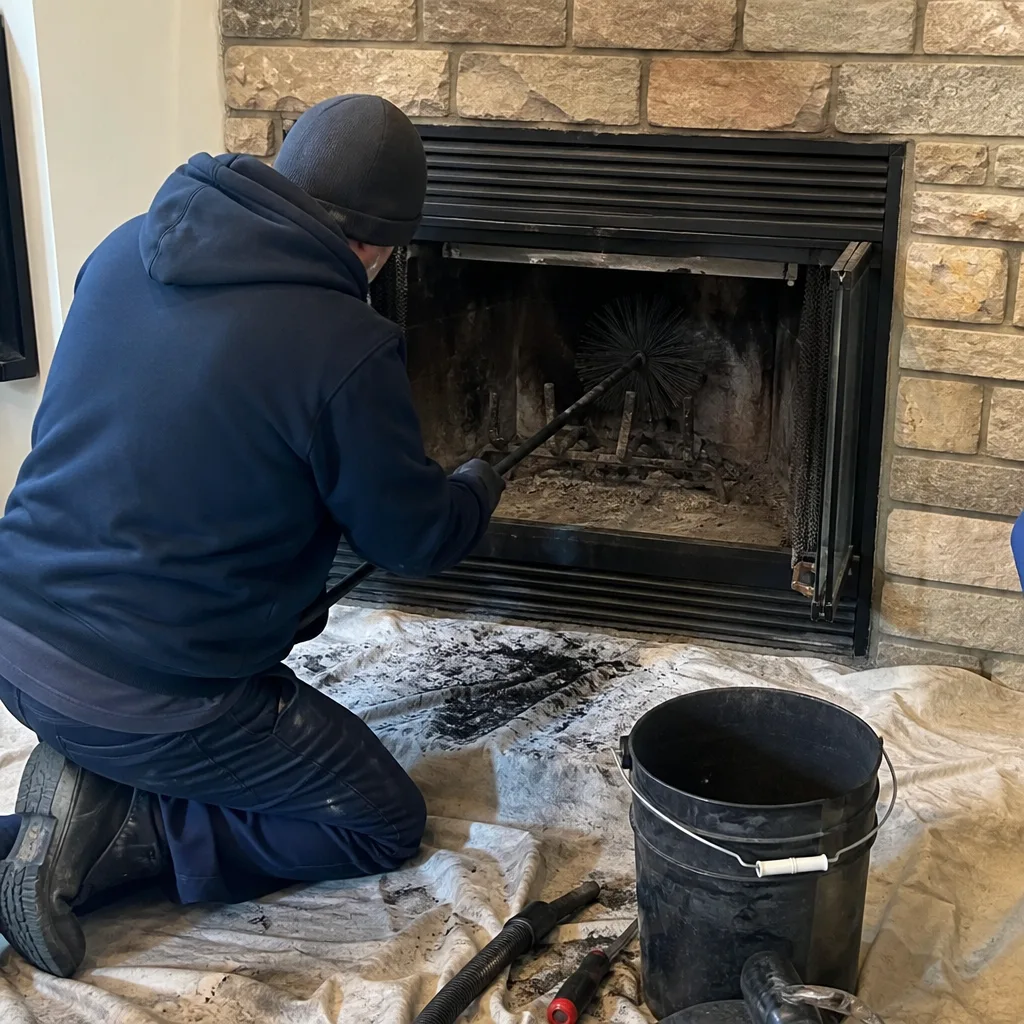
Chimney sweep logs do not sweep chimneys. They loosen some creosote - which then falls where a brush and vacuum still have to collect it.
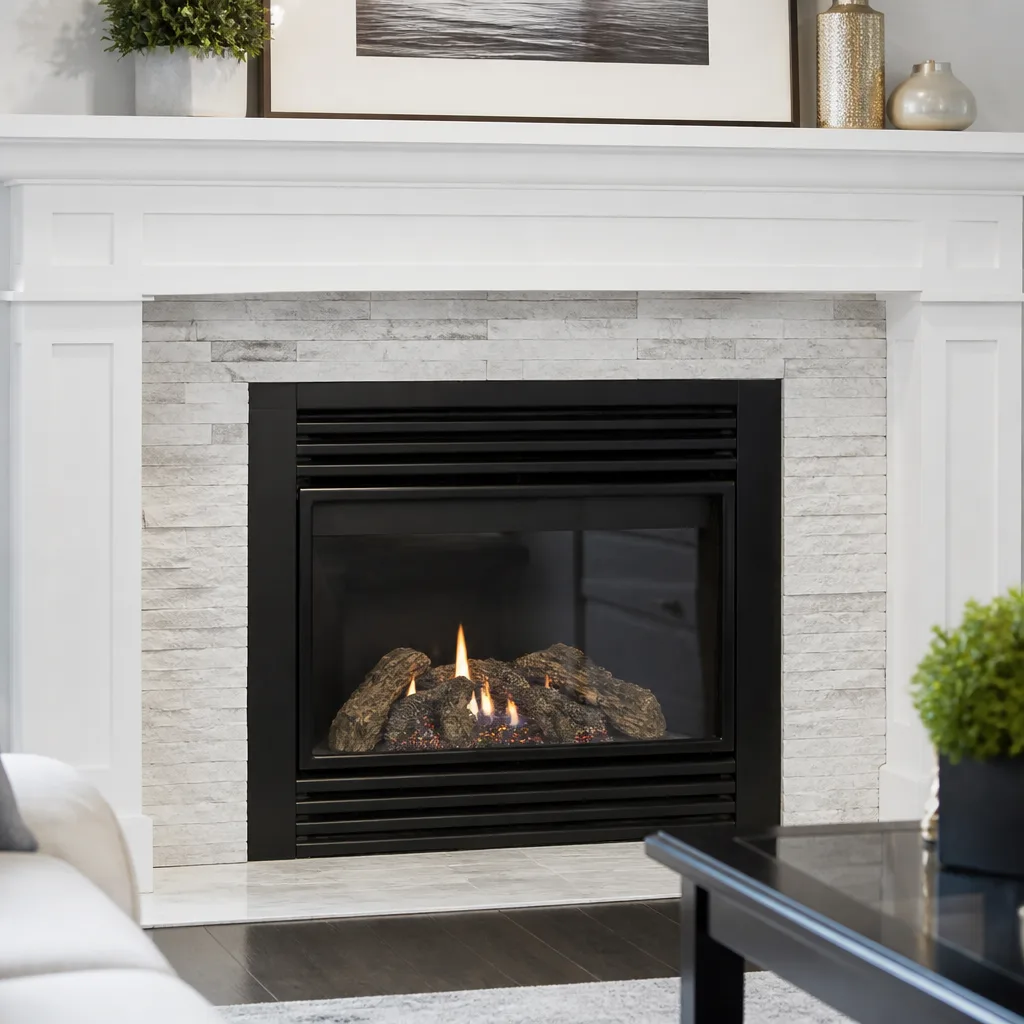
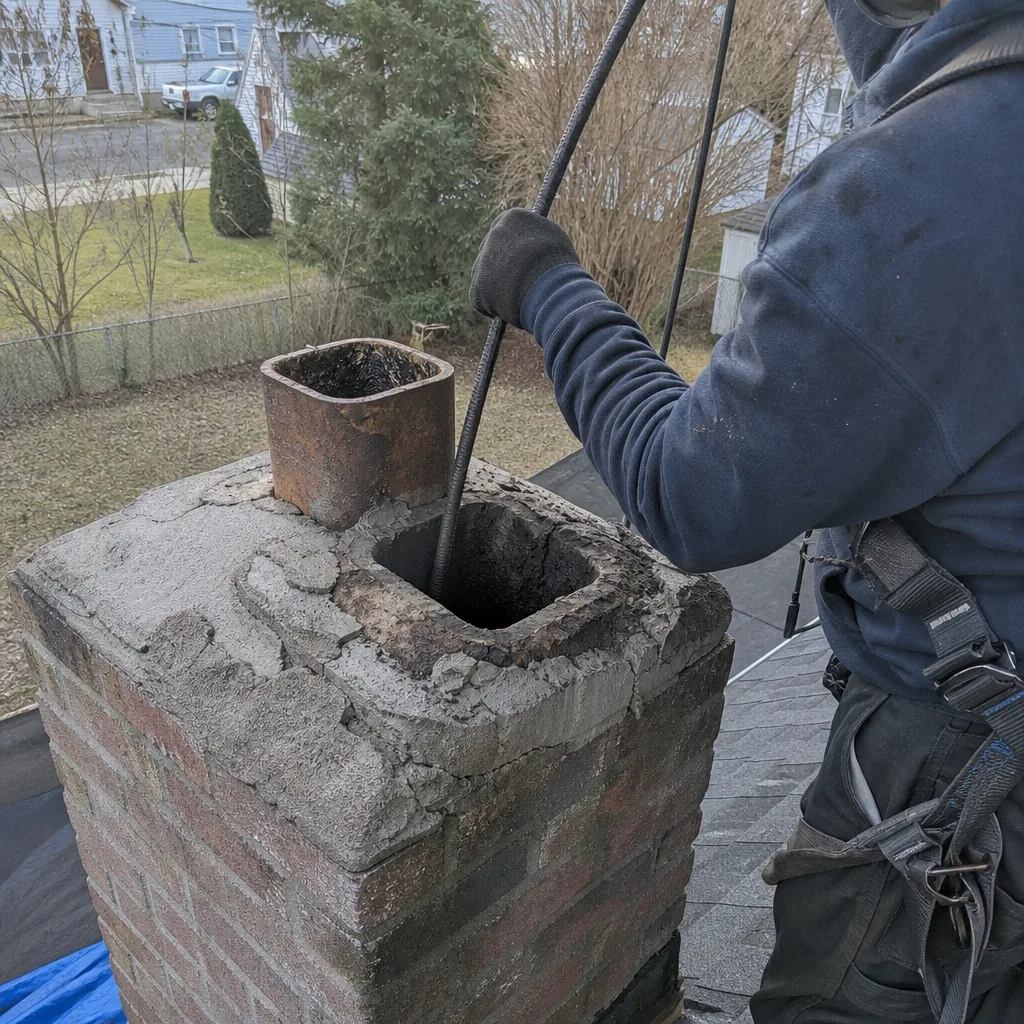 Before
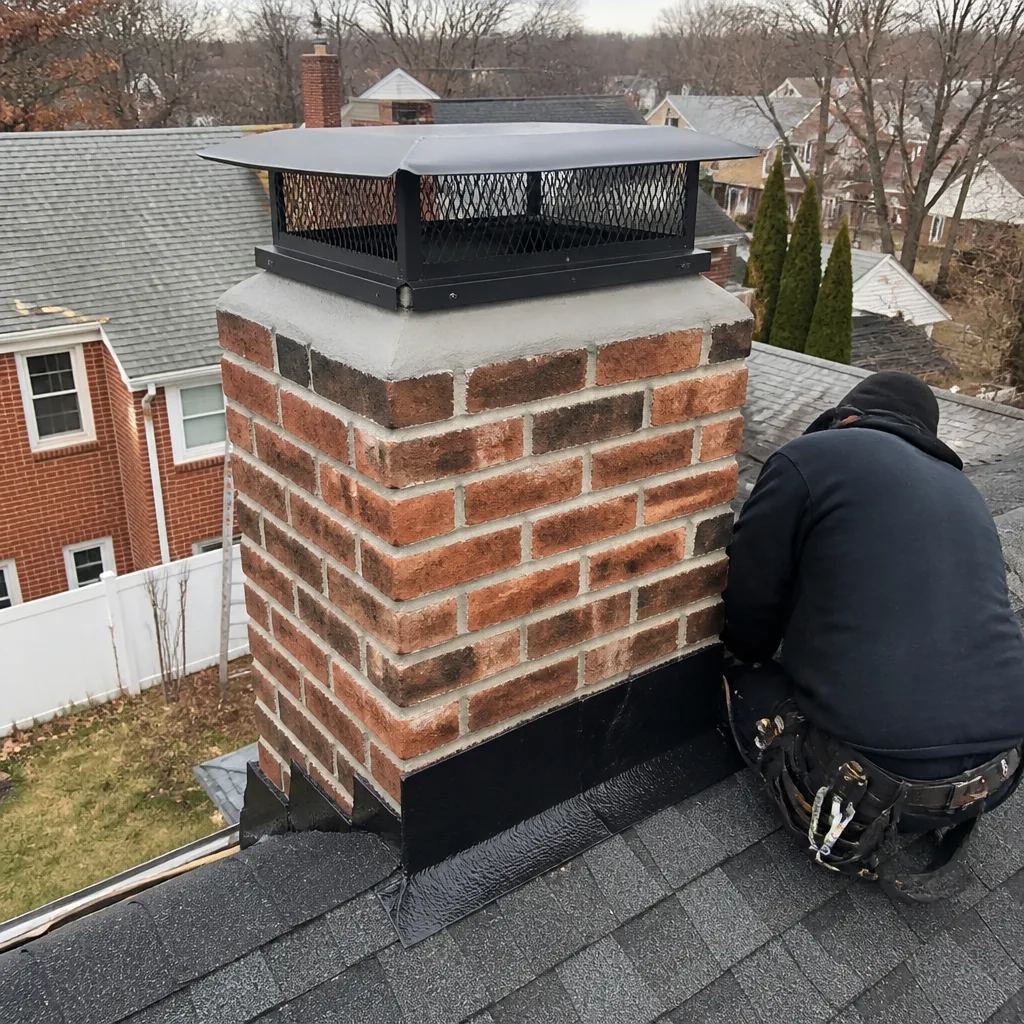 After
After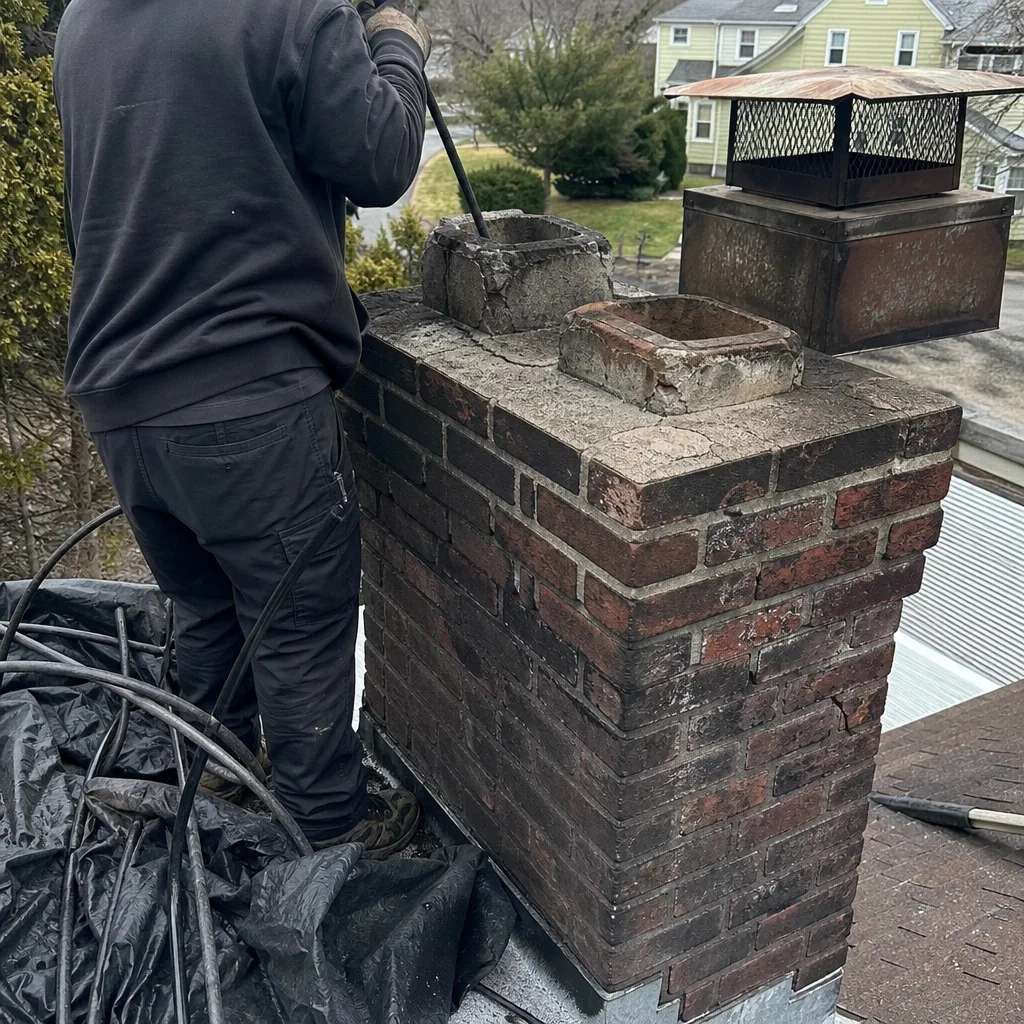 Before
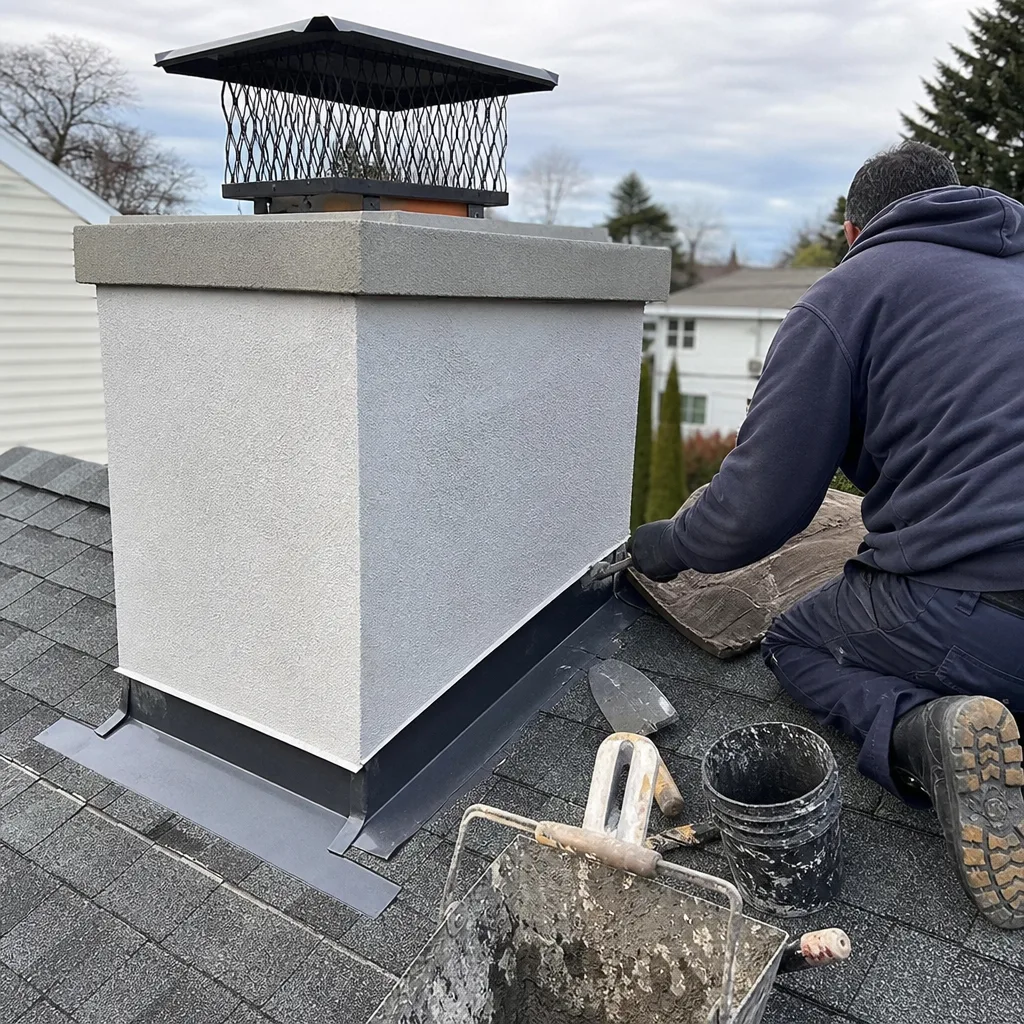 After
After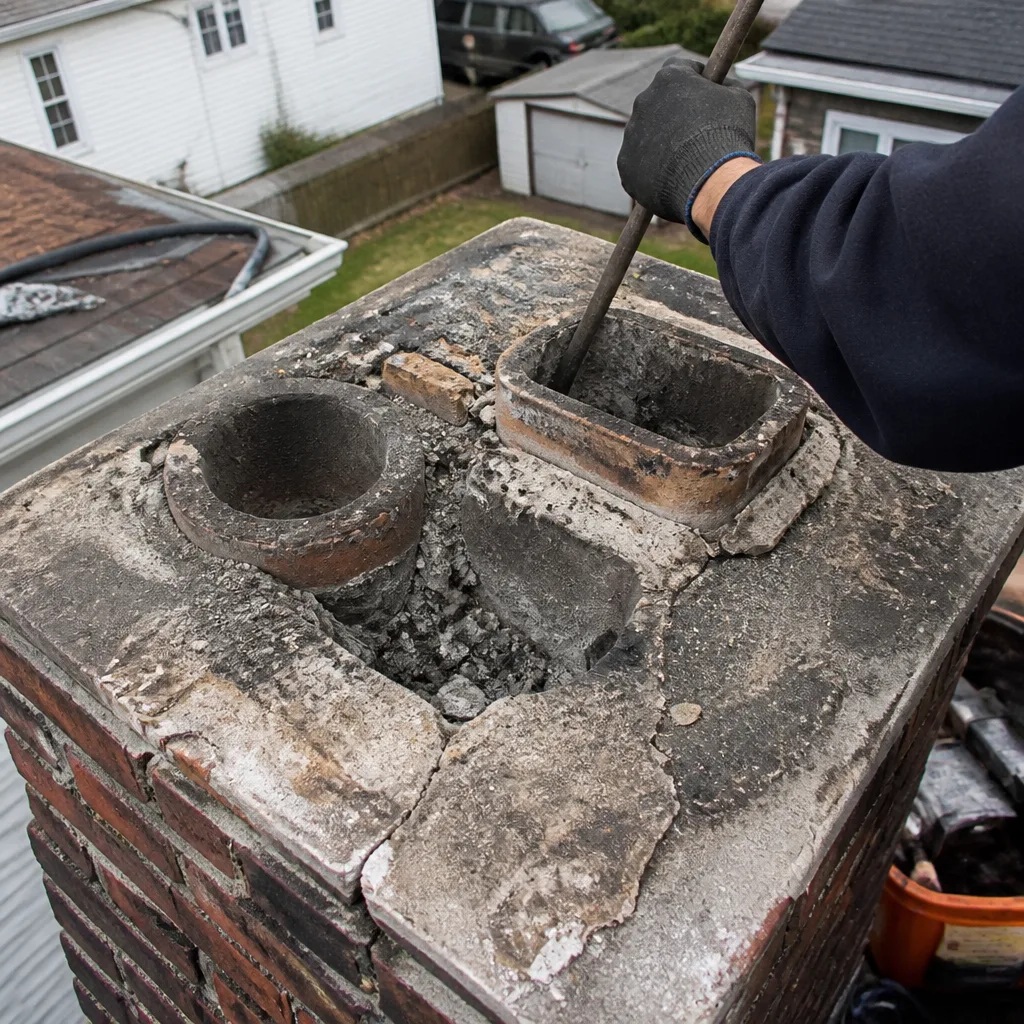 Before
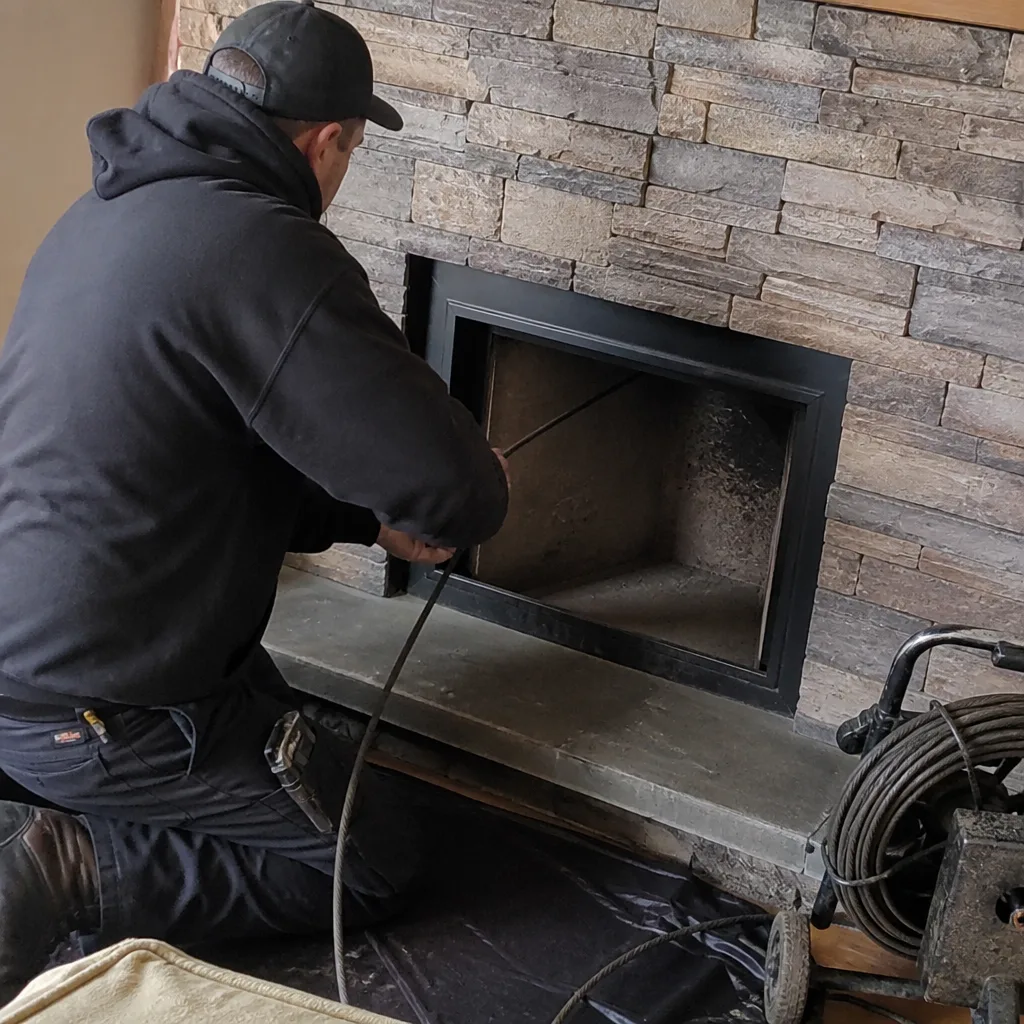 After
AfterHow to Hire a Chimney Cleaning Contractor in Newark: A Step-by-Step Guide
Here’s a number that should stop you cold: fewer than one in four chimney sweeps in New Jersey use a camera during a routine cleaning, even though the National Fire Protection Association has recommended camera-scan inspection as the baseline for decades. That means the person you hire may be working blind, on the one system in your home that can burn it down without visible warning. This guide walks through exactly how to vet, question, and hire a chimney cleaning contractor in Newark, with the questions that separate a documented professional from a guy with brushes and a truck. For more guides & resources on keeping your home safe, explore our blog.
Quick Answer
To hire a chimney cleaning contractor in Newark, you should call at least three companies, ask whether they use a camera during every cleaning, require a written price before anyone steps on your roof, verify their New Jersey Home Improvement Contractor registration and CSIA certification in public databases, and confirm the crew is insured for chimney work specifically. If a company cannot answer any of those five questions with a straight yes within thirty seconds, cross them off the list.
Table of Contents
- The Five Questions to Ask Before You Schedule Anything
- How to Verify CSIA Certification and NJ Contractor Registration in Under Ten Minutes
- What a Legitimate Written Estimate Must Include
- Red Flags Specific to Newark: Door-to-Door Coupons and Free Inspection Traps
- What a Chimney Cleaning Costs in Newark, Right Now
- What a CSIA Certification Actually Tells You, and What It Doesn’t
- Documentation After the Job: What to Demand for Insurance Protection
- Common Mistakes to Avoid
- When to Call a Professional
- Frequently Asked Questions
- The Bottom Line
BeforeAfterThe Five Questions to Ask Before You Schedule Anything
Here’s the thing most Newark homeowners get wrong about hiring a chimney sweep: they ask about price first, scheduling second, and everything else never. The five questions below are the ones that reveal whether a company documents what they find or asks you to take their word for it. Ask all five. A vague answer to any one of them is a signal to keep dialing.
- “Do you put a camera down the flue on every cleaning, or is that extra?” This is the single most revealing question. A camera-scan inspection tells you whether the flue liner is cracked, whether there’s a bird nest or debris dam above the firebox, and whether creosote has built up in places a brush can’t reach. If the answer is “we can do that for an extra fee,” that’s a red flag. The camera shouldn’t be an upsell. It should be how the job is done. At Level Two Chimney Newark, every cleaning since 2009 has included a camera-scan inspection under Clause 4 of the Haven Standard, the same standard that made documented photo records mandatory before most insurers even asked for them.
- “Will I get a written price before anyone starts work?” Not a verbal quote. Not a rough estimate over the phone. A written price with a written scope of work, delivered before boots hit the roof. If the company says anything that sounds like “we’ll see what we find and go from there,” you’ve just learned how they handle money: after the fact, not before. That’s not a quote. That’s an open tab.
- “Who exactly is coming to my house, and can I see their license number before they arrive?” A real company has no problem telling you the technician’s name, their CSIA credential number, and their NJ Home Improvement Contractor registration number before the appointment. If you get a shrug or a “we’ll have someone in your area,” that’s a rotating cast of subcontractors. You want to know who is on your roof.
- “Do you carry liability insurance that covers chimney work specifically?” General landscaping insurance is not chimney insurance. Ask for the declarations page. If they hesitate, that’s your answer. A dropped brush, a cracked crown, a roof tile gone wrong: chimney work happens above your head, and the coverage needs to be for chimney work.
- “What do I get after the job is done?” The answer should include at least three items: a written receipt, a document noting what was found and what was done, and photographic evidence. If the answer is “you get a clean chimney,” keep looking. A clean chimney with no record is a clean chimney you can’t prove to an insurer after a chimney fire. That’s the entire reason Clause 4 of the Haven Standard requires a photo record on every visit.
Ask these five questions to three companies in one afternoon. You’ll know within the first minute of each call whether you’re talking to a sweeping company or a sales organization that happens to own brushes.
How to Verify CSIA Certification and NJ Contractor Registration in Under Ten Minutes
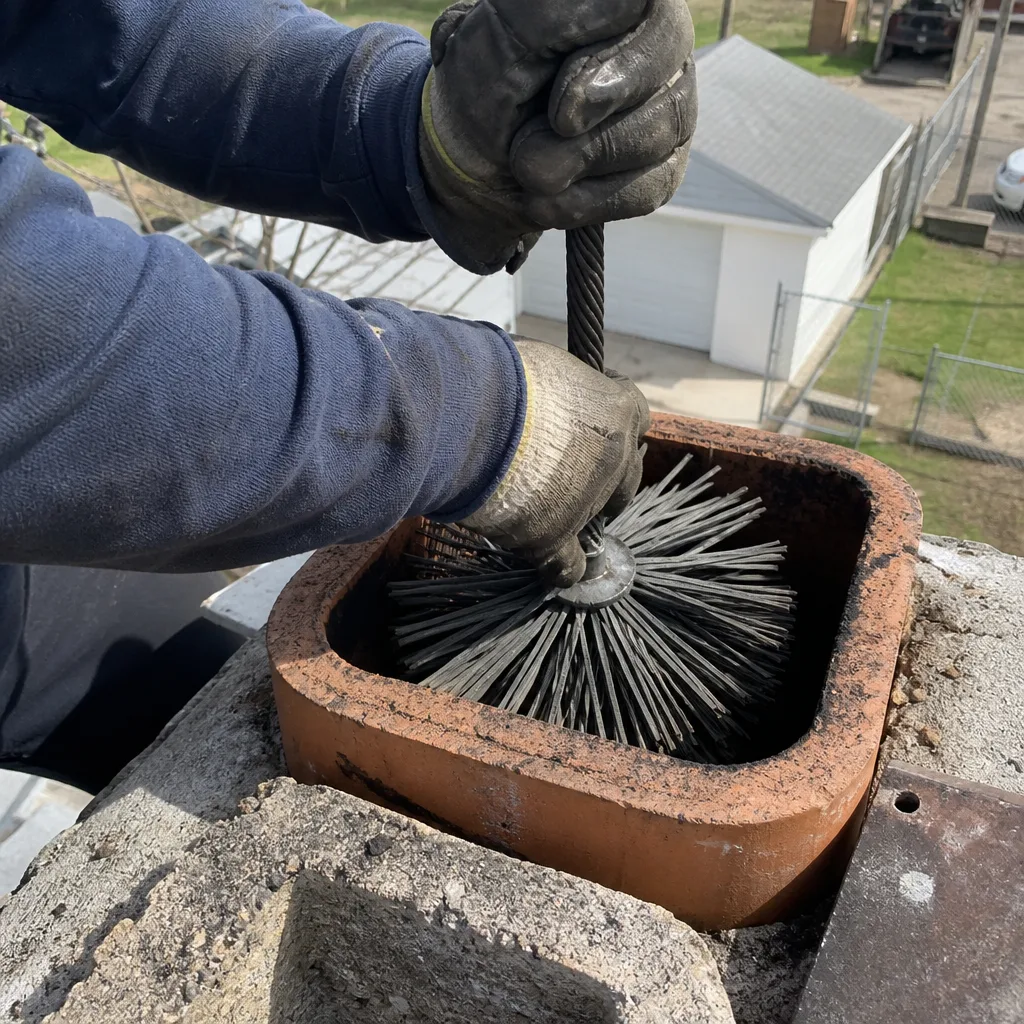
A “certified chimney sweep” credential tells you someone passed a written test. That’s genuinely useful to know, and it is also nowhere near enough on its own. The Chimney Safety Institute of America exam covers code knowledge, creosote chemistry, and inspection procedures. What it does not test: whether the sweep uses a camera, whether they document what they find, whether they hand you a written price, or whether they carry adequate liability insurance. Any company in Newark can print “certified” on their van. Here’s how to check the claim in under ten minutes using public databases.
Step 1: Check the CSIA Database (two minutes)
The CSIA maintains a searchable directory of certified sweeps at csia.org. Type in the company name or the individual’s name. You should see a credential number and an expiration date. A CSIA certification lapses every three years unless the sweep completes continuing education. If the credential isn’t current, it’s not a credential.
Step 2: Check New Jersey’s Home Improvement Contractor Registry (four minutes)
New Jersey requires any contractor performing home improvements, including chimney work, to register with the Division of Consumer Affairs. For full details on permits and legal requirements, read Chimney Cleaning Permits, Codes & Inspections in NJ: What You Need to Know. The registration number starts with “13VH” followed by digits. You can search the registry online through the New Jersey Division of Consumer Affairs website. If the company can’t produce a 13VH number, they are not legally registered to work on your Newark home. That’s not a negotiation point. That’s state law.
Step 3: Ask for a Certificate of Insurance (two minutes, on the phone)
Ask the company to email you their Certificate of Insurance, also called a COI. It should list general liability coverage and name the policy limits. The COI comes directly from their insurance carrier, not from the company’s own files. Look for at least $1 million in general liability. If the company says they will “send it later” and never does, that’s the answer.
Step 4: Check Newark and Essex County records for complaints (two minutes)
Search the company name on the New Jersey Division of Consumer Affairs complaint portal. Also search the Better Business Bureau and read the three-star reviews on Google, which tend to be more honest than the five-star ones and less theatrical than the one-star ones. Look for repeated patterns: no-shows, price changes after the job started, high-pressure upsell complaints.
Ten minutes. Four databases. You now know more about the company than 90% of their previous customers did.
What a Legitimate Written Estimate Must Include
A dollar figure alone is not an estimate. It’s a number. A written estimate that protects you in Newark, where winters are wet and chimneys take decades of freeze-thaw abuse, includes four specific components. If any one of these is missing, send it back.
1. Scope of work, described in plain language. The estimate should say exactly what will be done: chimney cleaning or sweep, camera-scan inspection, cap inspection, crown inspection, smoke chamber inspection. If the company offers Chimney Cleaning & Sweep in Newark, the scope should name it explicitly, not use the word “service” as a catch-all. Ambiguity here is how a $229 cleaning becomes a $2,900 “repair” once the tech is on the roof.
2. Liner type and access method. If any repair or relining work is being quoted, the estimate must specify the liner material by name (DuraFlex, HeatShield, Olympia Chimney, or another manufacturer), the size and type of liner being installed, and how the crew will access the chimney: roof, ladder, scaffolding, or interior access. “New liner” is not a scope. “DuraFlex 316L stainless steel flex liner, 6-inch, installed from the roof with crown seal” is a scope. Names matter because liner quality affects price, and material manufacturers like DuraFlex and HeatShield produce products at different price points for different flue conditions.
3. Access method and property protection. The estimate should state how the crew will enter and exit your Newark home, what floor protection will be laid down, and what happens to the debris. Will the soot be vacuumed out with a HEPA system, or are they brushing it into your living room? If the estimate doesn’t answer this, assume the answer is the one you don’t want.
4. Warranty terms, in writing. The estimate should include a specific warranty statement: what’s covered, for how long, and what happens if the work fails. “We stand behind our work” is not a warranty. A warranty is a written promise with a duration and a remedy. The Haven Standard’s Clause 1 requires a written price, written scope, and written warranty before anyone starts, and the 365-Day Done Right Promise is backed by exactly that kind of specificity. If a company won’t put the warranty in writing, you don’t have a warranty.
And one more thing: the estimate should be free. In Newark, a legitimate chimney company gives you a written price before any work starts, with no fee for the quote itself. If they charge to look at the chimney before telling you what it costs to clean, that’s a reveal in itself.
Red Flags Specific to Newark: Door-to-Door Coupons and Free Inspection Traps
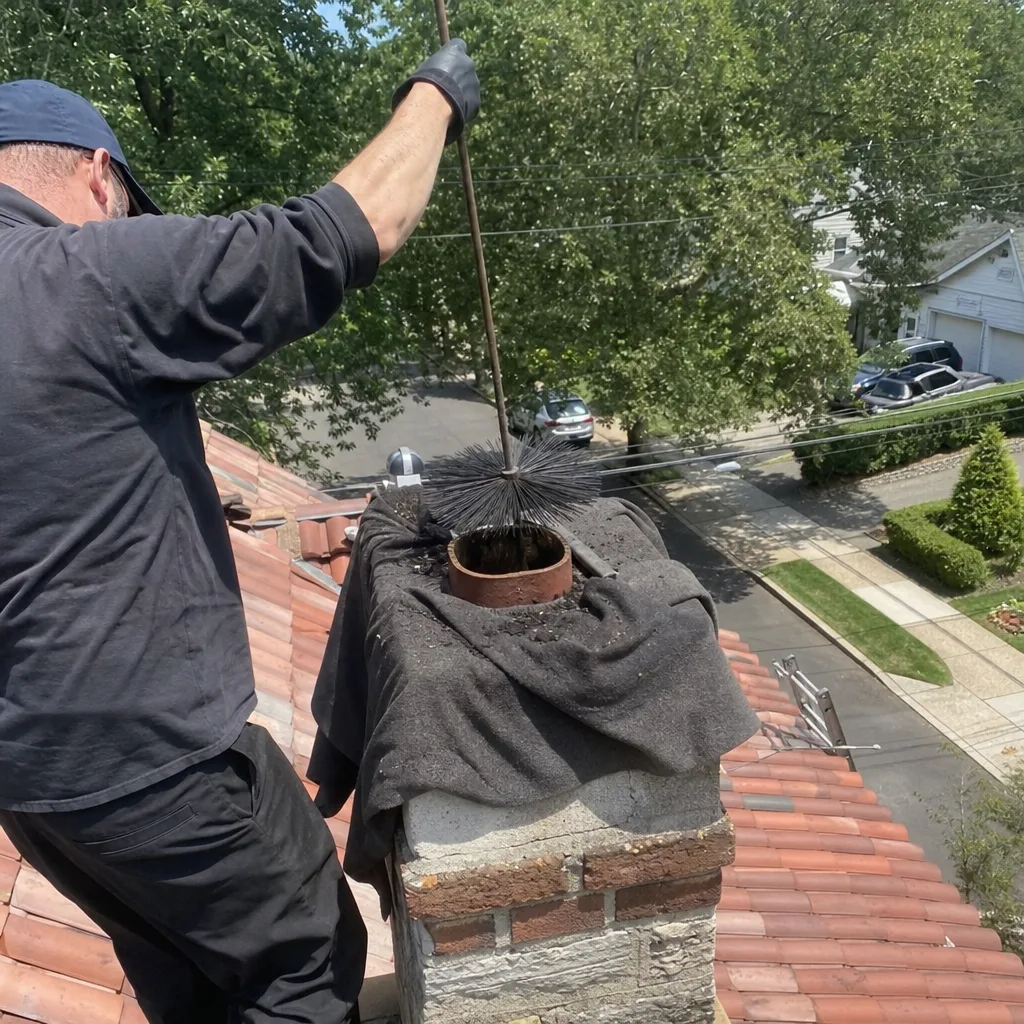
Newark’s housing stock is old. Real old. A lot of the brick rowhouses in the Ironbound and Forest Hill were built between 1890 and 1940, and their chimneys have decades of creosote, spalling brick (that’s brick face flaking off due to water freezing inside the masonry), and cracked crowns. That makes Newark a target-rich environment for two specific chimney scams that thrive in older housing markets.
Red flag one: the door-to-door coupon sweep. A crew shows up at your door, often working the neighborhood in the spring, offering a $49 or $79 chimney cleaning “for today only.” Here’s what happens next: the “sweep” runs a brush up and down, then comes down from the roof with a somber expression and a list of problems that need $3,000 to $6,000 worth of “emergency” repairs. The problems may be real, and they may be fabricated. You can’t tell because there’s no camera footage. Door-to-door chimney sweeps are the chimney equivalent of the roofing scammers who work Newark after a hailstorm. Ask yourself: when was the last time you hired a contractor who knocked on your door? Right.
Red flag two: the “free inspection” that becomes an on-site pressure sale. The ad says free inspection. The inspection takes ten minutes. Then the tech sits down at your kitchen table, no camera footage in hand, and starts quoting liner replacement with a story about how your family is one fire away from disaster. Here’s the tell: a real inspection produces evidence. A camera-scan inspection produces photos you can see, right there, on the spot. If the tech is asking you to trust their word instead of showing you the inside of your flue, you aren’t being inspected. You’re being sold. Chimney Repair in Newark when legitimately needed is a documented finding, not a story told over coffee. In our experience at Level Two Chimney Newark, homeowners who call us after one of these visits end up learning that the “emergency” liner was either not needed or, in about a third of cases, the flue was actually fine and the real issue was a cracked crown, a $400 repair, not a $4,000 liner job.
Red flag three: any pressure that time-boxes your decision. “That price is good if you sign today.” A chimney is a masonry structure. It does not expire. Any contractor who needs your signature before you can call someone else is telling you what they think of their own pricing: it won’t survive comparison.
What a Chimney Cleaning Costs in Newark, Right Now
Here’s the direct answer, because the price on the page is the point: a standard chimney cleaning and camera-scan inspection in Newark currently runs between $189 and $329, with most single-flue homes landing right in the middle, around $240 to $275. For a deeper dive into pricing factors, see our Chimney Cleaning Cost Breakdown: The Newark Homeowner’s Reference for 2026. A two-flue home, common in the larger Victorians in Forest Hill and Weequahic, runs $320 to $450. Prices climb from there when the chimney hasn’t been cleaned in more than five years, when there’s a confirmed animal nest, or when the flue liner is clay and has started to spall.
Here’s what shapes the price in Newark specifically, and why your quote from a neighbor in Montclair or Maplewood won’t match:
- Age of the house. Newark’s stock of pre-1940 masonry means older flue liners, more creosote history, longer inspection time. A rowhouse in the Ironbound with a century-old brick chimney will take longer to properly clean and document than a 1990s colonial in the outer wards.
- Flue type and liner condition. A clean stainless liner sweeps quickly. A clay liner with decades of hard-baked creosote (Class III creosote, the glazed, glass-like kind that doesn’t brush off and requires chemical treatment) takes longer and costs more. The camera inspection tells you which one you have before the brush touches anything.
- Roof access. Two-story rowhouses with a flat or low-pitch roof are faster to access than a steep slate roof on a Forest Hill Victorian. Scaffolding, when needed, adds to the tab.
- Animal presence. Newark has plenty of squirrels, raccoons, and chimney swifts. If there’s a nest, the removal is a separate line item with a separate disposal protocol.
For reference, here’s the rough breakdown of a single-flue chimney cleaning in Newark:
- Standard chimney sweep, single flue: $189 to $249
- Standard sweep plus Level 2 camera-scan inspection: $249 to $329, which is where most Newark homes land
- Two-flue cleaning with camera scan: $320 to $450
- Heavy creosote removal (Class III glazed creosote): add $100 to $180 depending on flue height
- Animal nest removal: $150 to $300, depending on size and location
- Chimney cap replacement (if the existing cap is missing or rusted through): $180 to $400 installed
- Crown repair (waterproof sealant over cracked concrete crown): $350 to $800, depending on crack severity
Every one of these should be quoted in writing before work begins. No exceptions. If a company can’t put the number on paper before the brush starts, the number can change after the brush stops, and you’ll have no recourse.
What a CSIA Certification Actually Tells You, and What It Doesn’t
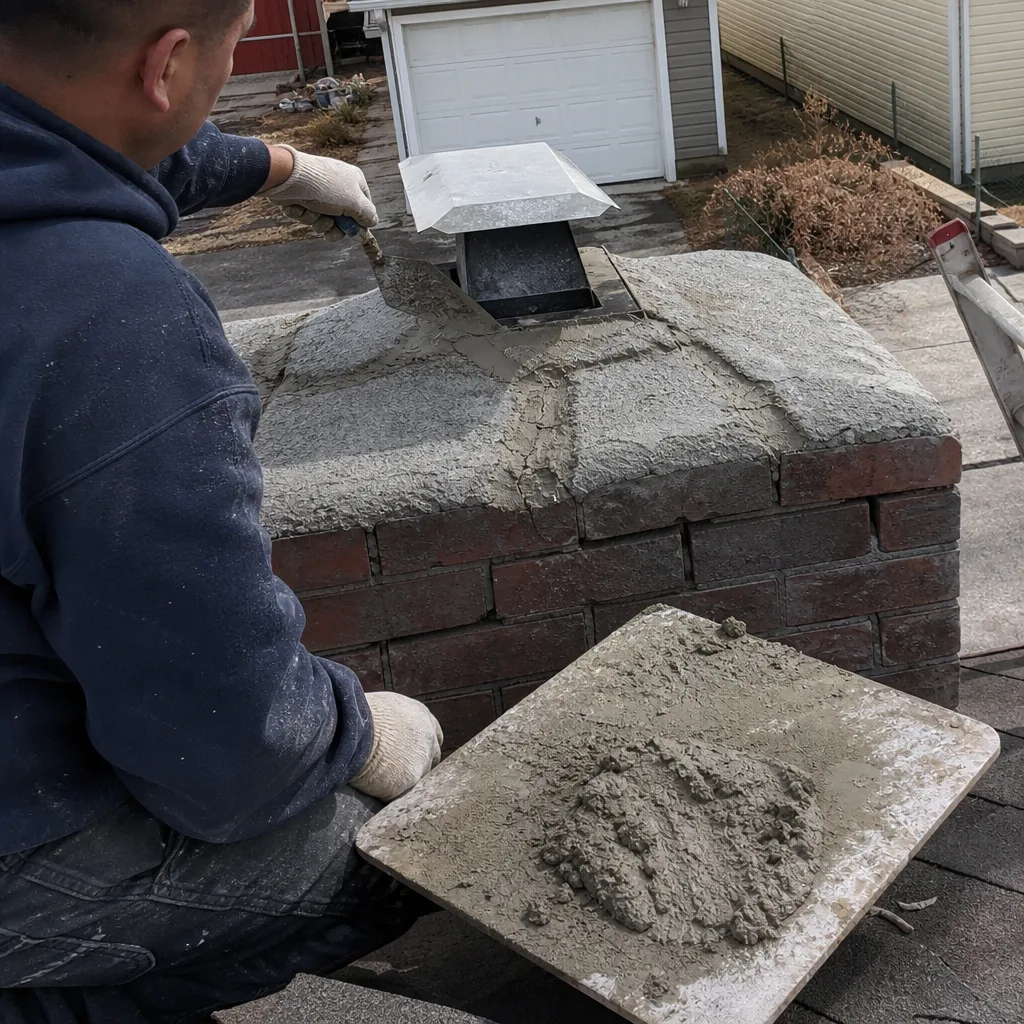
The CSIA credential is the only widely recognized national certification for chimney sweeps. It’s not a marketing badge. It’s a real exam with a passing threshold and a continuing-education requirement, renewed every three years. A sweep with a current CSIA certification has demonstrated knowledge of NFPA 211 (the National Fire Protection Association standard for chimneys, fireplaces, and vents), creosote inspection and classification, and basic code compliance.
Here’s what it doesn’t tell you, and this is where Newark homeowners get burned:
- The certification doesn’t require camera use. A CSIA-certified sweep can do a “Level 1 inspection,” which is a visual once-over with a flashlight from the firebox and the roof, and call the chimney clean. The camera is the only way to see the middle of the flue: the part where the cracks and the glaze live. It’s the difference between a doctor looking at your tongue and a colonoscopy. One is a look. The other is an inspection.
- The certification doesn’t require written pricing. The CSIA has nothing to say about whether a company prices the job before or after the work is done. A certified sweep can absolutely run the job on verbal pricing and send you a bill at the end. The certification and the contract practices are unrelated.
- The certification doesn’t guarantee recent work volume. A credential is a point-in-time test. It doesn’t say whether the sweep cleaned 300 chimneys last year or 12. Experience matters in a trade where older chimneys hide things that a test book can’t prepare you for.
This is why Level Two Chimney Newark does not treat the CSIA as the top of the pyramid. The credential is a baseline. The practices are the standard: camera down the flue on every job since 2009 (Haven Standard Clause 4), a written price with written scope and written warranty before anyone touches the chimney (Clause 1), and a documented photo record when the work is done. The credential tells you someone passed a test. The practices tell you what the test never covered.
Documentation After the Job: What to Demand for Insurance Protection
Here’s the part everyone skips. A chimney fire happens fast. In the aftermath, your homeowner’s insurance carrier is going to ask for exactly one thing: evidence that the chimney was maintained. If you can’t produce a receipt and a documented inspection record, the claim can get denied on the grounds of neglect, and you’re paying for a liner rebuild and smoke damage out of pocket. In Newark, a full chimney rebuild runs $8,000 to $15,000 depending on height and masonry condition. That’s not a risk you want to self-insure.
After any chimney cleaning or Fireplace Services in Newark job, you should leave the appointment with three things in hand:
- A written receipt that names the company, the date, the scope of work performed, the technician who performed it, and the exact amount paid. Not a credit card slip. A receipt.
- A documented photo record from the camera-scan inspection. At minimum you want before-and-after images of the inside of the flue: the smoke chamber, the liner walls, any areas of concern the tech flagged. The standard these days, and the one Level Two has used since 2009 under Haven Standard Clause 4, is a full photo archive delivered at the end of the visit, not a few grainy shots on the tech’s phone that never reach you.
- A written statement of findings that includes the creosote class (I, II, or III, where Class III is the glazed, tar-like accumulation that constitutes a genuine fire hazard), the condition of the flue liner and smoke chamber, and any recommended follow-up work with a written quote for that work.
Keep all three in a file with your home’s other maintenance records, ideally the same place you keep your boiler service history. If you ever file a chimney fire claim, this is the file that proves you maintained the system. Without it, you’re asking an insurance adjuster to take your word that “some guy” cleaned it “a couple years ago.” That’s not a claim. That’s a denial letter waiting to happen.
Common Mistakes to Avoid
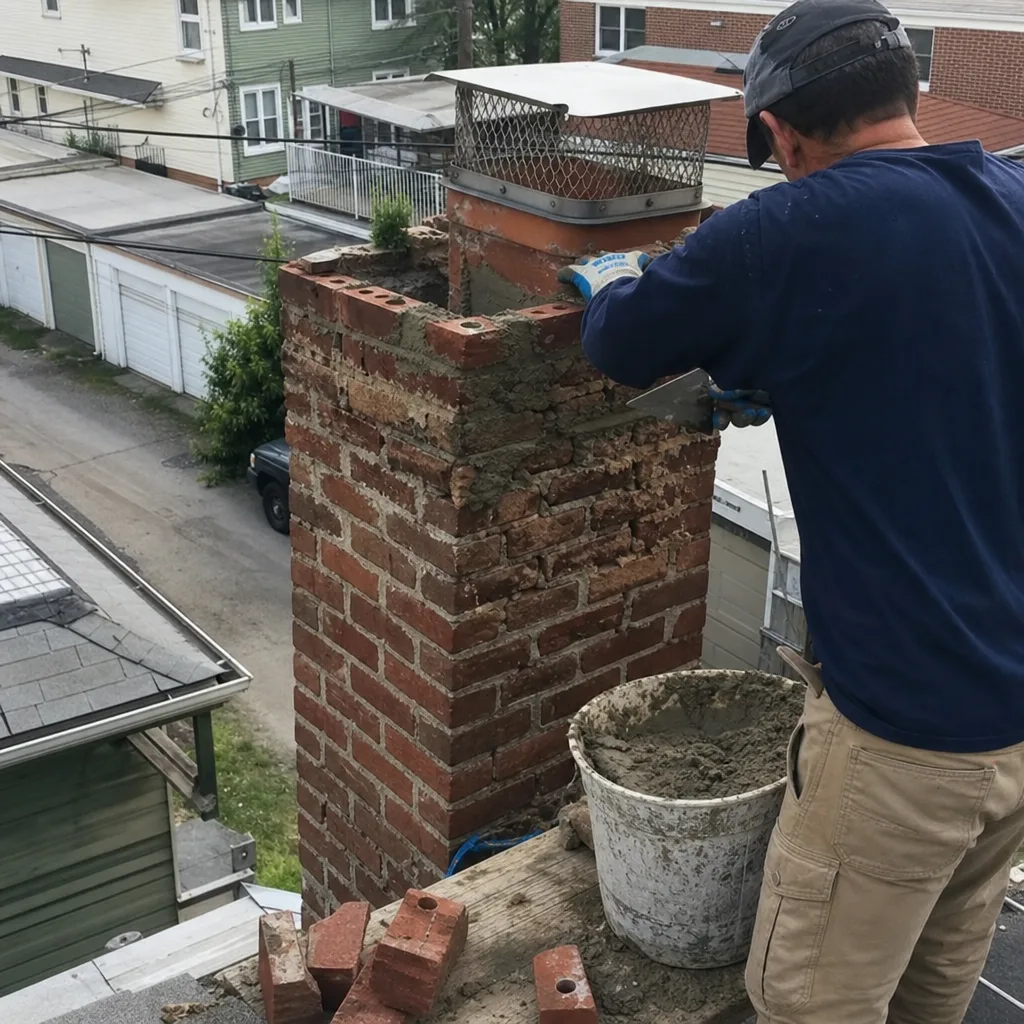
- Hiring based on the lowest price. A $79 chimney cleaning in Newark exists for one reason: to get someone on your roof who is incentivized to find “$2,000” of new problems. The real cost of that cheap sweep, in our experience at Level Two, is often a second opinion you pay for after the scare quote. The price comparison should be between documented, written estimates, not between door-hanger coupons and real companies.
- Skipping the camera inspection to save $40. The camera is the point of the service. A brush cleaning without a camera tells you your chimney is “clean,” but it tells you nothing about whether the liner is cracked, the crown is failing, or the smoke chamber is accumulating the creosote that will feed a chimney fire. Saving $40 to skip the camera is like getting a free tooth cleaning and skipping the X-rays. The thing the X-rays catch is why you went in.
- Hiring a company that can’t produce a NJ Home Improvement Contractor registration number. In Newark, this is not a suggestion. It’s state law. An unregistered contractor has no accountability to the Division of Consumer Affairs, and an uninsured contractor’s mistake on your roof is your liability. Verify the 13VH number before booking.
- Accepting a verbal quote. “Don’t worry, we’ll take care of you” is not a price. If it’s not written, it doesn’t exist. The time to find out the actual cost is before the work starts, not when the tech is standing in your living room with a sooty brush and a new “recommendation.”
- Choosing a company that won’t show you the inside of your own chimney. Camera-scan documentation is not a premium add-on. It’s the standard for a reason: a flue you can’t see is a flue you can’t verify. If the tech won’t show you the photos, or the company doesn’t take them, you’re relying on trust in a transaction where trust should be backed by evidence.
- Falling for the “we’re already in the neighborhood” pitch. A legitimate chimney sweep in Newark does not go door-to-door. If someone knocks on your door in the Ironbound or the North Ward offering a steep discount because they’re “already working nearby,” that’s not a local business. That’s a commission crew. Close the door and call a company you researched.
- Not asking what materials will be used for liner or repair work. A liner quote that doesn’t name the manufacturer and material grade (DuraFlex 316L stainless, HeatShield resurfacing compound, Olympia Chimney cap) is a quote that can be downgraded on installation day. Named materials are enforceable materials. Generic words are not.
When to Call a Professional
If you’ve just bought a home in Newark and have no record of the last chimney cleaning, call a professional before your first fire. That’s not caution. That’s the only responsible move with a system you can’t see. The same goes if you notice any of these: visible soot falling into the firebox, an odor that smells like a campfire or a car fire coming from the fireplace even when it’s not lit, any signs of water staining on the ceiling near the chimney chase, or if you’re using a fireplace that hasn’t been cleaned in more than one burning season. Animal sounds in the flue are their own urgent call. And if you’re buying a home in Newark, a Level 2 camera-scan inspection before closing is cheap insurance against a surprise $5,000 liner job. Level Two Chimney Newark offers free estimates in Newark. Call (862) 245-4309 and we’ll schedule a time, send a written price, and show you the camera evidence before anyone touches your chimney.
Frequently Asked Questions
A standard chimney cleaning and camera-scan inspection in Newark runs $249 to $329 for a single flue, with two-flue homes running $320 to $450. The price depends on flue type, liner condition, roof access, and whether there’s heavy creosote or animal presence. Every quote from Level Two Chimney Newark comes as a written price before work starts, so the number you see is the number you pay. Call (862) 245-4309 for an exact quote; estimates are free.
If you burn wood regularly during Newark winters, a cleaning every year is the safe standard, and the National Fire Protection Association recommends annual inspection regardless of burn frequency. Our Seasonal Chimney Cleaning Care for Newark: Year-Round Homeowner’s Guide explains how timing affects both safety and cost. If you use the fireplace occasionally, every two burning seasons is the minimum we’d accept, especially with older Newark chimneys that accumulate creosote in the smoke chamber even with light use.
A CSIA certification is a useful baseline that tells you the sweep passed a test on chimneys and fire codes. It’s worth checking, but it is not enough on its own. Always ask the camera question, the written-price question, and the documentation question, because those three practices separate documented professionals from certified-but-vague ones.
A Level 1 inspection is a visual check of the accessible parts of the chimney with a flashlight. A Level 2 inspection means a camera is run down the flue to see the interior surfaces, which is how you find cracks in the liner, glaze build-up, and damage that a flashlight cannot reach. In Newark, where chimneys are old and freeze-thaw damage is common, we recommend Level 2 on every job. Level Two Chimney Newark home has made camera-scan Level 2 the default standard since 2009.
You can, but you shouldn’t. A chimney cleaning without a camera tells you what a brush touched, not what the flue actually looks like. Safety note: chimney cleaning involves heights on roofs with steep pitches, and a fall from a two-story Newark rowhouse roof is a life-altering injury. Creosote dust is also a respiratory and skin hazard. The job is not a household chore. It’s a trade with real gear and real risk. Hire a professional with a camera and insurance.
Ask for a Certificate of Insurance emailed directly from their insurance carrier, and check the New Jersey Division of Consumer Affairs registry for their Home Improvement Contractor registration. A 13VH number and a COI with at least $1 million in general liability are the two non-negotiables for any chimney work on your Newark home.
The Bottom Line
Hiring a chimney cleaning contractor in Newark comes down to this: ask the five questions, verify the credentials in public databases, require a written price before work starts, and walk away from anyone who can’t show you the camera evidence. The credential matters less than the documentation. The price matters less than the proof. And in a city with this many century-old chimneys, the company that shows you the inside of your flue, hands you a written price, and leaves you a photo record is the company you should have already called. Level Two Chimney Newark has done it this way since 2009, and our prices are on the page, not hiding behind a phone call. Call (862) 245-4309 for a free estimate.
Written by Corrine Halstead, Owner at Level Two Chimney Newark, serving Newark since 2009.