
Last updated September 20, 2026
Level 1 sweep and inspection to the NFPA 211 annual standard - flue, crown, cap, and flashing checked and photographed
Chimney sweep logs do not sweep chimneys. They loosen some creosote - which then falls where a brush and vacuum still have to collect it.
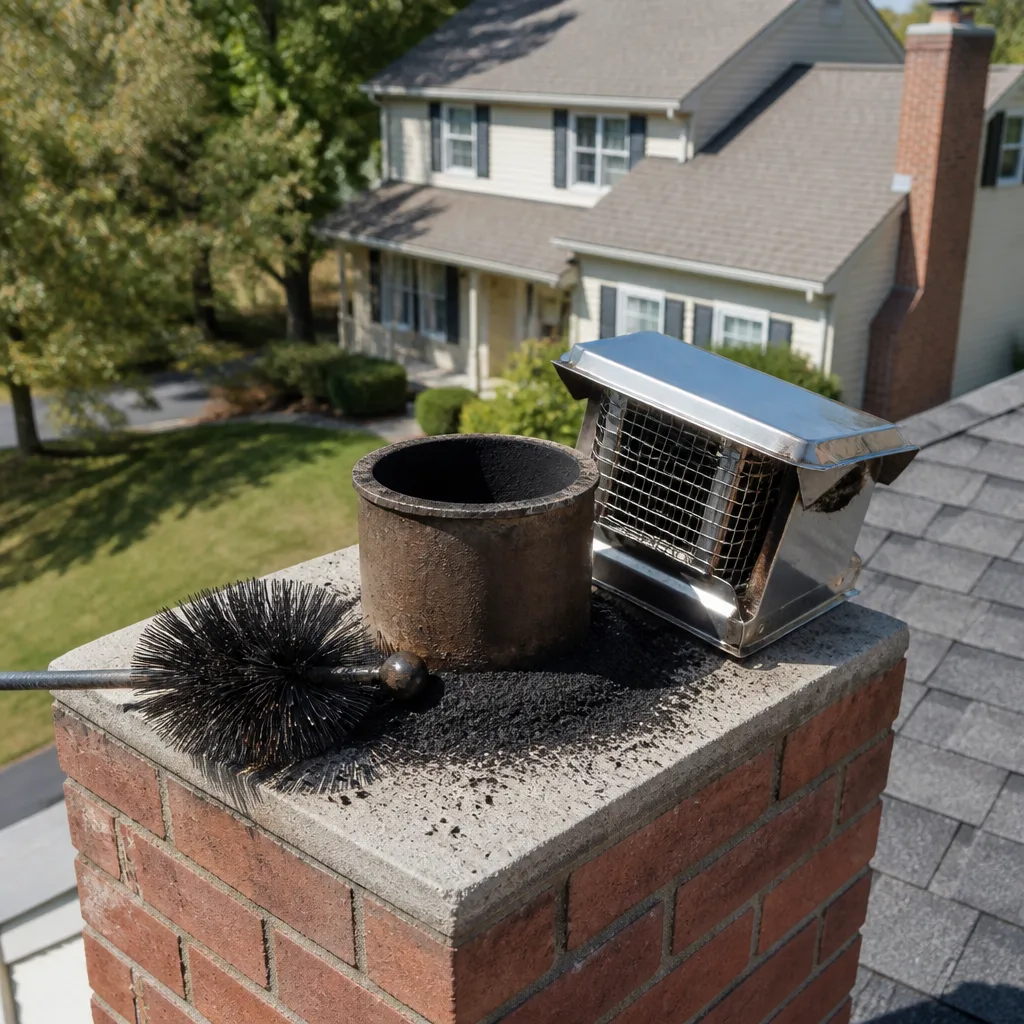
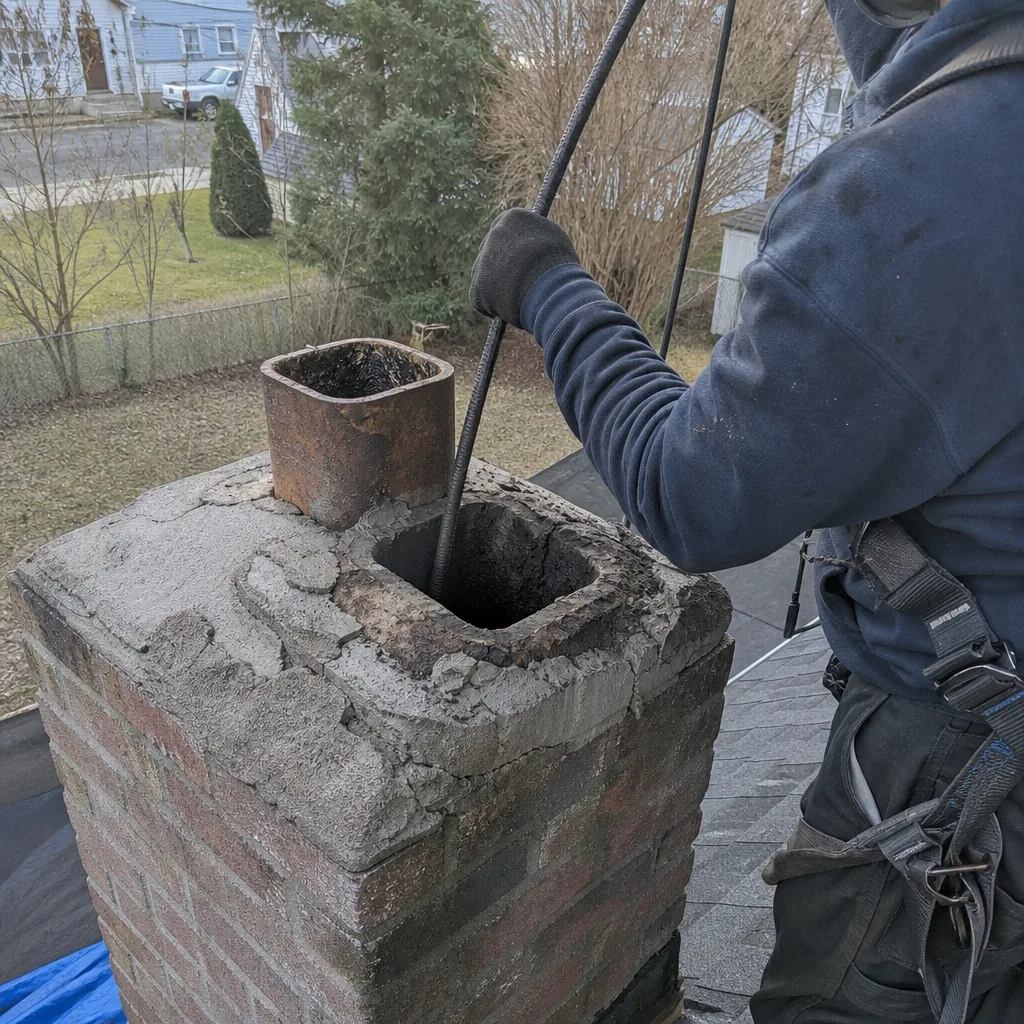 Before
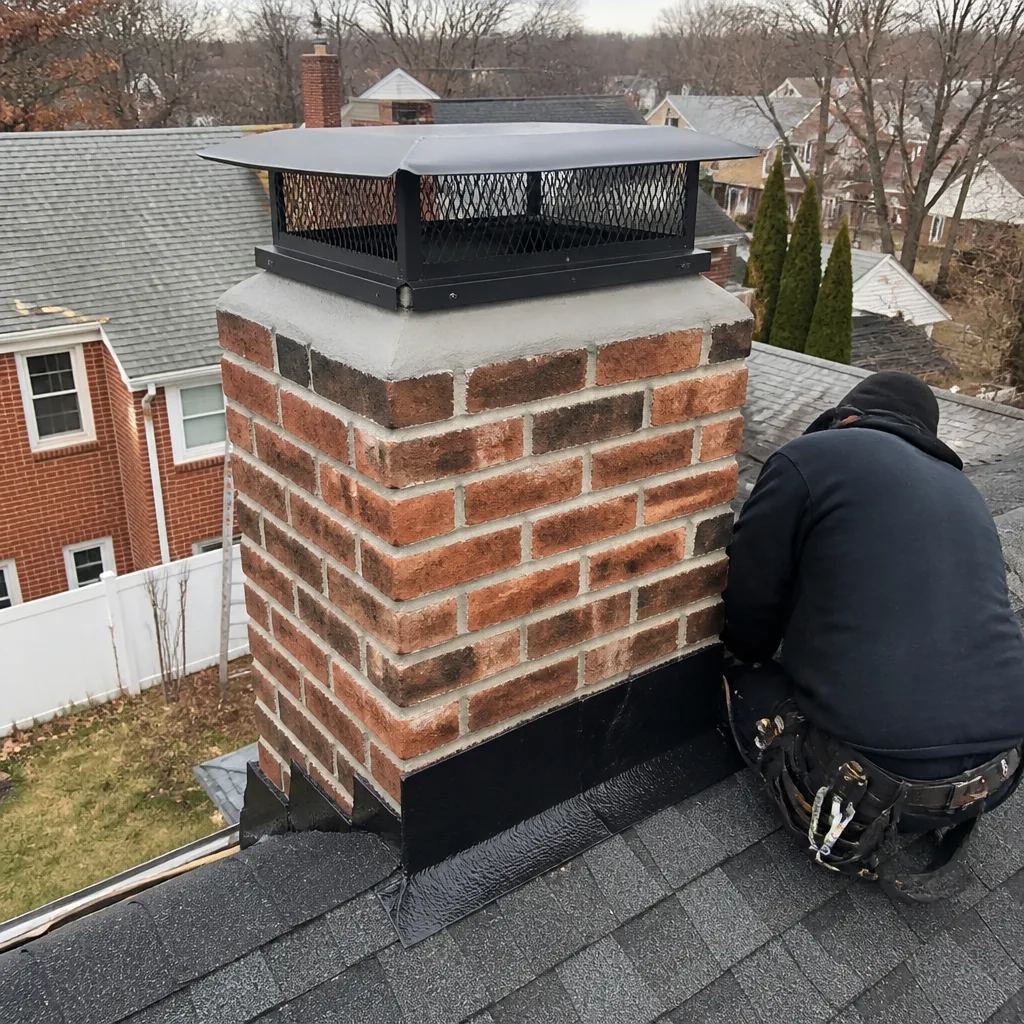 After
After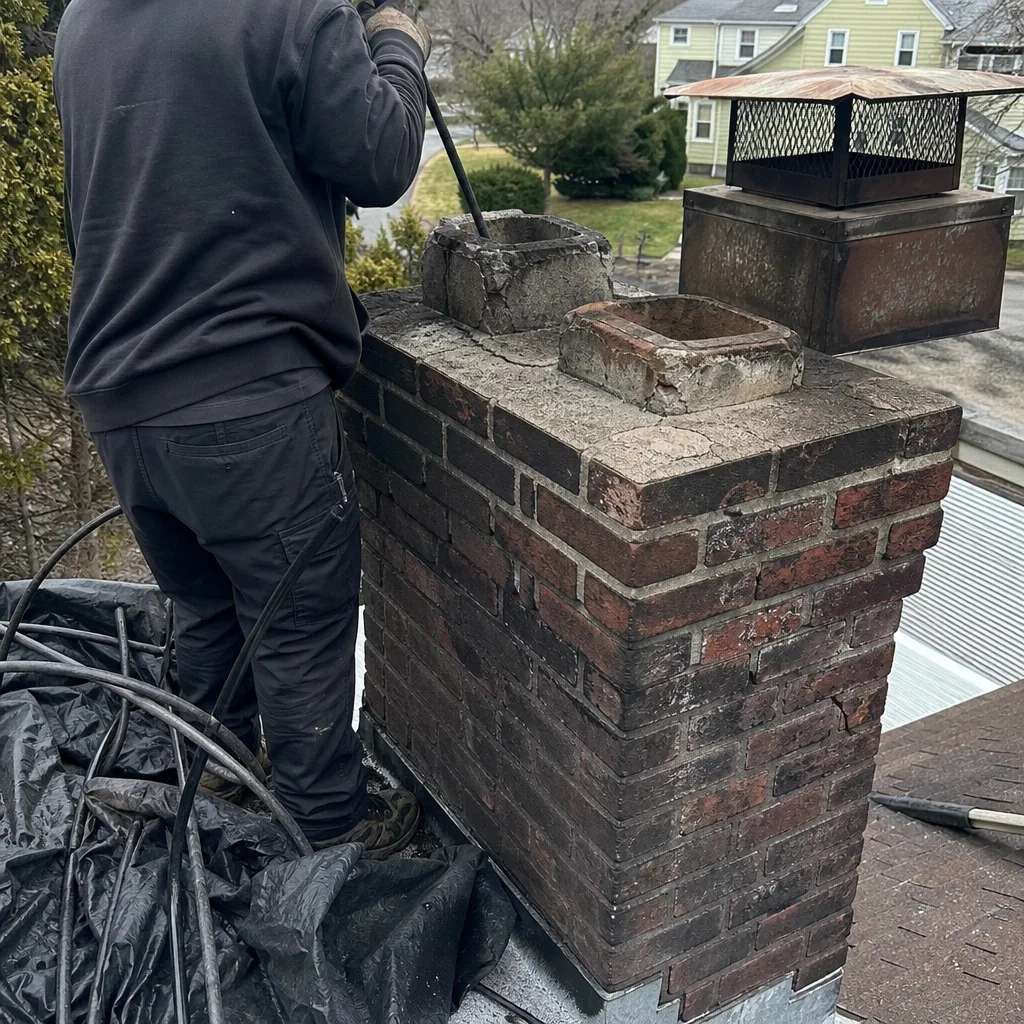 Before
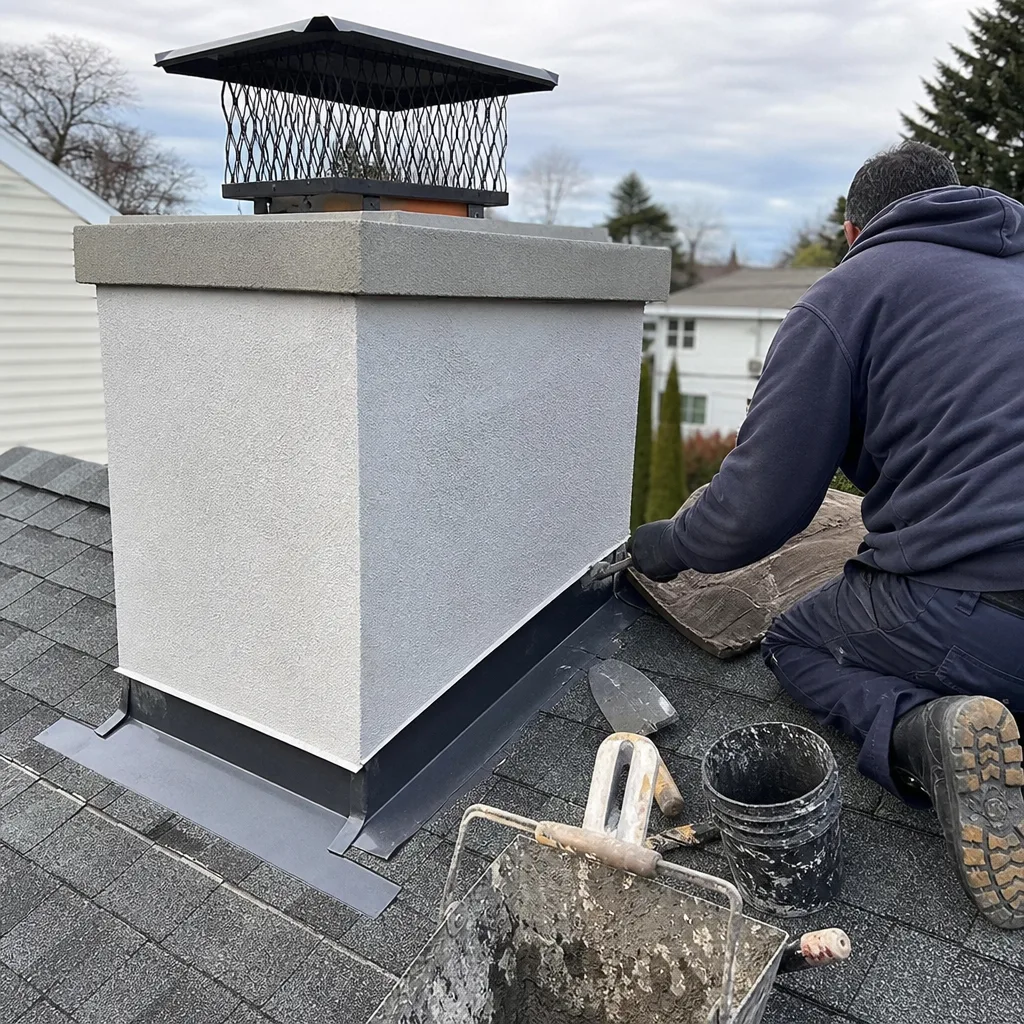 After
After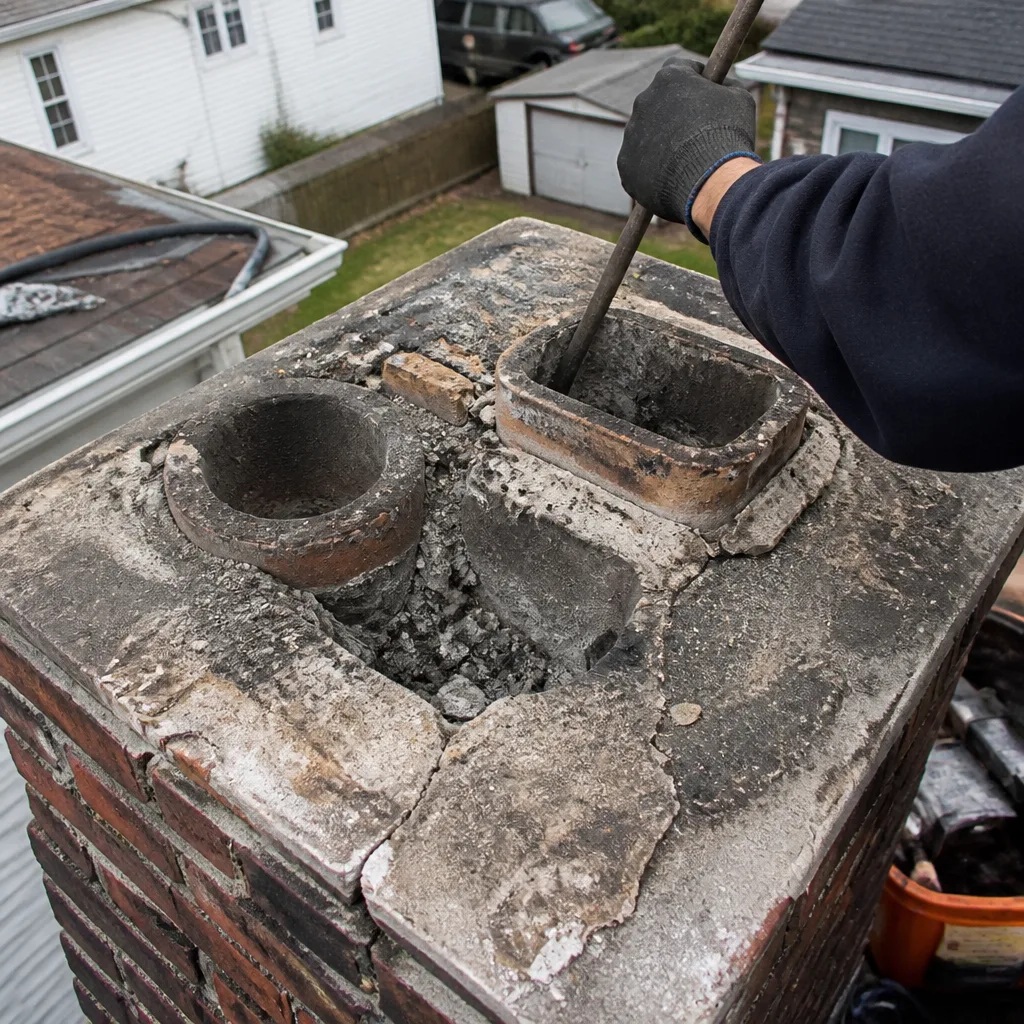 Before
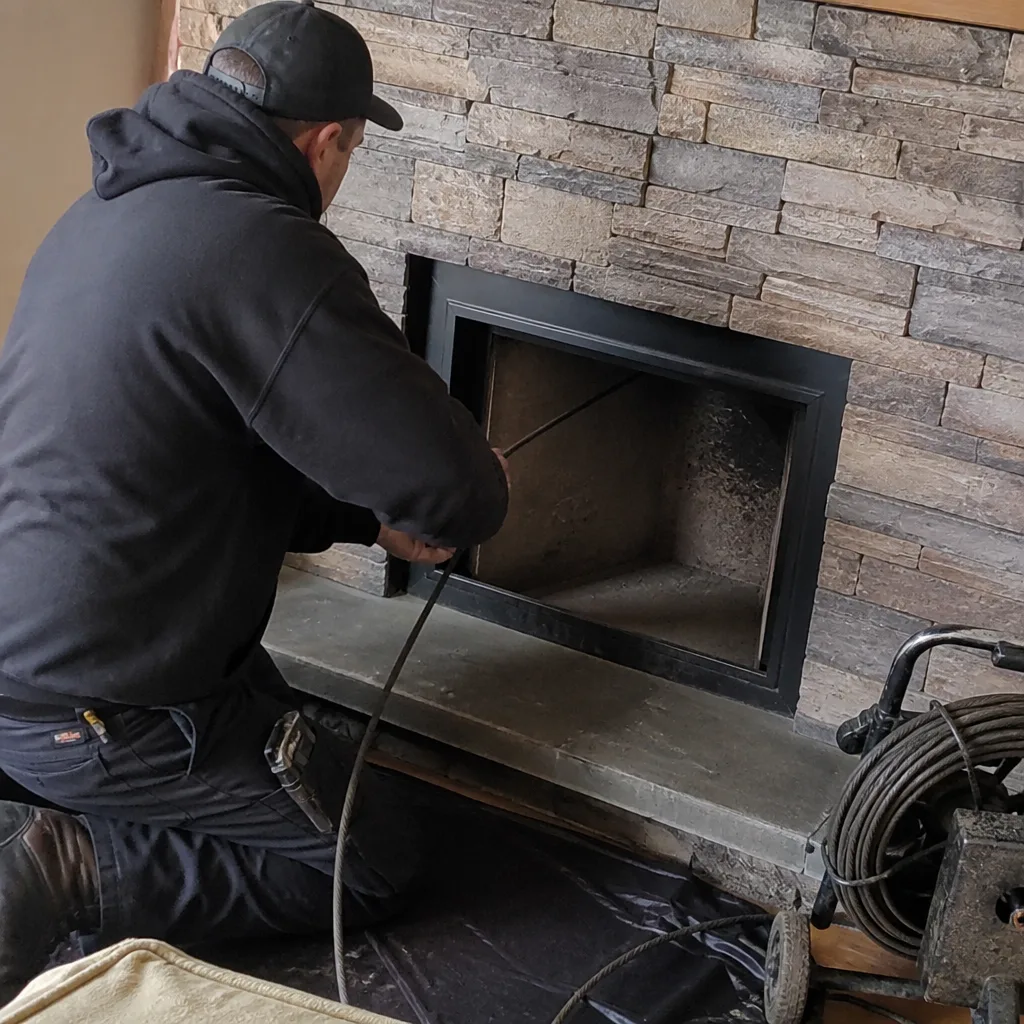 After
AfterChimney Cleaning Warning Signs: A Newark Homeowner’s Reference Guide
Most Newark homeowners discover their chimney problem the day smoke rolls back into the living room or a neighbor spots staining on the brick. By then, the condition has been developing for months, sometimes years. The signs were there earlier: a draft smell in a closed room on humid days, a damper that doesn’t seat fully, a faint rattle from the cap when wind comes off the Passaic. This guide is about those early indicators, the ones that show up long before a fire becomes likely. We’ve inspected more than 38,000 chimneys in Newark since 2009, and the pattern is consistent: the fires we help prevent almost always left a trail of small, readable signals first. Here’s how to read them.
Quick Answer
The earliest chimney cleaning warning signs for a Newark homeowner are a persistent fireplace odor in warm weather, a damper that feels sticky or doesn’t close fully, visible dark residue on the firebox walls after use, and a chimney cap that rattles or sits off-level. White staining (efflorescence) on exterior brick and flaking mortar joints are also early indicators that moisture is moving through the chimney system. If you notice any odor coming from the fireplace when it isn’t in use, schedule a camera inspection – that smell means creosote or moisture is present, and neither resolves on its own.
Table of Contents
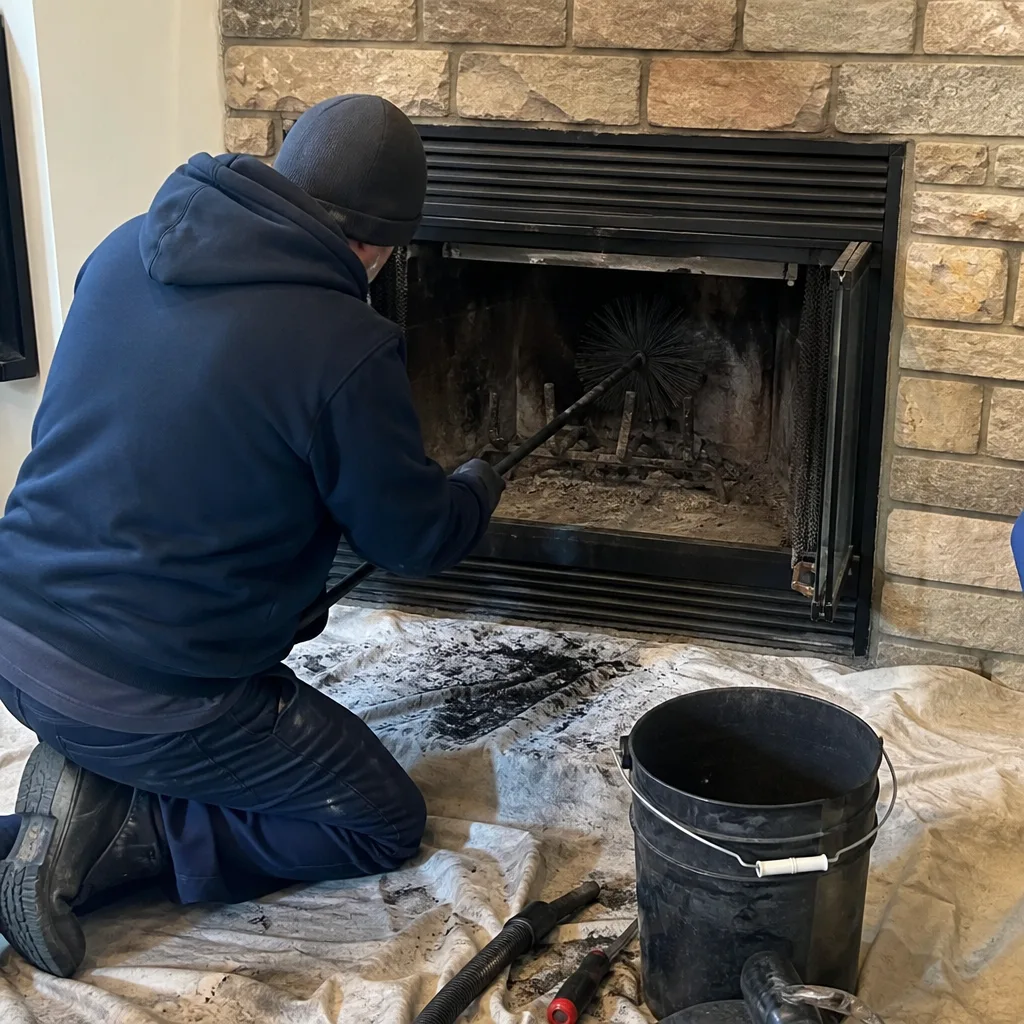
- Odor Profiles: What Each Chimney Smell Actually Means
- Warning Signs Inside the Firebox You Can See Yourself
- Signs Only a Camera Inspection Will Catch
- Exterior Warning Signs You Can Check From the Ground
- Sounds and Movement: Separating Normal Settling From Liner Problems
- The Decision Rule: Schedule a Cleaning vs. Stop Using the Fireplace Today
- What a Proper Newark Chimney Inspection Actually Looks Like
- Common Mistakes Newark Homeowners Make
- When to Call a Professional
- Frequently Asked Questions
- The Bottom Line
BeforeAfterOdor Profiles: What Each Chimney Smell Actually Means
A chimney smell is never just “needs cleaning.” Each odor profile corresponds to a specific condition, and knowing which one you’re dealing with tells you how urgent the problem is. In Newark’s attached housing stock – row homes in the Ironbound, brownstones in Forest Hill, brick twins in the North Ward – odors travel through shared party walls and floor cavities, which means a chimney smell in one room doesn’t always mean the fireplace in that room is the source.
Tar or asphalt smell (strongest on hot, humid days)
This is creosote. Specifically, it’s the smell of Stage 2 or Stage 3 creosote – the tar-like deposits that condense on flue walls when wood smoke cools too quickly inside the chimney. Newark’s summer humidity makes this smell dramatically worse because moisture activates the creosote’s volatile compounds. What this tells us: the flue has enough creosote buildup that flue gases are no longer moving efficiently, and the residue is substantial enough to be fuel for a chimney fire. Tar smell in summer means schedule a chimney cleaning in Newark before burning season starts.
Sulfur or rotten-egg smell
Sulfur odors in a chimney are almost always combustion byproducts trapped in the system, often mixed with animal debris. Birds, squirrels, and raccoons nest in Newark chimneys year-round – the uncapped flues of pre-war homes are particularly inviting. When nesting material decays and mixes with creosote and soot, the result is a sulfur-like odor that gets stronger when the wind blows down the flue. This is not a cleaning-only situation. The nest must be removed, the flue inspected for damage the animals caused, and a proper cap installed to prevent re-entry.
Musty or damp-earth smell
Musty odor means water is entering the chimney and staying there. The source is usually one of three things in Newark homes: a failed or missing chimney cap, cracked crown mortar, or spalled brick that’s absorbing rain. When moisture sits inside the flue, it mixes with creosote and produces that characteristic basement-like smell in the rooms around the fireplace. The concern here extends beyond smell: wet creosote is more corrosive than dry creosote, and moisture is the primary driver of chimney repair in Newark – cracked flue tiles, deteriorated mortar joints, and rusted dampers all trace back to water entry.
Animal or urine smell
If the fireplace smells like urine, ammonia, or wet fur, something is living – or has been living – in the flue or smoke chamber. Raccoons are common in Newark’s mature tree canopy neighborhoods, and squirrels routinely enter through uncapped flues. The smell is decomposition or waste, and it won’t go away with a standard sweep. The animal must be removed (by a licensed professional), the nesting debris cleared, and the flue sanitized. We’ve removed nests from chimneys in the Ironbound, Weequahic, and University Heights that had been there for multiple seasons before any odor became noticeable in the living space.
Warning Signs Inside the Firebox You Can See Yourself
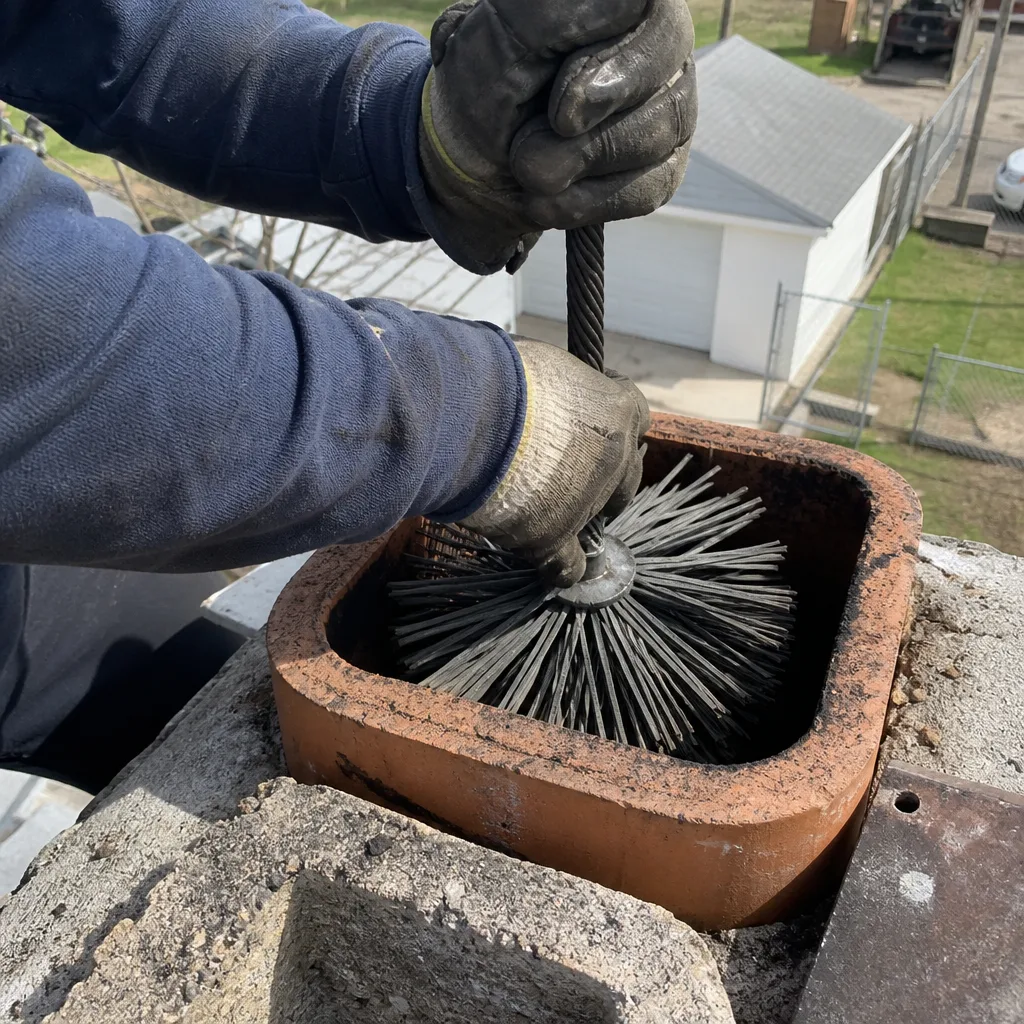
You don’t need tools to spot several early indicators. Shine a flashlight into the firebox and look at the walls, the damper, and the area where the firebox narrows into the smoke chamber. Here’s what matters.
Dark, shiny residue on the firebox walls
After a fire, some soot is normal. But residue that looks glossy, tarry, or forms in sheets rather than as a fine powder is Stage 2 creosote. In Newark’s older flues – many dating to the 1920s and 1930s – the unlined or clay-tile-lined chimneys cool flue gases faster than modern insulated systems, which accelerates creosote condensation. If the firebox walls look like they’ve been painted with dark varnish, the flue above almost certainly has heavier deposits. This is a schedule-cleaning signal, not a stop-using signal, but it should not wait until winter.
Damper that sticks, shakes, or won’t seat fully
The damper is the mechanical gate between your living room and the flue. When it starts sticking or no longer closes completely, the cause is usually rust from moisture, creosote buildup on the damper frame, or warping from heat. A damper that won’t close leaves an open channel between your house and the chimney – which is how odors enter living spaces and how heated air escapes in winter. In Newark’s older attached homes, a stuck damper is one of the most common reasons we’re called out after a homeowner notices unexplained drafts around the fireplace.
Fine black powder falling into the firebox between uses
That powder is dry creosote flaking off the flue walls. Stage 1 creosote is flaky and brittle, and it sheds naturally as temperature and humidity change. Seeing it accumulate in the firebox between fires tells you the flue has a meaningful layer of buildup. A single season of occasional fires shouldn’t produce visible flaking. If you’re seeing it, the chimney has likely gone multiple seasons without fireplace maintenance in Newark.
White or gray ash that smells oily even when cold
Ash is inert – it shouldn’t smell like anything. If the ash in your firebox has an oily or chemical odor when the fireplace has been cold for days, that’s creosote residue mixed into the ash. It’s an early sign that deposits in the smoke chamber are substantial enough to absorb and release odors as barometric pressure changes.
Signs Only a Camera Inspection Will Catch
Here’s the structural problem with most chimney warning-sign lists: they only include what a homeowner can see from the living room or the sidewalk. But a meaningful portion of chimney hazards in Newark homes are invisible without a camera. The confusion between visible signs and camera-only signs is exactly why so many homeowners get a “clean bill of health” from a visual-only inspection and then have a chimney event a season later.
Creosote classification above the smoke chamber
A flashlight look up the flue shows you maybe the first 18 inches. A camera shows the full run. The difference matters because creosote concentrates at the top third of the flue, where flue gases hit colder air and condense fast. We regularly find Stage 3 creosote (tar-like, hardened, glazed) in the upper flue of Newark chimneys that look clean at the firebox level. The camera reveals it, and the photo documentation becomes the record that Clause 4 of the Haven Standard requires on every visit we perform.
Cracked flue tile separations
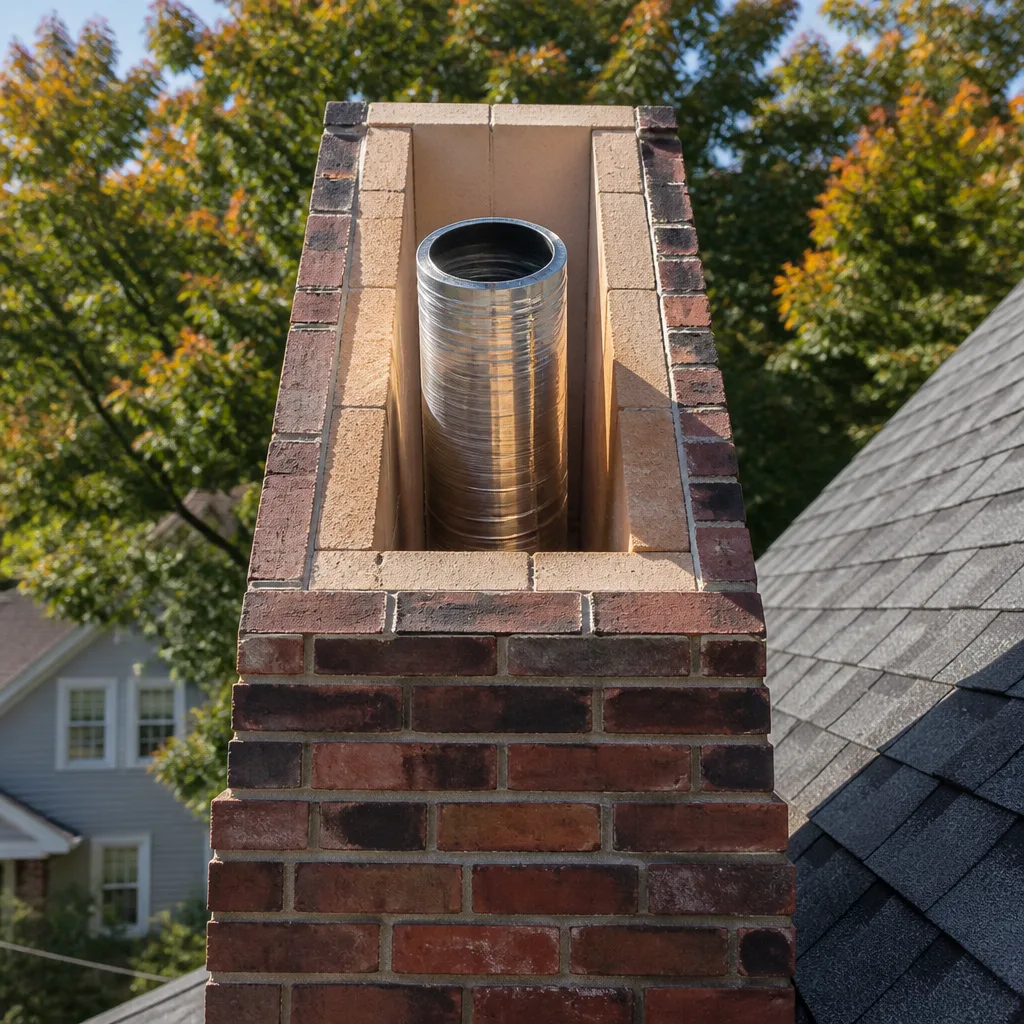
Clay tile liners crack from thermal stress, and those cracks are the pathway for heat and gases to reach the brick structure around the flue. A cracked liner is invisible from the firebox and undetectable from the roof without a camera. In Newark’s pre-war stock, where liners have been through 80 to 100 years of heating cycles, we find cracked or missing tiles in roughly one of every five chimneys we inspect. The camera catches it early, when repair is a liner application rather than a full chimney rebuild in Newark.
Smoke chamber damage and corbeling gaps
The smoke chamber is the pyramid-shaped transition between the firebox and the flue. Its corbeled brickwork is often slapped together with parge coat that breaks down over time. When it does, smoke and heat get into the spaces between the bricks. This is a camera-only diagnosis in most cases, and it’s one of the most common findings in Newark row homes built before 1940. The failure mode here is silent until it isn’t: by the time a homeowner notices smoke smell in the walls, the damage is established rather than incipient.
Exterior Warning Signs You Can Check From the Ground
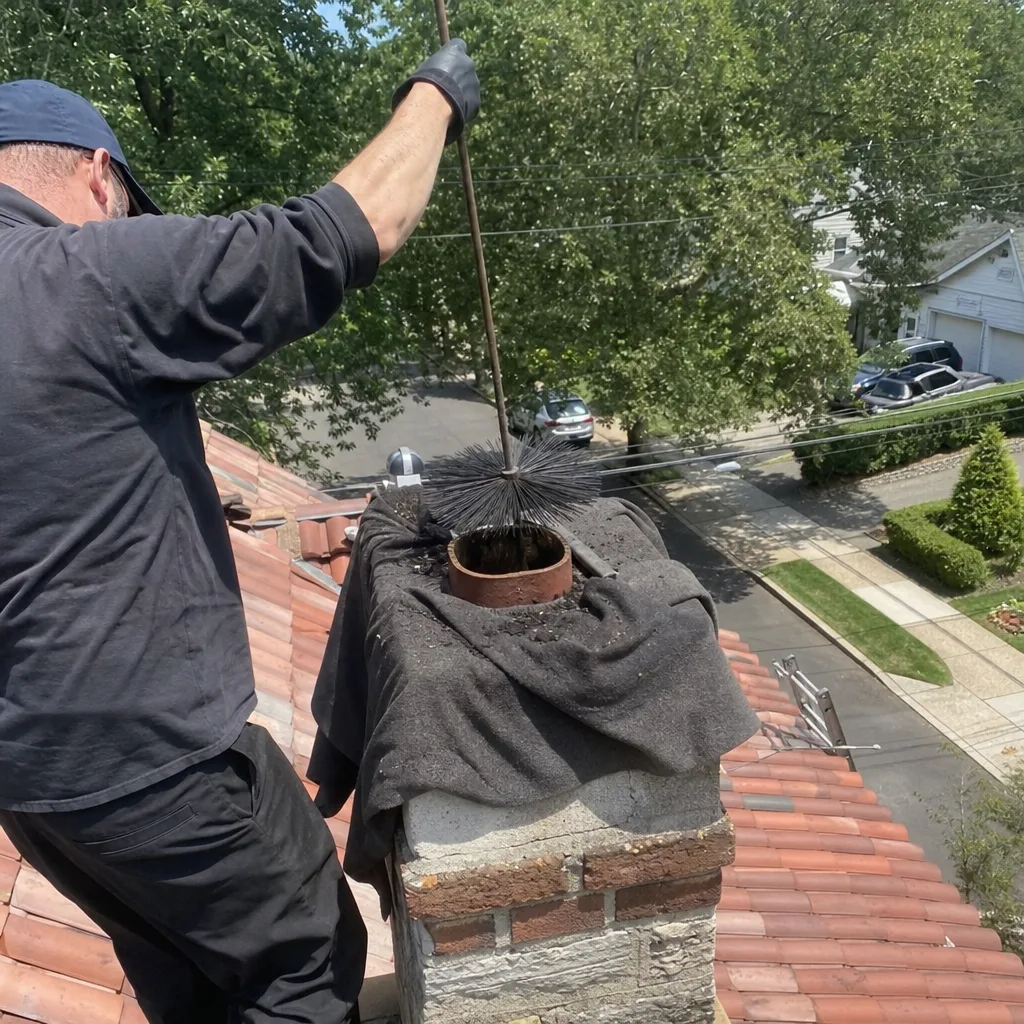
You can assess a lot about chimney condition without a ladder. Use your phone camera, zoom in, and look at these four things.
Efflorescence patterns (white staining on brick)
Efflorescence is a white, chalky deposit that appears when water moves through brick and evaporates, leaving salts behind. A light, even fuzz is common on older Newark chimneys and usually means surface absorption. But a distinct band or concentrated patches – especially near the roofline or around the flashing line – indicates water is entering and moving through the structure in a specific path. That’s a structural moisture signal, not a cosmetic one. Document it with photos monthly. If the pattern grows, you have an active water entry point.
Flashing gaps at the roofline
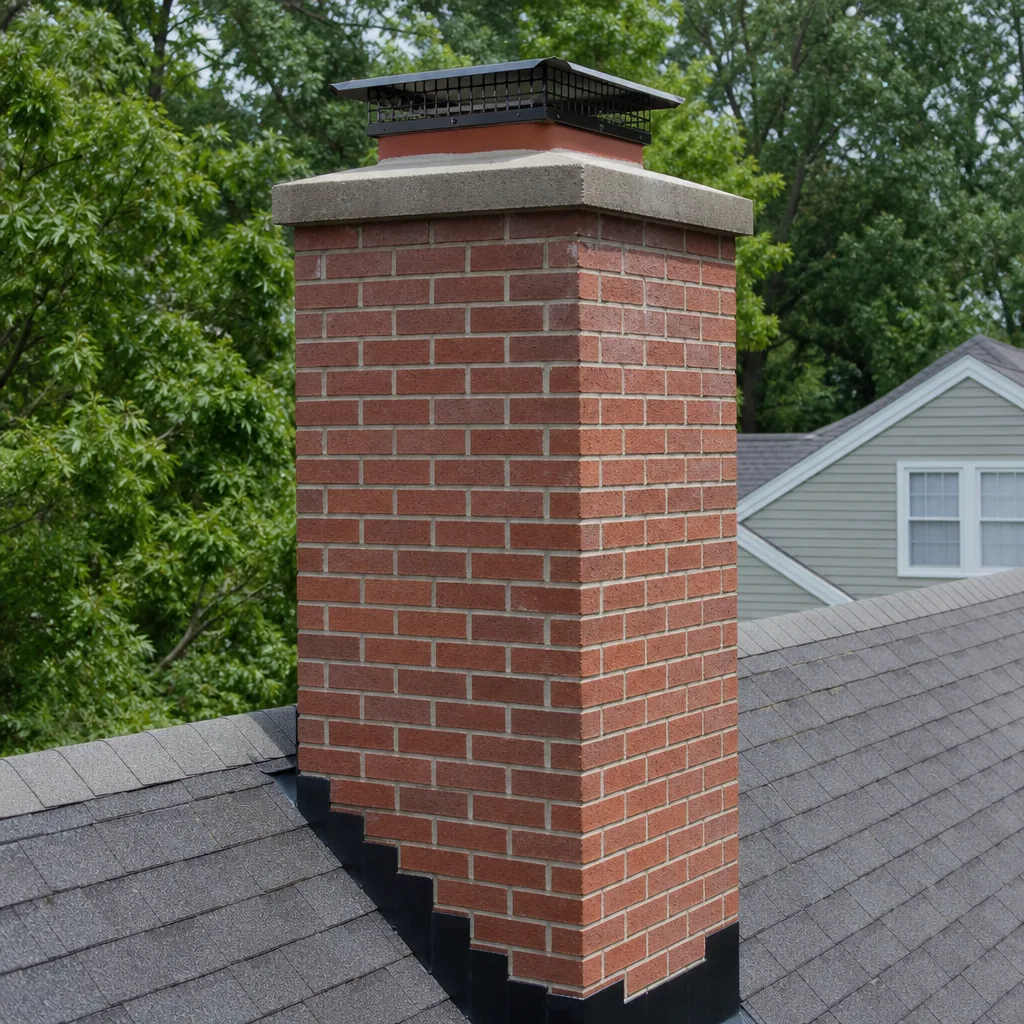
The flashing is the metal seal where the chimney meets the roof. In Newark’s slate and asphalt shingle roofs, flashing fails slowly: the sealant cracks, driven rain gets underneath, and water follows the chimney down into the roof deck and the flue. From the ground, look for a visible gap between the flashing and the brick, missing sealant, or rust streaking down the brick face. Any of these means water has been entering. The fix is flashing replacement and possibly crown work – both common chimney repairs we perform in Newark.
Cap displacement or missing cap
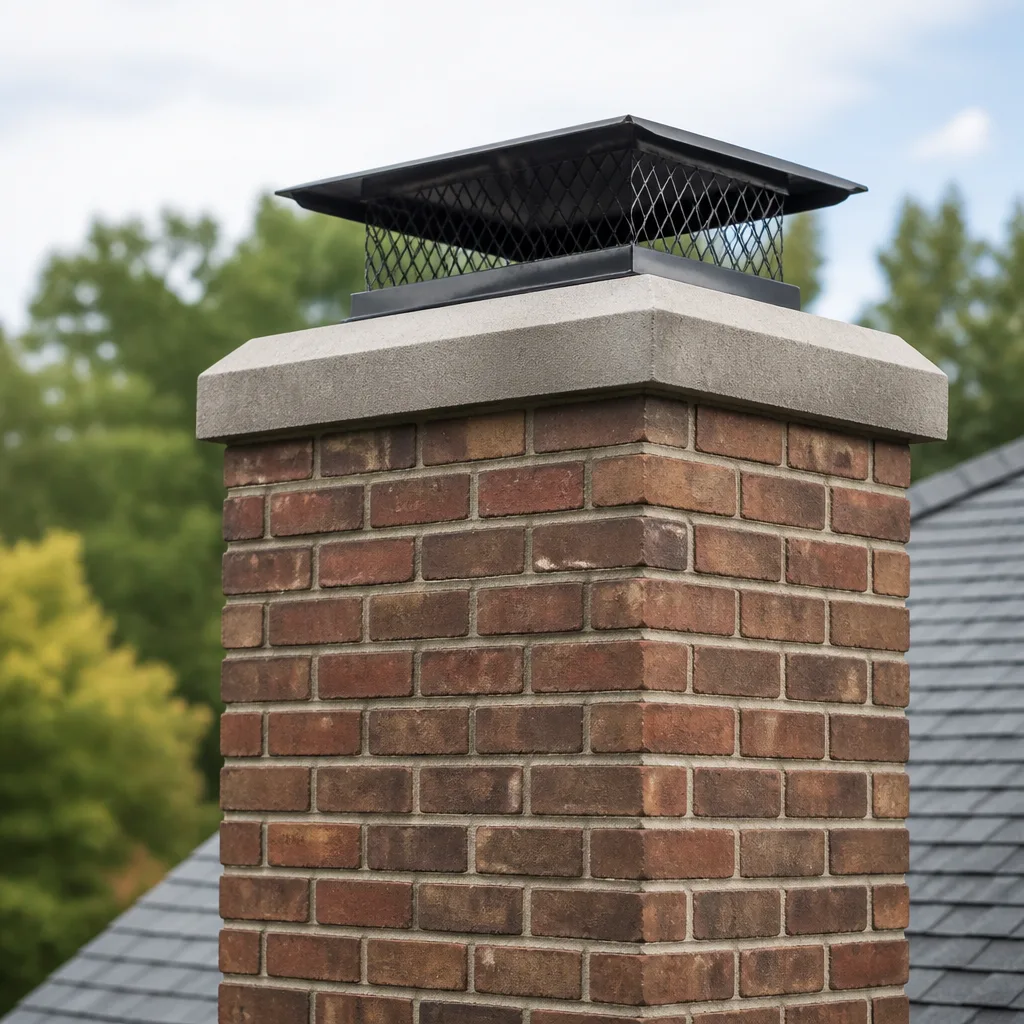
If the cap sits off-level, was installed without a proper masonry base, or is missing entirely, rain goes straight down the flue. In Newark, uncapped flues are the number one entry point for raccoons and squirrels, and they’re the primary cause of water damage to dampers, fireboxes, and liners. A properly installed cap should sit level, be sized to the flue, and be visible as a solid profile. If the cap rattles or tilts in wind – something you may hear on gusty days in the Ironbound or near the Passaic – it’s loose and letting water in around its base.
Spalling brick and missing mortar
Spalling is when brick faces pop off due to trapped moisture freezing and expanding. Newark’s freeze-thaw cycles make this a persistent problem on exterior chimneys. From the ground, look for brick edges that look rounded or crumbled, or mortar joints that appear recessed or missing. This is a structural warning sign: the chimney is losing its weather barrier. Unchecked spalling means water gets deeper into the structure, which accelerates flue damage and can eventually require rebuild rather than repair.
Sounds and Movement: Separating Normal Settling From Liner Problems
Newark is old. Its housing stock – particularly in the North Ward, the Ironbound, and Forest Hill – has been settling for decades. Homes make noise. The question is which noises are architectural and which are chimney-specific. Here’s the distinction that matters.
Sounds that are usually the house settling
The occasional pop or creak when temperatures change quickly is normal in any pre-war structure. Wood framing expands and contracts. Brick is rigid, but it does move fractionally, and a single, random pop on a cold night is rarely a chimney issue. What we tell Newark homeowners: if the sound has no pattern, no timing relationship to weather, and no visible companion sign, it’s probably the house.
Sounds that indicate liner movement or deterioration
Three patterns warrant attention. First: a rattling sound from the flue when the wind gusts. That’s usually a loose cap or a sheet-metal liner that has lost its connection at the top, and the movement will eventually damage the liner or the masonry around it. Second: muffled thumps from the chimney during high wind events. Clay tile liners that have cracked can shift slightly under pressure, and the sound is distinctive – it comes from the flue itself, not the structure around it. Third, and most concerning: a grinding or rasping sound when the chimney goes through a heating cycle. That can be cracked tiles rubbing or a liner separating from the flue wall. Any of these three patterns is a schedule-inspection signal, and the inspection should include a full camera scan.
In Forrest Hill brownstones and the larger Victorians near Branch Brook Park, we see a fourth pattern: sounds that travel down the party wall from a neighboring chimney. Don’t assume a chimney noise is yours until you’ve verified which flue runs through which wall. A camera inspection maps that definitively.
The Decision Rule: Schedule a Cleaning vs. Stop Using the Fireplace Today
Most warning-sign guides give you a list with no guidance on urgency. That’s not useful. Here’s the decision rule we use with our Newark customers, and it applies to every sign in this guide.
Schedule a cleaning or inspection (not urgent, but don’t wait past the next burn season)
- Tar or musty odor that’s only noticeable in warm weather
- Dark, shiny residue on firebox walls after the last use of the previous season
- Fine black powder collecting in the firebox between fires
- Damper that’s stiff or doesn’t seat fully but still closes
- Cap that rattles in wind but sits level
- Light efflorescence that hasn’t grown in recent months
- Animal smell that’s stale (an old nest, not an active one)
Stop using the fireplace today and schedule an inspection before the next fire
- Any sulfur smell that’s present when the fireplace is cold. This indicates active decomposition or trapped combustion gas, both of which demand a camera inspection before use.
- Fine black powder accumulating on furniture near the fireplace, not just in the firebox. This means creosote and soot are backdrafting into the living space, which points to a draft or liner problem.
- Visible cracks in the firebox walls or smoke chamber you can see from the room. A cracked firebox exposes your home’s framing to firebox temperatures.
- Smoke entering the room during normal use when the damper is fully open. Smoke backing into the house can mean a blocked flue, a failed liner, or a negative-pressure issue – all three are fire and carbon monoxide risks.
- Water visibly inside the firebox after rain. Active water entry during storms means the flue is exposed, and the next fire can create a steam-driven expansion that cracks masonry.
- Any animal you can hear moving in the chimney. Do not light a fire to drive it out. A professional removal is required, and the flue must be inspected before use.
The guiding principle: if the sign relates to odor, residue, or minor mechanical issues, you have time to schedule appropriately. If the sign relates to water entry, structural damage, or smoke movement into the house, the next fire is not safe until the issue is documented and addressed.
What a Proper Newark Chimney Inspection Actually Looks Like
This matters because the inspection standard determines what gets found. A visual-only “inspection” – common in the cheaper tiers of chimney service – gives you whatever the technician can see from the firebox or the roof. That’s a fraction of the system. The standard that has governed every one of our Newark inspections since 2009 is NFPA 211 Level 2, and the camera scan is the difference between a diagnosis and a guess.
A proper Level 2 inspection includes:
- Interior visual assessment: firebox condition, damper function, smoke chamber access, and the condition of the hearth and surround.
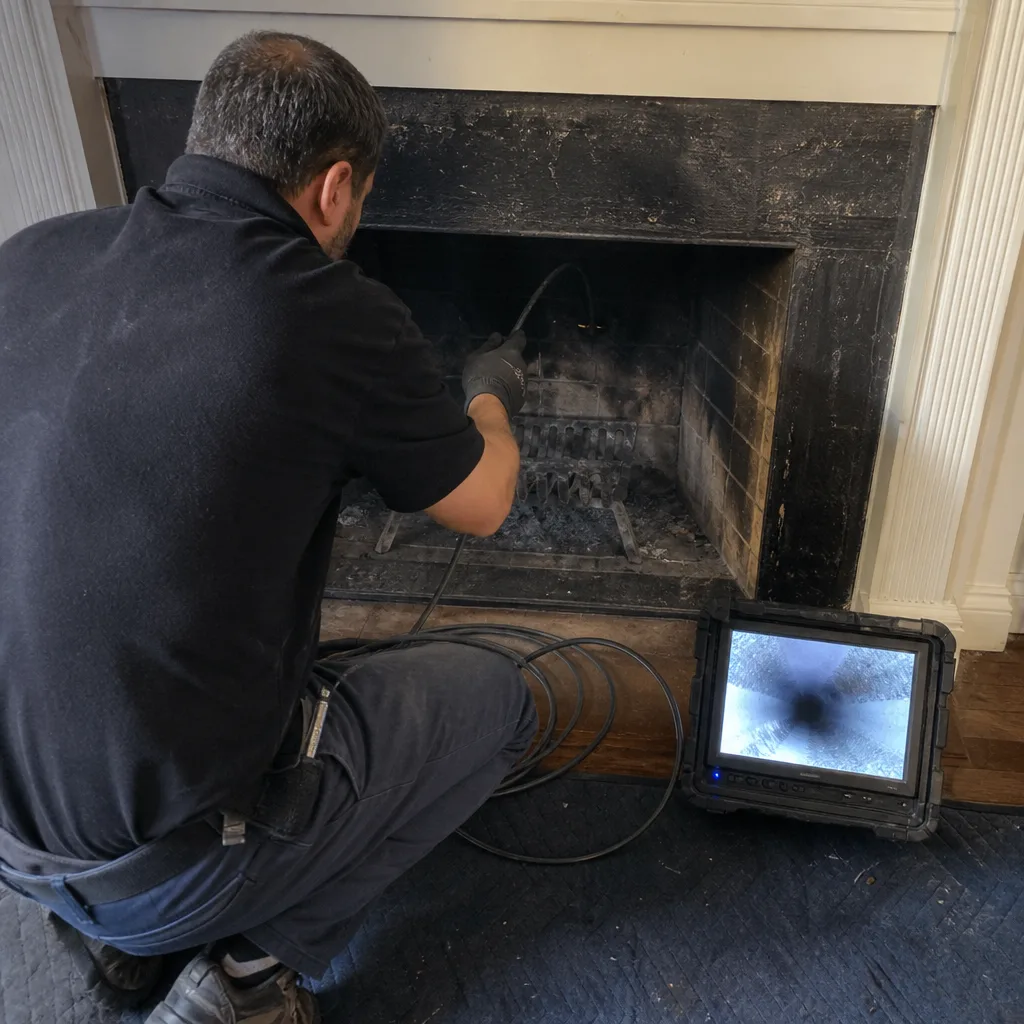
- Full-height camera scan: a camera runs the entire flue from firebox to crown, documenting liner condition, creosote classification, tile offsets, and any blockages. The video is reviewed with you, not just filed.
- Exterior assessment: crown integrity, flashing condition, brick and mortar joint condition, cap installation, and clearances from the roof line.
- Attic or roof verification when accessible: visible flue run, chase condition, and any signs of water entry into the surrounding structure.
- Written documentation: a photo record of findings, a written scope of work if any work is recommended, and a written price before anything is scheduled.
This is the part where we should be plain about what Level Two Chimney Newark does differently. Every inspection we perform includes the camera scan and a documented photo record. That’s been true since 2009, years before insurers or code enforcement began requiring it. The practice became Clause 4 of the Haven Standard: every job gets a documented record, no exceptions. You walk away with photos, not a verbal summary. And if you’ve already received a written estimate from another company, we offer a free second opinion on it – bring us the paperwork and we’ll verify the findings, in writing, before you decide anything.
Common Mistakes Newark Homeowners Make
- Assuming no use means no problem. A chimney that hasn’t been used deteriorates too – moisture enters through uncapped flues, animals nest, and mortar joints weather. Newark homes that go a winter without fires still need inspections before reuse.
- Confusing visual inspection with camera inspection. A technician who looks up the flue with a flashlight and says it’s fine hasn’t seen the flue. If the inspection doesn’t include camera documentation, the inspection hasn’t covered the system.
- Using creosote-removal logs as a substitute for sweeping. These products may loosen Stage 1 creosote, but they don’t remove Stage 2 or Stage 3 deposits, and they give a false sense of security that delays real cleaning.
- Delaying cap replacement because the old chimney “has been fine without one.” Newark’s freeze-thaw cycles and animal populations make uncapped flues a documented risk. The older the chimney, the more critical the cap, because liner damage from decades of weather makes water entry more consequential.
- Accepting a verbal quote or a “we’ll see when we get in there” price. Under Clause 1 of the Haven Standard – H.A.V.E.N. “Have it in writing” – our customers receive a written price, a written scope of work, and a written warranty before any work starts. If a company won’t commit to a number in writing, find another company.
- Ignoring summer odors as “just how old chimneys smell.” Chimneys don’t have a baseline odor. If you smell it in July, something is inside the flue, and it will be worse – and more dangerous – by January.
- Waiting until September to book a sweep. Newark chimney companies book heavily in September and October. The best time for a cleaning is spring, after burn season ends, when moisture has had less time to activate creosote and scheduling is flexible. Our Level Two Chimney Newark home page outlines seasonal scheduling and what to expect.
When to Call a Professional
If you’ve identified any of the warning signs in this guide – or if you simply haven’t had the chimney inspected since you bought the house – that’s the moment to call. Homes purchased in Newark between 2015 and 2025 frequently changed hands without a Level 2 chimney inspection, because standard home inspections don’t include camera scans of the flue. If you bought a home in the North Ward, the Ironbound, Weequahic, or any of Newark’s older neighborhoods and have never seen the inside of your flue on camera, scheduling an inspection is the single most useful thing you can do for your chimney this year. Level Two Chimney Newark offers free estimates in Newark – call (862) 245-4309 and we’ll schedule a time that works around your calendar, with a named technician assigned and a text when they’re on the way.
Frequently Asked Questions
A standard chimney sweep and cleaning in Newark typically runs between $180 and $320, depending on flue height, creosote classification, and whether animal debris or obstruction removal is required. When the cleaning includes a Level 2 camera inspection and documented photo record – which we include on every visit under Haven Standard Clause 4 – the total generally falls between $250 and $400. The exact price is always provided in writing before work begins, never as a verbal estimate. Call (862) 245-4309 for a written quote specific to your chimney.
In Newark, the answer depends on whether the liner recommendation came with camera documentation. A cracked or separated clay tile liner is a specific, visual finding – and under our standard, you see the footage yourself before deciding anything. We never recommend a liner replacement without showing you the camera evidence that justifies it. If another company has recommended liner work without camera documentation, get a second opinion. Our free second opinion program exists specifically for this situation: bring us the written estimate and we’ll verify the findings with our own camera scan.
The National Fire Protection Association recommends a sweep whenever creosote buildup reaches 1/8 inch, which for most Newark homeowners with regular wood-burning fireplaces means once per year. Gas fireplaces used occasionally may go two years between sweeps, but the annual inspection should still happen because flues, crowns, and caps weather even when fires are rare. If you burn more than two cords of wood per season or burn unseasoned wood, you may need a mid-season sweep. Schedule by condition, not by calendar.
Creosote accumulates. Stage 1 deposits become Stage 2, then Stage 3 – which is glaze-like, highly combustible, and requires chemical treatment or mechanical removal rather than a standard sweep. As creosote builds, flue temperatures rise and draft efficiency drops, which means more smoke in the house and more fuel in the flue. The end state of a neglected chimney is a chimney fire, which in Newark’s attached housing is not a contained event: fires in party-wall flues can spread to neighboring structures. The chimney cleaning service we provide in Newark exists to keep that sequence from starting. If you’ve gone two or more years without service, schedule a sweep and inspection now – estimates are free, and the written price is yours before any work is scheduled.
You can document the firebox, the damper, and the first section of flue, and that’s useful baseline information. What you can’t do is see the full flue run, the smoke chamber condition, the liner condition at the top third of the flue, or the crown from the roof side. A phone camera from inside the firebox gives you a partial view that can miss the most dangerous conditions. That’s why the camera scan is the standard we built our company around rather than an add-on. Schedule the inspection and get the full system documented.
Yes, for structural reasons. Newark row homes and brownstones built before 1950 typically have clay tile or unlined flues that have experienced 80 to 100 years of thermal expansion and contraction. Party-wall chimneys, where two homes share a chimney structure, add complexity: flue separation issues in one home can affect the other, and deterioration is more common where two flues run adjacent in the same masonry mass. The age and construction style don’t mean the chimney is unsafe, but they mean the inspection standard matters more, not less. These systems should receive a camera-documented Level 2 inspection at minimum once every two years, and annually if the fireplace is used regularly.
The Bottom Line
Chimney fires in Newark almost never happen without warning. They happen when early signals – the tar smell in August, the sticky damper, the rattle from the cap – go unread for seasons. The difference between a $250 sweep and a $6,000 rebuild is usually just attention: noticing the sign, understanding what it means, and acting on it before the condition compounds. Our recommendation is simple. If you can’t remember the last time your chimney was inspected with a camera, schedule the inspection. You’ll get a written price before work starts, a documented photo record when it’s done, and the best-case outcome: finding nothing that needs urgent attention, which is the entire reason to inspect in the first place.
Written by Corrine Halstead, Owner at Level Two Chimney Newark, serving Newark since 2009.